 Symbol
Symbol
Singing Notes Photos Symbol Memoriam
 This
is the symbol for colorectal cancer awareness. It was recently adopted by
all colorectal cancer societies
along with the phrase
This
is the symbol for colorectal cancer awareness. It was recently adopted by
all colorectal cancer societies
along with the phrase
"Preventable, Treatable, Beatable."
In July, 2003, I heard the devastating diagnosis that I have advanced colon cancer. Since then I have lived with the terrible consequences of this disease; the difficult surgery, the chemotherapy, the symptoms and complications. There are other challenges too; keeping the faith, hoping where there is no hope, fighting with courage and humor. I have met many brave people who face these same challenges which can bring out the worst or the best in a person.
And the kicker is, this cancer is indeed preventable. With
timely screening, a colonoscopy by age 50 at the
very latest, many cases can be treated effectively and even cured in the early stages.
It is my most fervent wish that everyone who is at all at risk (family history,
age, colitis, dumb luck) make that vital
appointment for a colonoscopy and avoid becoming dangerously ill.
Remember, denial kills. I pray for you every night. Elizabeth Parcells
March 30, 2005 Radio Interview
American Cancer Society Colon Cancer Alliance Medicine Net Information ACOR Assoc. of Cancer Online Resources Colorectal Cancer Coalition
Date: Fri, 19 Nov 2004 18:05:46 EST
From: Elizabeth Parcells
Subject: Re: Avastin and It's Side Effects
Hello all,
I'm new to the board. So here goes.
I too have noticed additional hoarseness since beginning Avastin last March. I
find it troublesome only because I am a singer, but the usual remedies seem to
help, hot tea with lemon and honey, some careful vocalizing and deep breathing
to move the phlegm off the cords, and stuff like that. I did not think the Avastin was causing the problem necessarily, but after reading the posts, I
guess it is. I asked my doctor at one point and he suggested a special mouthwash
for sores and hoarseness, but I like my hot tea better.
I am on Avastin, 5FU and Leucovorin for stage IV colon cancer. I was diagnosed
in July 2003, had surgery that August and started chemo on FOLFAUX in October
2003 and have been on it ever since with only two interruptions when I got too
"toxic." I have had to deal with nausia, vomiting, dehydration, fever spikes,
infections, a DVT (deep vein thrombosis) resulting in pulmonary embolisms and
the *&%$# blood thinners to control them. I have been in the hospital twice for
the side effect related issues. Chemo is no fun!
Otherwise I am in good health and feel lucky not to have pain or other
debilitating conditions. I do have mets to the liver and elsewhere, but they
don't hurt yet. So far, I am doing pretty well, considering, and am
grateful.
God bless those of you who have these serious challenges. I pray God will
give each of us what we need to survive each day.
Regards, Elizabeth
----------------------------------
Date: Tue, 23 Nov 2004 19:23:48 EST
From: Elizabeth Parcells
Subject: Re: FDA approves FOLFOX for Stage III disease
11/23/2004
12:04:02 PM EST, theyerlp@ writes:
My husband, Dennis, will be starting his treatment (FOLFOX6) beginning Dec.1. We've received some encouraging news from another list member as far as
side-effects - but I'm asking for anyone on the list who is receiving FOLFOX to
reply back with any advice about the chemo and\or side effects. Like so many of
the "newbies" - we've never been down this road before - can I sit with him when
he gets the treatment? And speaking of the "road" - I'm not sure if I should
take pillows or blankets for the drive home? (approx. 2 hours) My husband's
attitude is so good - someday I feel guilty because I'm not always "up". thank
you all for this LIST! I have learned so much in a very short 5 weeks! Thank you
- Pat - wife of Dennis, dx 10/16/04, Stage III, 17 of 23 nodes positive.
Dear Pat, I am Elizabeth, dx July, 2003, stage IV, sigmoid tumor with mets to
liver, pelvis and lungs, but clinically doing exceptionally well!
I started my FOLFOX treatment in October 2003 following a six week recovery
period from surgery. At first I had a hard time with nausea and vomiting. It
seems in retrospect that I did not alter my activity level to suit the chemo and
thus caused some of the problems by: over-doing it, not drinking enough water
and not adjusting my eating correctly. The Oxaliplatin also causes some
sensitivity to cold which was annoying but didn't set me back much.
As I went along I learned to rest thoroughly for at least three days after
chemo. The first day, I came home from treatment and just went right up the
stairs without thinking and found I had to throw up right then! So don't go
jogging after treatment! Keep the Immodium and Zofran handy at all times and
take more Immodium than prescribed on the package when there is severe
diarrhea
. Take the Zofram at the first sign of nausea if not sooner. Drink plenty of
water, eat Jell-O or anything else you can do to keep your fluid coming in. Stay
away from raw or hard-to-digest foods or foods that cause gas. Eat small
portions and eat slowly!
If you don't believe me or the folks advising you, you'll have to learn the hard
way! LOL like I did. You just don't realize right away the limitations
within which you have to live as a chemo patient.
These days, I am feeling quite okay, much better than a year ago. So yes, it can
improve. Your husband is stage III and may only get treatment for a prescribed
period of time. As a stage IV, I have to live with the chemo indefinitely
so I have found ways to tolerate it better.
Yes you can accompany your husband to the chemo treatment room and sit with him
there. Take reading material or your favorite knitting project in case he tends
to sleep thru treatment. I find the Anzemet they give before treatment makes me
sleepy. If he has any problems during treatment, call a nurse. They are there to
help. At first the treatments should go fine. Later when the chemo has built up
in his system he may notice side effects worsening. Be sure to let the doctor
know in detail how he is reacting and feeling. Sometimes the doses can be
adjusted. He will probably get the steroid Decadron before treatment to promote
healing and help him deal with the side effects better. I found it helpful at
first, but later when I felt better, I decided I could do without the steroids
and have dropped that med. Do what he feels is best for him.
As far as the road, yes take pillows and blankets since he may feel like resting
and will want to stay warm in the car. If he gets car sick, keep a container for
him if he has an "oops." It might be advisable to stop if he really feels
nauseous while traveling. Wait and see. This chemo side effect thing
can be unpredictable so just be ready.
There is lots more I could tell you , but I don't want to "hog" the board. Feel
free to email me if you have specific questions. Hope all goes well with you
both, and best wishes!
Elizabeth
------------------------------------
Date: Sat, 27 Nov 2004 10:38:37 EST
From: Elizabeth Parcells
Subject: Re: clinical trial eligibility
I would like to comment on the messages below on the merits and challenges of
clinical trials from my own point of view as a patient with advanced cancer:
I understand the disappointment when treatment options dwindle, since options
always represent hope. But even when treatments cannot deliver us, there is
always room to hope for the right things. Thanks to Kate and the other
list managers for helping so many of us with their understanding and expertise.
When my colon cancer was diagnosed in July 2003 at stage IV, I was otherwise in
very good health and 51 years old. At the very first visit with my oncologist we
discussed clinical trials. I was a good candidate because I had had no treatment
other than surgery and my cancer was considered incurable due to mets to the
liver and beyond. I jumped at the chance to try a new treatment right away. It
was an experimental pill version of an anti-angiogenesis treatment in a trial
sponsored by Novartis.
Upside: I was realistically optimistic that I was "part of the solution" to
cancer research for the future, that I personally had a 50% chance of being in
the experimental group receiving a cutting edge new treatment, and that there
was reason to hope for better results for me.
Downside: The treatments could only be given and monitored at one location,
which nailed my feet to the floor. Worse, I had a very bad reaction to the new
drug and had to drop it. I continued with the FOLFOX treatments which were
aggressive but which I tolerated reasonably well without the experimental pill.
So much for the placebo theory! It took me some months to stabilize and "get
used" to my regular treatments.
I've now been in treatment for over a year. In the meantime, I have stopped the Oxaliplatin because of allergic reactions and begun treatment with Avastin,
which I am tolerating well. Without the constraints of a clinical trial, my
treatments can be tailored to my own needs and wants, I can take treatment at
other locations (I have had a wonderful time living in the country and getting
my chemo at the local hospital just 30 miles away) and am reasonably comfortable
and optimistic about my future. I believe my prognosis has improved.
In fact, when I spoke with my oncologist recently, he mentioned a new trial I
could try with a genetic strategy. However, we both agreed that I personally
prize my freedom to go where I want and do as I like more than the off chance
that participation in some trial might help me. The key to any treatment is
being able to tolerate it and seeing some kind of good result. Otherwise, to
He** with it!
So, although I am still an eligible "candidate," I feel I can choose against
entering a clinical trial in favor of my quality of life without feeling that I
have missed out on some silver bullet miracle. I see plainly that my treatments
are palliative, that is, intended to treat symptoms and prolong survival. Acceptance of this has given me peace of mind and the serenity to face the road
ahead with dignity and without fear. My hope is for continued good times
and that I will be able to control the cancer for a long time to come.
However, when the treatments finally do "fail" and I am in decline, I hope to be
well cared for and comfortable for the duration without heroics. I have informed
my family of my wishes and have a living will with advanced directives in place. So when my time comes, I guess I'll just cut the engines and glide in for a
smooth landing. I hope to cause as little pain to my family over this as
possible. The Good Lord in His infinite wisdom and mercy will see to the
rest.
In the meantime, life goes on.
This is my own point of view, for what it's worth. Thanks for listening.
God bless us all.
Elizabeth
11/26/2004 5:48:13 PM EST, katemm@ writes:
On 26 Nov 2004 at 15:33, Ona Nowina-Sapinski wrote: I just wanted to express
my disappointment and depression over the fact that a week ago I asked our
oncologist about clinical trials for Robert. He replied that in the shape
Robert is in now, he wouldn't be eligible for any. So, is it more often than
not that by the time you have exhausted all your options and are looking at
trials (probably Phase I or Phase II), you are no longer physically going to
meet the inclusion qualifications?
This may or may not be true. It is difficult to be part of the most mature Phase
III trials if you have already received most of the drugs and drug combinations.
In addition, many trials want to be sure that both liver and kidneys are in
reasonable condition to process drugs.
If the liver is not functioning well, it may not be able to "clear" drugs from
the bloodstream and there will be too much toxicity. The same is true for
kidneys. So trials may not admit patients whose liver or kidney function
tests are abnormal.
Many trials also look for a "performance status" of 1 or 2 to be sure that
patients will be able to withstand treatment. Finally, some trials want to
know that patients have a life expectancy of a certain number of weeks or
months.
All of these factors tend to eliminate patients who are very ill or close to
death.
Phase I trials have the least amount of known information and are only testing
safety. Whether they will be effective or not is really unknown. We
know a bit more about drugs in Phase II trials, including what a safe dosage is.
Whether this is fair to individual patients or not is difficult to judge.
It is really important to realize that clinical trials -- especially in the
early phases -- are research aimed at better treatments for future patients.
I believe strongly in the clinical trials system. It has brought us where we are
seeing better survival rates and longer lives, but I worry when patients put all
their hopes in a clinical trial basket. A clinical trial does not make a
good last resort.
I wish there was better news . . .
Kate
------------------------------
Date: Sat, 27 Nov 2004 17:00:26 EST
From: Elizabeth Parcells
Subject: Re: clinical trial eligibility
11/27/2004 4:24:25 PM EST, jaybyrd1@ writes:
This is a complicated subject with no "right" or "wrong" answer.
The recent posts that I have read on this thread have been somewhat conflicted
at best. When one is younger with small children at home to raise, their
opinion of what is best may be different than someone who is somewhat older
whose children have grown older and are independent.
Is Oxaliplatin considered "palliative" for someone with stage four disease who
is ambulatory and otherwise relatively healthy?
I don't think so.
Certainly not for the person whose liver tumors have shrunk enough while
undergoing oxaliplatin treatment to allow for a resection, and I do believe that
this has happened.
Dear Jay,
In case I was misunderstood: I rejoice for anyone who has taken Oxaliplatin and
seen their liver mets shrink! Having a shot at liver resection, a tough go, is
real hope for recovery. I encourage every patient to fight with all their might
to get treatments that offer them a chance at longer life, remission or cure. People of any age want to survive.
All of us have reasons to live.
And, oh yes, any treatment that is aimed at helping reduce or arrest the cancer
or relieve symptoms can be considered palliative or curative, depending. No
patient is denied any treatment they can tolerate because they are considered
incurable. I have never noticed a "what's the use?" attitude toward me by my
medical team. They are overjoyed and smiling each time my CT scans come back
unchanged. I am doing much better than expected, in fact.
We chose an aggressive FOLFOX regemin which I took from October 2003 until March
2004 when the Oxaliplatin started causing rashes and itching (a form of
neuropathy). Now I take the 5FU and Leucovorin with Avastin. Though there is no
"curative intent" I have been helped significantly by the treatments. I was not
lucky enough to see my tumors or mets shrink, but the "good" news is, they have
not grown. Since my mets are to both lobes of the liver and beyond, I will never
be a candidate for liver resection. So I'll take "no new progression" any
day! I am clinically in good health and enjoying life right now.
I will take any and all treatments I believe to be beneficial to me and that
Blue Cross will pay for! LOL I don't much care what the FDA says about who the
drugs are for. If my doctor chooses them for me, I'll take 'em! If I
choose not to, then so be it.
Yes, this is a complicated subject and every person must make his/her own
decisions. Every case is different. As far as my decisions for
myself go: The buck stops here.
God bless you all, Elizabeth
-------------------------------
Date: Sun, 28 Nov 2004 15:58:19 EST
From: Elizabeth Parcells
Subject: Re: hair
As to coloring hair and chemo: I was advised not to perm or color my hair during
chemo. But I wonder if a little natural henna would hurt? Just a thought...Elizabeth
-----------------------------
Date: Tue, 30 Nov 2004 10:11:56 EST
From: Elizabeth Parcells
Subject: Re: Status of My Ileostomy Reversal at 9 Months
Dear Rick,
Thanks for your story. I have a permanent colostomy from my sigmoid resection
surgery and you are right. The reasonable adjustment period is roughly a year, tho it sounds to me like after six months you were already well on your way to
recovery. In our impatient world where we have come to expect immediate results,
a year seems like eternity, but it is not. Your perseverance will inspire
and help many others.
Thanks for sharing! Elizabeth
---------------------------
Date: Tue, 30 Nov 2004 13:39:21 EST
From: Elizabeth Parcells
Subject: Re: Questions about PET scan vs. CT scan
I've been thinking about the PET scan thing too. So far I have had only CT
scans. I know already that there are tiny lesions in my pelvic area that the CT
doesn't pick up but which were seen in surgery last year. Recently my Onc
mentioned two "very small" lesions in my right lung that were running somewhat
under the radar. He said in two or three months when we repeat the CT he
would let me know if these were going to be bothersome.
I wonder if a PET scan would tell us more than we need to know. I'm stage IV and
in treatment, with systemic chemo as my only option. Since surgery and rads are
ruled out for me for various reasons, is it really necessary to know in greater
detail what tiny new lesions are coming down the road? Is there such a thing as
TMI (too much information) with cancer? Should I start or stop agonizing over
stuff I can do nothing about? Or is there something out there somewhere that CAN
be done? Or would I be subjecting myself to more pain and aggravation from new
and aggressive treatments needlessly? ...? ...? ...?
Questions we all ask ourselves and our doctors I'm sure. I can't say I know the
"correct" answer since my reactions to such questions seem to change with what
mood I'm in: Fight, coast, whatever, fight harder, search for more answers,
coast, whatever, che sera sera, fight, fight, fight, grim determination, deep,
heavy sigh.
Mind bending isn't it?
Elizabeth
-------------------------------
Date: Wed, 1 Dec 2004 00:43:45 EST
From: Elizabeth Parcells
Subject: Re: Questions about PET scan vs. CT scan
11/30/2004 11:42:31 PM EST, kimbyy71@ writes:
I have had two ct scans, one noted a small spot on my liver, but an MRI came
back that it was a fatty focal(?) I think. Before I begin my chemoradiation
regime prior to surgery my med. onc. is insisting on my getting a pet ct scan. He doesn't want to start any treatment until after he gets these results. So far
in the MRI and ct scans they have not seen anything else but my med onc. wants
to be sure and I know he specifically is looking at my lungs as well. I
was a bit annoyed with the delay, I couldn't get an appt for a scan until next
week, but boy am I glad my doc is on-top of things.
Kimberly
Dear Kimberly,
What a blessing these scan technologies really are! Even when the results are
ambiguous, a mixed blessing, the scans are miraculous diagnostic tools today
that are invaluable for managing treatment, the key to long term survival.
I don't have to imagine the bad old days only a few decades ago: the '50s and
'60's when I first had cancer. The doctors had to perform the dreaded
exploratory surgery on me twice!! They would have to cut you open for a
diagnosis because the x-rays were so poor and needle biopsies hadn't been
invented yet. It was a horror! And for what? How many cancer patients were
lost in exploratory surgery I wonder.
Nobody talks about exploratory surgery anymore! How barbaric and antiquated! Now
you just slip onto the CT scan table and they can see most of what they need to
see. No more tears! My parents waited seven years to know if my treatments had
worked. The only way to tell was that I was still alive! Today we get impatient
when we have to wait a week or two for test results! Ah thank goodness for
modern times! (I stress over test results like everyone else, believe me!)
Kimberly I am so glad your doctor is on top of things and can give you a
diagnosis right now. A weeks delay to be sure of the diagnosis is no biggie. I
hope all goes well for you. Remember to thank the pioneering doctors and
patients of the past for the wonders of today that help and save so many.
That's my pitch for the past building a better future. Elizabeth - cancer
survivor for over fifty years and counting.
--------------------------------
Date: Wed, 1 Dec 2004 00:10:12 EST
From: Elizabeth Parcells
Subject: Re: Questions about PET scan vs. CT scan
11/30/2004 10:48:33 PM EST, Franrauba@
writes:
Hi Elizabeth:
Considering your staging and results from CT scans, I would definitely fight for
a PETSCAN. It could determine if you were eligible for a trial or surgery to
eliminate any mets that could be cut out. Fran
Hi Fran,
Even tho a PET scan may be too much information in my particular case, who
wouldn't be curious to see exactly what is going on down there? To think that
lesions may be forming beyond what we already know about is unsettling to say
the least.
If I decide to join a clinical trial or need to reconsider surgery (hate the
idea) I would push harder for a PET scan. That nagging hope that all is not lost
keeps me fighting on. It just doesn't feel right to kick back and coast yet.
However, I want to be reasonable too and not demand procedures that will make no
difference or do no good, or could even set me back.
I certainly intend to discuss this issue with my Onc next visit. Thanks
for your thoughts.
Elizabeth
------------------------------
Date: Wed, 1 Dec 2004 11:41:55 EST
From: Elizabeth Parcells
Subject: Re: Healing Circle -- Steve
Dear Kate and Steve's healing circle,
I am praying hard for Steve to prevail thru all of this. He is such a valuable
soul! Hoping for the best. Strength and courage to you.
Elizabeth
---------------------------------
Date: Wed, 1 Dec 2004 23:05:32 EST
From: Elizabeth Parcells
Subject: Re: post-op. passing blood
Hi,
Don't quote me, I'm no doctor. But I had colon surgery to remove a sigmoid tumor
(with colostomy) and did have something kinda disgusting exit my rectum some
week after. I had been told to expect some mucus and dark or black blood to come
out, residue from the healing process I suppose. It only happened once and there
was no other bleeding or discharge after that. I was told it was nothing
to worry about.
For what it's worth, hope this helps.
Elizabeth
----------------------------
Date: Wed, 8 Dec 2004 12:00:41 EST
From: Elizabeth Parcells
Subject: Re: Time to go
Dear Jim,
I wish you and Aurelia peace and courage for both your transitions, into this
life and the next.
Sincerely, Elizabeth (dx colon IV 2003)
-----------------------------------
Date: Fri, 10 Dec 2004 15:38:17 EST
From: Elizabeth Parcells
Subject: Re: Hysteroctopy tomorrow
Hi Dagney,
Good luck with the hysterectomy surgery!
About the chemo break, I have had to take breaks from chemo a few times since
starting it in October 2003. I took a six week break in Dec and Jan, then
skipped a round to take a Florida vacation. I will play hooky again this
Jan-Feb so that I can go to NY to sing a concert.
So far there has been no progression of disease and that for over one year, in
spite of the breaks in chemo.
I am not your Onc, he knows best of course. But for me the breaks were more
beneficial than harmful, giving me a much needed respite from the effects and a
chance to regain some strength. I don't believe the breaks had any
influence on my outcome.
I hope that is one less thing to worry about for you,
Elizabeth
-----------------------------
Date: Sat, 11 Dec 2004 01:24:08 EST
From: Elizabeth Parcells
Subject: Re: SSD Social Security Disability
Here's how I went about applying for SSD:
I first spoke to my doctor and the hospital social worker who assured me that I
qualified for permanent disability. It is your doctor that has to sign the
application medical portion.
I got the number of my local office and called in. They were very helpful, in
fact the agent there interviewed me over the phone and filled out the
application for me. the agent didn't want me to come to the public office since
I was on chemo and vulnerable to infection. She was very nice. I prepared for
the interview by first downloading and printing out the application and
qualification rules so I had answers to all the questions. Some of them seemed
rather moot like how many hours per day did I need to be on my feet for work and
so on. But you have to answer them all!
Your disability is rather open and shut if you have advanced (incurable) cancer. So I got my disability status within eight weeks, with no need to appeal or
reapply. Right after that I was able to get my blue parking tag which has
made life easier.
The checks don't start right away since there is a waiting period of three
months from the day you became disabled until you are officially declared
disabled. I think this is to make sure you have not "recovered" in the meantime
or something. So you should apply ASAP to avoid waiting too long for your
checks.
I had heard that getting the disability status could be complex and difficult,
but that was not my experience. Things like chronic pain or mood disorders
often get booted the first try and you have to jump thru hoops, but a terminal
cancer diagnosis gets their attention and they did not give me any trouble at
all, in fact they were very very nice about it.
Hope this helps,
Elizabeth
--------------------------------
Date: Sat, 11 Dec 2004 01:58:47 EST
From: Elizabeth Parcells
Subject: Re: my beloved
12/10/2004 8:52:06 PM EST, nscoates@ writes:
My husband Robert died yesterday. He was 55.
I will stay subscribed to the list for a few more days to see if any of you have
suggestions on how to cope with grief and despair beyond measure. I would
lay down and die too, except for our two toddlers whom I need to take care of.
My deepest thanks to all of you for your advice and support over these last few
months.
Ona
Dear Ona,
I am so sorry for your profound loss. From your posts, I know how hard you
fought for his life and how much you loved him. The memories that pain you now
will become treasures you will cherish and pass along to your children.
They will learn from you what a wonderful, loving and courageous father and
husband Robert was.
You ask for suggestions on how to cope. I know that this group will have many
suggestions for you as you reach out for support and consolation. You are
a caregiver, the most valued individual a cancer survivor can have! All of us
who are patients will sooner or later have to rely on a caregiver for our needs,
and I am sure we all hope it will be someone with your strength and devotion.
We also know that our loved ones will have to endure the pain of loss and
bereavement for our sakes. That is not a happy thought. But that pain is the
price of great love, and love is a thing beautiful in the eyes of God.
Great love.
How to cope each day? I think before long you will be telling us how, offering
encouragement to others going thru what you have. On the other side of grief
comes wisdom, hard earned and valuable. You will go on sharing your great
love and that will pull you through.
For now, I can only offer my condolences for your loss and my enduring
admiration for you. The world needs people like you in it to make this
life precious and beautiful.
With love and respect, Elizabeth
-------------------------------
Date: Mon, 13 Dec 2004 00:37:44 EST
From: Elizabeth Parcells
Subject: Re: SSD Social Security Disability
12/11/2004 12:54:48 PM EST, Superdee565@ writes:
EParcells@ writes:
{The checks don't start right away since there is a waiting period of three
months from the day you became disabled until you are officially declared
disabled.}
Aloha -
I believe that the wait is 6 months. Most people can use their TDI
(temporary disability insurance) from their jobs during this period.
Dear Dagny, I stand corrected. Chemo brain or something. And yes,
the doctors reports are key to getting accepted.
EP
---------------------------
Date: Mon, 13 Dec 2004 20:15:23 EST
From: Elizabeth Parcells
Subject: Re: SSDI vs.SSI and dieting!
12/13/2004 10:32:47 AM EST, katemm@ writes:
I am facing the fact that I've let illness dominate my thinking about health for
too long. I've become overweight, thinking I had no choice.
Hiya Kate,
Good point. We should never allow any one issue to dominate our thinking or
limit our choices! Even cancer. I am suitably busy with my cancer but do try to
keep up with other things and people as well. I look on the bright side of my
situation. With all the new problems I have because of illness, some problems
have vanished because of it too!
My favorite no-more-worry is that I don't have to do weight loss diets ever
again.
After a lifetime of struggling to keep my weight down, I get to eat whatever I
want! Operative word is "want" here, since the appetite is not always good and
my weight tends to drop. So when I feel like some Key Lime Pie, I eat it without
guilt! If anything, I can congratulate myself on keeping my weight UP!
Okay, Okay, I know, good nutrition is important now more than ever. Ya gotta eat
the good stuff too. It's still not okay to load up on sugar, fat and carbs.
I find that a protein rich diet suits me well during chemo.
Main thing is, we all need to take good care of ourselves. Kate, I wish you well
with your full return to health and fitness. If you ever want to tap my vast
experience with dieting, feel free to write me. I had it down to a science!
Elizabeth
---------------------------
Date: Wed, 15 Dec 2004 02:26:50 EST
From: Elizabeth Parcells
Subject: Question on Blood thinners and Avastin
Hello friends,
I have a question. I recently informed my Onc that I am unwilling to take the
blood thinner (Innohep, one daily self injection, a drug similar to Lovenox)
anymore. This is because of nasty side effects that seem to have worsened since
beginning Avastin. I was bruising very badly and bleeding more than seemed
right. Since stopping the blood thinner, I still have nose bleeds and trouble
stopping bleeding from small nicks or cuts. But I am bruising much less.
The blood thinners were to reduce the chance of embolisms from a DVT in my right
leg. I was told that the chemo therapy, surgery and the cancer itself
could have caused the clot to form and that I should take blood thinners daily
"forever." But lately I have been most uncomfortable with the daily shots,
bruises, welts, nose bleeds and episodes.
My question: Anyone out there on blood thinners having increased trouble since
starting Avastin? Could there be a correlation?
This is really a "Lady or the Tiger" situation. I don't want to die of an
embolism, but I don't want to bleed to death either! Any thoughts?
Thanks, Elizabeth
------------------------------
Date: Wed, 15 Dec 2004 02:29:54 EST
From: Elizabeth Parcells
Subject: Re: Next CT
I get CTs every two months. Frequency of scans ordered for cancer patients
probably varies widely depending on various factors.
Elizabeth (Colon IV liver mets and beyond)
------------------------------
Date: Wed, 15 Dec 2004 13:57:54 EST
From: Elizabeth Parcells
Subject: Re: About me
Dear Kate,
Thanks for your biography. You are so articulate about cancer and its treatments
that I learn a great deal from your posts. This is THE best list on the subject
out there, largely because of your contributions. You are right to caution each
of us to use any information we get with discretion. Your posts do help
round out the info we have to get thinking and make better decisions.
I admire your perseverance and life energy during all the cancer incidents
you've endured. Each time bad news comes our way it can be devastating. To pick
up and keep on fighting again and again shows "True Grit." Bravo!
With great respect, Elizabeth
------------------------------
Date: Wed, 15 Dec 2004 13:57:49 EST
From: Elizabeth Parcells
Subject: Re: Question on Blood thinners and Avastin
12/15/2004 7:58:58 AM EST, katemm@ writes:
Lovenox or Innohep is pretty strong medicine. Low-dose coumadin is the more
usual preventive for blood clots. Was it prescribed because you already had had
blood clotting?
Hi Kate, thanks again for your informed insight. I was put on Coumidin first n
Dec. 2003 after spending five days on Heperin in the hospital for pulmonary
embolisms to both lungs. This occurredand four months after surgery and two months
after commencing FOLFOX. The DVT had not been noticed up til then, but the
embolisms were visible on a CT scan I had the very week the chest pain and
breathing difficulty started. (I got lucky I guess.) At the time, I was taking a
"break" from FOLFOX because of toxicity and side effects.
Coumidin was going okay until I resumed the FOLFOX in January '04. I had a
couple of bleeding incidents and trouble keeping the values stable since Coumidin and chemo apparently don't mix. So I started Lovenox. That was going
tolerably well (I hated the twice daily self injections) until I started the Avastin
in March '04 when the side effects from the thinner seemed to get worse.
I see that I have a choice to make: Keep the Avastin in spite of the risks in
hopes that it will slow down progression and grant me some extra time, or drop
the Avastin (in which I had placed much hope) and take the blood thinner on the
chance that a stroke or embolism can be prevented. Hmmmmmmmmm........... the
Lady or the Tiger?
Yes, I have been talking to my Onc about this. He is a very good specialist in
whom I have faith and he has advised me well so far. He wasn't thrilled with me
dropping the blood thinner, but we had a deal from the start that I would be
making the final decisions on my treatments and meds. So he respected my
decision, tho he made his opposing view on it clear. Mitigating is that my
cancer is not progressing (much) and that I am physically active enough to keep
the blood moving. He reserves the right to push the blood thinners later
on.
He is also suggesting moving me over to Erbatux by March (after my NY concert)
and considering a trial or new treatment then.
Thanks again for listening, but this Avastin question might be of interest to
many here on the list.
Elizabeth
----------------------------
Date: Thu, 16 Dec 2004 00:56:45 EST
From: Elizabeth Parcells
Subject: Re: Avastin -Blood Clots & Procrit and Blood clots
12/15/2004 5:58:08 PM EST, ELanzendorfer@ writes: The onc said no Avastin while on coumidin. The Avastin brought the CEA
level down from 45 to 9.
Hi Elaine,
I have been on Avastin since March and it did bring my CEA down some. But lately
my CEA level has been creeping up again, from 30ish back to 40ish. Though CEA
is supposedly not a reliable marker, it still seems to get the doctor's
attention.
As I stated in an earlier post, I chose to drop the blood thinner I was taking
because of bleeding and bruising. Your doctor's advice, "no Avastin while on
coumidin" caught my eye. I keep wondering which I should choose, the promising
cancer treatment or that annoying blood thinner! With my CEA rising in spite of
the Avastin treatment, it may be time to consider a change in treatment after
all.
Thanks, Elizabeth
---------------------------------
Date: Fri, 17 Dec 2004 01:28:04 EST
From: Elizabeth Parcells
Subject: Re: Avastin -Blood Clots & Procrit and Blood clots-reply
Hi Elaine,
Thanks for the words to the wise. I am aware of the risks of not taking the
thinners. Having gotten thru my embolism incident alive, I know I have used up
one of my nine lives. I am doing my best to weigh the odds and make my choices. Since my care is palliative, my Onc has told me that the decisions lie with me. He makes sure I am informed and acting responsibly. The treatments are helping
me live a better, longer and more comfortable life. However I am focused on
quality of life too. There are some things I want to do.
I am taking another break from treatment to recover and gain strength. In March
I will begin a new plan of attack. There are still treatment options for
me to consider.
Again, thanks and good wishes to you and your family, Elizabeth.
-----------------------------
Date: Sat, 18 Dec 2004 09:57:44 EST
From: Elizabeth Parcells
Subject: Re: Inner Peace
Hi Dr. Phil,
Thanks for your latest posts on Health Advice and Inner Peace. I found the
smiles and laughter they inspired most helpful to lighten up my mood. A very
capable onc nurse who treats me advises the three things a cancer patient needs
most:
"Hope, Humor and Drugs"
Thanks for your steady doses of the second one! Or: Thanks, I needed that!
Elizabeth
---------------------------
Date: Sat, 18 Dec 2004 10:10:45 EST
From: Elizabeth Parcells
Subject: Re: Avastin -Blood Clots & Procrit and Blood clots for Rich
Hi Kate and List friends,
Kate, enjoying a little beer now and then sounds like bad advice medically, but
from the "quality of life" point of view it makes perfect sense! So here's a
little German poem I'd like to share with the list:
Im Himmel gibt's kein Bier So trinken wir es hier.
(In Heaven there's no beer, And so we drink it here.)
Coffee doesn't rhymn. but I'm hoping there's a Starbucks up there.
Elizabeth
---------------------------------
Date: Thu, 30 Dec 2004 10:11:13 EST
From: Elizabeth Parcells
Subject: Re: Barium Enema?
12/29/2004 10:33:01 PM EST, olis1@ writes:
I've never heard of a BA being a follow up to a colonoscopy. Usually the
other way around.
Jon
Hi Jon and List Friends,
At the time I had my colonoscopy for suspected colon cancer, the growth in my
sigmoid colon was too large to allow the probe to pass it into the rest of the
colon. As a result, a barium test was done to get a look at the rest of the
colon prior to surgery. So the BA can be used as a follow up to a CT under
special circumstances.
Elizabeth
----------------------------
Date: Thu, 30 Dec 2004 17:00:41 EST
From: Elizabeth Parcells
Subject: Re: I'm done with Folfox - WOOOOHOOOOO!
Congratulations! How sweet it is! to have the freedom from the treatments and
the bright prospect for feeling better.
I was on FOLFOX from October 03 until March 04, six months. The last two
treatments gave me such itching that we had to discontinue the Oxaliplatin. We
replaced it with Avastin which I am still taking.
I have been told that my treatments are palliative and intended to help relieve
symptoms and gain time. Therefore it is my call whether to treat or not.
This freedom has allowed me to feel "in control" of my routine and thus more
motivated to take the meds.
However, after more than a year on chemo with no end in sight (that is a good
thing actually) I am longing to take a lengthy break from treatment to regain
strength and get my life back.
I wish all chemo patients and survivors a good outlook and courage during
treatment. We all deserve purple hearts and our caregivers deserve sainthood!
Regards, Elizabeth
------------------------------
Date: Fri, 31 Dec 2004 14:24:48 EST
From: Elizabeth Parcells
Subject: Re: OT - Inspired Giving
What a beautiful message! Thank you and God Bless.
Elizabeth
--------------------------------
Date: Mon, 3 Jan 2005 23:27:52 EST
From: Elizabeth Parcells
Subject: Re: Forced to quit FOLFOX early?
Hi,
I did FOLFOX for about nine rounds too, but had a bad reaction twice. I got
severe itching (not fun) 30 minutes into the infusion and had to be given benedryl to stop it. I had neuropathy symptoms from it too which I still have
nine months after stopping the Oxaliplatin.
My Onc told me that Oxaliplatin is not a drug that can or should be taken for
extended periods. It is actually typical for patients to become intolerant
by the seventh or eighth round.
Speaking from the patient's point of view, I was glad to be off the stuff, it
was awful. The Onc pointed out that there are other treatments on the rack to
try and that all is not lost just because one drug has to be discontinued.
So, as concerned and disappointed as you may be, think of it as a relief to your
Mother and a chance to try something else.
I don't know anything about the study you mentioned, but I am pretty sure that
the Oxaliplatin is still present in my body after all these months. Maybe it's
still therapeutic, who knows?
Best to you and your mother, Elizabeth
---------------------------
Date: Thu, 6 Jan 2005 23:00:17 EST
From: Elizabeth Parcells
Subject: Re: tom
Dear Sharon,
Thanks for your post on Tom. You and he are an inspiration to me. I
wish you both courage and serenity in the coming time.
Elizabeth (CC IV Dx 7/03)
-------------------------
Date: Sun, 16 Jan 2005 13:55:17 EST
From: Elizabeth Parcells
Subject: Cancer Awareness Bracelets
X-To: info@countmeblue.com, info@hopebracelet.com
Dear Sirs:
The now famous yellow "Livestrong" bracelets have raised significant awareness
and funds for the fight against cancer. So I was very glad when the blue
colorectal cancer awareness bracelets became available. I ordered 200 of them
right away. I am distributing them to my family and friends and to anyone
who will listen.
As a colon cancer sufferer in an advanced stage. I am trying very hard to make
everyone I can reach aware of this terrible and insidious disease. By the time
symptoms are noticeable, it is usually too late. My cancer was found too
late and there is no cure for me.
That is why people aged 40 and over MUST act before they become symptomatic by
getting screened for colon cancer via colonoscopy. I have personally
encouraged several people near and dear to me to get colonoscopies and in three
cases, their lives were saved via early detection.
With regret I notice that bracelets just like the cancer awareness bracelets are
now being sold to express political views, school spirit and soon I am sure,
many other fashionable statements.
Cancer is such a significant threat to the population and awareness so vital and
life saving, it is a tragedy to dilute the message with these other bracelets.
Who will hear our plea over the din of this fad?
Thank you for listening.
Elizabeth Parcells
----------------------------
Date: Sun, 16 Jan 2005 16:44:12 EST
From: Elizabeth Parcells
Subject: Re: Cancer Awareness Bracelets
My last post is the letter I sent to the producers of these fad bracelets that
are competing with the cancer awareness bracelets. I hope I have at least
made my point.
Thanks, Elizabeth
---------------------------
Date: Thu, 20 Jan 2005 18:33:59 EST
From: Elizabeth Parcells
Subject: Re: achy bones with avastin
Hi,
I have been on Avastin for ten months. I notice a raspy throat, dry sinuses with
nose bleeds in the days following treatments, and over the past few months, very
annoying neck muscle and rib pains. With the 5FU and Leucovorin ongoing,
the usual fatigue and queasiness are omnipresent, but I am not experiencing any
debilitating effects.
I have no idea what is causing which pains, but there it is. I take regular
Motrin when I get too uncomfortable. It is hard to know if side effects or
symptoms are "normal" or not. I have given up jumping to
conclusions.
Elizabeth
--------------------------
Date: Fri, 21 Jan 2005 07:33:25 EST
From: Elizabeth Parcells
Subject: Re: next?
Hi Cynthia,
The thing the doctor wants to put in your father's shoulder is called a port. It
is placed under the skin on the chest below the collarbone. The procedure is
considered minor and is done outpatient. The port will be very helpful to
your father by making the administration of chemo much easier for him.
I had a port put in before starting chemo and I would not want to be without it. The site will be sore for a week, but will heal completely.
The port is accessed with one poke and allows chemo to be infused easily, no
need to access veins in the arm which might break down or be harder to access.
As far as how aggressive his chemo should be, your doctor will consider
treatment options according to the patient's general health, age and
preferences. These days, patients who wish to participate in decision
making are helping determine their own treatments to optimize therapeutic effect
while considering quality of life.
I know this cancer stuff is complex and confusing, so there are no "dumb
questions." Feel free to ask all the questions you need answers to and make sure
you understand the doctor's answers.
Good wishes to you, Elizabeth
---------------------------------
Date: Sat, 22 Jan 2005 20:40:50 EST
From: Elizabeth Parcells
Subject: Re: ebatux stop workin
1/21/2005 9:10:09 AM EST, Rslindley@ writes:
There are lots of stage IV cancerteers that shock their doctors.
Hi Suzanne. I would be glad and interested to hear more about the stage IV cancerteers you mentioned. I would like to be one of those who makes it past the
magic five year point. How are you doing it?
I am taking a break from chemo, ending my Avastin. Next I will try Erbitux.
I look to the list to hear about similar experiences.
Elizabeth (CC stage IV dx 7/2003)
---------------------------------
Date: Mon, 31 Jan 2005 10:30:11 EST
From: Elizabeth Parcells
Subject: Locks of Love and Donor Intent
Hello List Friends,
I would like to add a few comments to the discussion below:
Wigs for kids is certainly a worthy charity in my view. The other question is,
does the organization accepting donations and providing the wigs adhere to the
high fiduciary and moral standards required of a 501(c)3 charitable
organization?
 From my experience (25 years on the stage wearing all kinds of wigs), I know
that hand made custom wigs of real human hair are not cheap. Anywhere from $1000
to $3000 is not unreasonable depending on length and quality of the hair and the
labor involved. It takes the equivalent of three "heads of hair" to make just
one such wig, so of course, donated hair has to be sorted for type and quality
and then combined to produce each wig. Human hair wigs are also more
difficult to maintain since they need regular styling and cleaning to be worn
properly.
From my experience (25 years on the stage wearing all kinds of wigs), I know
that hand made custom wigs of real human hair are not cheap. Anywhere from $1000
to $3000 is not unreasonable depending on length and quality of the hair and the
labor involved. It takes the equivalent of three "heads of hair" to make just
one such wig, so of course, donated hair has to be sorted for type and quality
and then combined to produce each wig. Human hair wigs are also more
difficult to maintain since they need regular styling and cleaning to be worn
properly.
Artificial hair wigs are very inexpensive compared to custom human hair wigs. $100 or less will buy you a nice one. They are very easy to maintain, simply
hand washed in the sink and dried, ready to wear again with a simple comb-out. (I myself have been using such a wig to look better in spite of my thinning
pate.) But young children can look conspicuous and awkward with an artificial
hair wig. The advantage of a custom human hair wig is that it can look
much softer and more natural on a child.
So I find it plausible that an organization like "Locks of Love" could be
spending an average of two grand per wig, and even that their CEO is paid fifty
grand a year. I also accept the raising of cash from selling unsuitable or
unused hair to pay for wig manufacture.
Disturbing is that accurate audited financial reports of this or any other
501(c)3 charitable organization are not made readily available for donors and
the public to review!! Donors absolutely should follow up on organizations to
which they give to be sure that their intent is being appropriately honored. Tax
exempt charitables are bound by law to provide financial information on request.
So, DONOR BEWARE! But then, that rule applies to all charitables and all donors.
Hope this helps.
Elizabeth
1/30/2005 9:46:44 PM EST, katemm@ writes:
On 30 Jan 2005 at 19:27, Arlene Margolis wrote: I hope this gives the info you
desire.
http://www.give.org/reports/care2_dyn.asp?733 > > 1/30/2005 7:09:15 P.M. EST, > robin_hannel@
writes: > > Dear list, > Hoping this question is acceptable here as it is not
directly colon. I have > been asked to donate my hair this coming May to Locks
of Love. Does anyone > know the recommendations for this?
I read the charity report on Locks of Love and am a bit disturbed by it. They
raised about $375,000 and provided 113 real hair wigs and 39 artificial wigs. That comes out to about $2,500 per wig donated.
That seems high, but perhaps it is not.
Also, $150,000 of that money came from selling hair. So your donation of hair
may only indirectly help children in need of wigs when it is sold to raise
money. Another $200,000 came from cash donations.
They have an Executive Director who is paid about $50,000. In
addition, they cannot provide an audited financial statement. I may
be way off base on this one, but perhaps this is not the best use of volunteer
gifts.
Kate
------------------------------------
Date: Sat, 5 Feb 2005 11:36:28 EST
From: Elizabeth Parcells
Subject: Re: Avastin/Nasal complications
2/4/2005 11:31:13 AM EST, Deborah.Schab@ writes: I am wondering if anyone has had
sinus/nasal problems as a complication of Avastin. I know that Avastin can cause
bleeding in the colon, small bowel, and other epithelial linings. The sinus area
contains these same type of cells, so I thought this might be the cause of my
sister's problem. She has been having blowing blood from her nose since she was
on Avastin. The Avastin was discontinued in July, but the nose problems
continue. Now there is a small spot showing up on her PET scan in the nasopharynx. I am hoping it could just be inflammation or irritation from the
damage done by Avastin. Any chance my assumption could be correct? I do
not want to think it is the other alternative, such as a distant metastasis.
Can anyone tell me if there's a connection with Avastin and nasal side effects.
Thank you in advance for any help you can give.
Hi Deborah,
About the problem you mention below, I am on Avastin and have noticed the same
thing: bleeding nose, increased bleeding in general in fact, and some gravel in
my voice that wasn't there before. (I am 53, a professional singer, dx cc 7/03
stage IV with mets to liver and pelvis, recently noticed lung spots) As a singer
I am hyper-sensitive to changes to my voice and mucus membranes in the sinuses. Others on this list have reported the same effect from Avastin
so I am not imagining it.
But I don't believe this side effect is serious or life threatening in any way. For me it's just a damned nuisance! (Laughing a little) So don't panic. I have
decided that if the Avastin can help with the much larger problem of the cancer
itself, I can put up with a few nose bleeds and gravel in the voice.
In fact, this month I will be singing on three different concerts in spite of my
compromised singing voice. I am not taking this cancer thing lying down, y'know,
and will sing until they carry me off the stage!
Yes to life! Elizabeth
-------------------------
Date: Fri, 11 Feb 2005 12:41:11 EST
From: Elizabeth Parcells
Subject: Re: CEA tests
2/10/2005 12:11:27 AM EST, Franrauba@ writes:
Hi Merle:
As Ray said CEA is not a reliable indicator for everyone. My CEA did not rise
when I had a met to the lung and usually remains pretty much the same within a
few fraction points. My Onc therefore relies on symptoms and exam to determine
if I need a CT or PET scan or any other diagnostic test. I see him every 4
months with blood work done before the visit. Hope this helps. Fran
I too am mystified by the CEA values. I've been told they are not reliable
markers, but have noticed that the doctor pays keen attention to them none the
less. Prior to surgery, mine were up in the 160 range, tho I was told that much
higher values are seen at this stage too, like 800 or even over 1000! yikes. After surgery to remove the primary tumor in 2003, my CEA dropped to under 30,
stayed there for some months. Last summer it began to creep up again, first to
33 then 37, then to 44. The doctor has not suggested a change in treatment until
recently when he noticed two very small lung spots, but was relying on CT scans
as the deciding factor. The cancer has been stable all along. In March,
depending on what the next scan shows, we will talk about changing the
treatment. Or not... ??? hmmmm......
So, I don't exactly know what this CEA thing means for real. An indicator as
they say, I suppose. I'm keeping an open mind.
Elizabeth
-----------------------------
Date: Fri, 11 Feb 2005 23:41:42 EST
From: Elizabeth Parcells
Subject: Carnegie Hall and Blue Buddy Bracelets
Hello everyone,
I'm Elizabeth Parcells, 53, dx CC 7/2003 at stage IV. I've been thru the wringer
since then but am feeling better and stronger these days. In my "real" life, I
am a professional classical singer with a successful singing career to look back
on. After I became ill, I thought I would never sing again. (Prognosis was
pretty gloomy!) But here I am, not out of the woods, but still in the game! I
can't express how great it feels to be getting back into my life! Knowledge is
power, and this [COLON] list has helped me learn how to survive.
On February 23, 2005 I will be performing on a concert at Weill Recital Hall at
Carnegie Hall, New York. On that occasion I plan to kick off the CC Awareness
month by distributing blue bracelets and urging my audience to be vigilant with
their health, to find the cancer early, to avoid my fate. Claude Debussy, the
great French composer, died of colon cancer in 1918. His very last
composition, Suite for Violin and Piano will be performed on this concert.
If any of you are in the New York City area on Feb 23, I would love it if you
could come to the Carnegie concert. Tickets are only $20 and there's a blue
bracelet in it for you!
Cheers and warm regards to you all, Elizabeth
--------------------------
Date: Sat, 12 Feb 2005 22:22:34 EST
From: Elizabeth Parcells
Subject: Re: Unlocking the Pearly Gates
Dear Sheila,
It is hard to find the right words. Know that you are in my prayers and thoughts
and those of your many friends here. I wish you continued strength and comfort
in the coming days. Prayers and blessing to you and your family. Love lives
forever. Elizabeth
--------------------------
Date: Tue, 15 Feb 2005 21:25:27 EST
From: Elizabeth Parcells
Subject: Re: Carnegie Hall and Blue Buddy Bracelets
Hi, I may be a very, very distant cousin of the coach, but do not know him
personally. Why don't we send him a buddy bracelet anyway? Everyone could use
one!
Elizabeth
--------------------------
Date: Tue, 8 Mar 2005 12:31:56 EST
From: Elizabeth Parcells
Subject: Carnegie Concert and the Blue Bracelets
Hello fellow survivors and caregivers, This is Elizabeth Parcells reporting back
to you on the Feb. 23 concert at Carnegie Hall in which I participated. Success!
Here is an excerpt from the first concert review which will appear next month in
a New York City Concert periodical: ************************************** Maria
Bachmann, violin Jon Klibonoff, piano Elizabeth Parcells, soprano Felix Justen,
guitar Weill Recital Hall at Carnegie Hall February 23, 2005 On Pro Musicis
February 23rd concert, one of the most memorable nights of the season, Maria
Bachmann and Jon
 Klibonoff were impeccable, and Elizabeth Parcells made a heroic
return to the stage after battling cancer during a two-year absence. Parcells
brought along her long-time musical partner, guitarist Felix Justen, and
presented music by Roberto Gerhard and Jacques Bondon. She sang admirably
and tenderly, inspiring the large crowd in attendance. Gerhards selections were
from his Cantares: Seven Spanish Songs for Voice and Guitar. Parcells lent
a silken beauty to her high register and a solemnity to her low, and she brought
integrity and profound calm to her performance. Understandably, her voice
Klibonoff were impeccable, and Elizabeth Parcells made a heroic
return to the stage after battling cancer during a two-year absence. Parcells
brought along her long-time musical partner, guitarist Felix Justen, and
presented music by Roberto Gerhard and Jacques Bondon. She sang admirably
and tenderly, inspiring the large crowd in attendance. Gerhards selections were
from his Cantares: Seven Spanish Songs for Voice and Guitar. Parcells lent
a silken beauty to her high register and a solemnity to her low, and she brought
integrity and profound calm to her performance. Understandably, her voice  sounds a bit weak and withdrawn, but one couldn't have asked for more in this
first comeback. Justen's guitar playing was her fine compliment, although at times
he was dynamically overpowering. In Jacques Bondons Trois Complaintes for
Soprano and Guitar, Parcells brought darker and more spiritual aspects to her
characterizations, especially in the middle movement in which deep sadness is
depicted, and in the uplifting final movement. Everyone, it seemed, could sense
the irony, as if Parcells was living and breathing this music based on her own
recent experience........ A decorative, yet loyal arrangement of Summertime
(from G. Gershwin's "Porgy and Bess"), performed by all four of the
evening's
artists, brought this unforgettable concert to a heart-warming conclusion.
-Anthony Aibel **************************************** Before I began to sing,
I made a few remarks. I thanked Pro Musicis Foundation for their faith in me
over the years, and especially when they invited me to sing in spite of my
cancer situation. Then I spoke directly to my audience and told them that I had
a very personal message and a gift for each one of them. I asked them to be
aware that colon cancer can be treated early and even prevented by a
colonoscopy, that there was a buddy bracelet for each of them to remind them or
a loved one of this, to get the bracelet, to wear it for me, and get the test
for themselves. I added that if my initiative saved but one life, it would all
be worth it. When I came back on stage after the intermission, it was a joy to
see a blue bracelet on every wrist in the hall! Of all the triumphs I could wish
for as a singer and a human being, this was the greatest moment of all. Warm
regards and love to you all, Elizabeth
sounds a bit weak and withdrawn, but one couldn't have asked for more in this
first comeback. Justen's guitar playing was her fine compliment, although at times
he was dynamically overpowering. In Jacques Bondons Trois Complaintes for
Soprano and Guitar, Parcells brought darker and more spiritual aspects to her
characterizations, especially in the middle movement in which deep sadness is
depicted, and in the uplifting final movement. Everyone, it seemed, could sense
the irony, as if Parcells was living and breathing this music based on her own
recent experience........ A decorative, yet loyal arrangement of Summertime
(from G. Gershwin's "Porgy and Bess"), performed by all four of the
evening's
artists, brought this unforgettable concert to a heart-warming conclusion.
-Anthony Aibel **************************************** Before I began to sing,
I made a few remarks. I thanked Pro Musicis Foundation for their faith in me
over the years, and especially when they invited me to sing in spite of my
cancer situation. Then I spoke directly to my audience and told them that I had
a very personal message and a gift for each one of them. I asked them to be
aware that colon cancer can be treated early and even prevented by a
colonoscopy, that there was a buddy bracelet for each of them to remind them or
a loved one of this, to get the bracelet, to wear it for me, and get the test
for themselves. I added that if my initiative saved but one life, it would all
be worth it. When I came back on stage after the intermission, it was a joy to
see a blue bracelet on every wrist in the hall! Of all the triumphs I could wish
for as a singer and a human being, this was the greatest moment of all. Warm
regards and love to you all, Elizabeth
----------------------------
Date: Tue, 8 Mar 2005 13:06:25 EST
From: Elizabeth Parcells
Subject: Decision Point and Pain Management
Hello, its me again, (CC dx 7/03 stage IV Liver, lung and pelvic mets)
Back from my feel-good trip to New York, it is time for real life again.
So on Friday I had my routine CT scan, and yesterday I met with my oncologist to
discuss our next moves.
The CT scan shows that, since November, the liver lesions are active again and
increasing in size. Also, several lung mets are now clearly visible. I had been
on 5FU, Leucovorin and Avastin for over ten months before I took a break from
all treatment to prepare for my concert in NY. Indication is that the treatment
had already stopped working and it was time for a change. The oncologist urged
that we begin Camptosar asap, which will be Monday next.
I asked about any new treatments that could target the liver, such as the SIR
Sphere radiation delivery technique, but was told once again that, since my cancer
has spread beyond the liver to lungs and pelvis, that systemic chemo is my only
real option. Any comments on this?
Also, I have been having pain in my right ribcage and right shoulder areas, more
or less severe, for many months. The pain has become very aggravating lately
(the location of this pain impairs my breathing for singing and I felt that
keenly on stage this time) and I asked what I should do about it. The oncologist
said that this pain is typical for liver conditions and that only a pain killer
of some kind is indicated. Now that I realize it's not just a pulled muscle and
in fact that this pain is cancer related, I am thinking hard about pain
management. Any comments on this would be appreciated.
I am really looking for pain relief without messing up my stomach or undue
damage to my liver, or is this mission impossible? I am sure many of you face
the same challenge, so your experience will help many more of us. Thanks, you
guys! Elizabeth
--------------------------------
Date: Tue, 8 Mar 2005 13:11:55 EST
From: Elizabeth Parcells
Subject: Re: Carnegie Concert and the Blue Bracelets
X-To: katemm@
Hi Kate,
You reach many hundreds of people, maybe even thousands, with this listserver!
What a "niche" !!
You are right tho, each of us has an opportunity to make a difference every day. Let's keep doing what we're doing!
So many clueless denialists, so little time! :)
Elizabeth
---------------------------------
Date: Fri, 18 Mar 2005 23:44:28 EST
From: Elizabeth Parcells
Subject: Re: Quality of life
3/16/2005 11:53:25 PM EST, houmeri@
writes:
Tony's cancer has become systemic.
His oncology team are now talking about extending his life rather than a cure,
although they haven't given up on that entirely.
It's important to both of us that Tony's remaining time be as good as we can
make it. Can anyone else recommend medications/lifestyle changes that can keep the
quality of life high for as long as possible? Norma
Seize the day, put no trust in tomorrow.
Hi Norma, hello friends,
Quality of life becomes the main issue for those of us no longer seeking a cure. I was told at diagnosis that my case is incurable and that, without treatment, I
had a year or less to live. So in the first phase I opted for aggressive
treatment, hoping to at least gain more time. I am very glad for the time I have
won, giving me a chance to live my life and look for more treatment opps to
extend my life. It has turned out to be a strange balance between my
willingness to endure the rigors of chemo and my determination to have quality
of life in spite of it.
The compromise for me and my oncologist is to provide theraputic treatment that
relieves symptoms and prolongs life (the word is palliative) and still leaves me
feeling well enough to pursue favorite activities. I have been thru many months
of FOLFOX, Avastin and recently, Camptosar. There have been complications like DVT with PEs,
dehydration from excessive fluid loss, trouble eating, things that are not
cancer symptoms but rather treatment side effects, along with the expected
nausea, fatigue and so on.
I have seen fit from time to time to take "breaks" from treatment to regain my
strength and well being and to have quality of life to do things like take a
family vacation, finish an important project or perform on concerts. These
reprieves have been very important to me, giving me the feeling that I am still
truly alive, not defined by my illness.
When I do have to go thru treatment and unpleasant times, I take to my bed and
make my surroundings as comfortable and comforting as possible. I have wonderful
caregivers to help me. Lately I have been having pain from the liver mets and
have been thinking about pain management. I try to deal with pain by resting,
taking baths, keeping my mind occupied, trying to relax. The pain is worse
when I over do it.
I too am looking for ways to make my time as comfortable and good as possible. There will come a point when I decide to drop the treatments, probably when
their effectiveness has been exhausted. Actually that sounds pretty good
to me right now! Chemo is nasty! In the meantime, I am fighting for more time
and hoping for better times.
An observation I have made: there is a profound difference in thinking between
patients who have a chance at a cure and those who do not. For patients hoping
for a cure, quality of life can wait as they pursue every treatment avenue open
to them, willing to do whatever it takes to improve their chances of survival.
This is obvious.
Patients like me for whom there is no cure find themselves more and more
interested in making the most of the time they have. I never thought I would
hear myself say that quality of life has become more important to me than
quantity. It is as if my most basic survival instinct, survival at all costs,
has been reprogrammed. I have truly had a change of heart on this issue.
We talk a lot about positive mental attitude in the fight against cancer. Quality of life is very much about attitude, emotional and spiritual well being. These are easier to maintain when the body is not in pain or distress.
Any help I can get to feel comfortable, free from pain and happy are more
important to me now than living an extra month or two thanks to some unpleasant
treatment.
It is hard to trust the future when it is so uncertain. It is hard to face
decisions like this when you are unsure and feel so inadequately informed. I
have second thoughts and wonder "what if?" One thing is certain, the only one
who can know what is right for the patient is the patient himself. Each of us
has to decide what is right for ourselves. These are tough decisions which
earn respect.
Thanks for listening, Elizabeth
------------------------------
Date: Tue, 22 Mar 2005 22:36:31 EST
From: Elizabeth Parcells
Subject: Re: Liver challenges - continued
Hi Harry and Bella,
I am so glad that Bella was able to travel and visit her grandchild as she so
dearly wished. Some things are just that important. I sure am glad I
took some quality time (away from treatment) for my heart's wish too, I'll never
regret it.
Here's prayers, energy and support coming your way from me.
Elizabeth
----------------------------
Date: Wed, 23 Mar 2005 13:43:42 EST
From: Elizabeth Parcells
Subject: Re: Liver challenges - Miracles
Hi,
Miracles are wonderful. Each of us has experienced them if we know where to
look. Some miracles seem common because they happen every day, like life for
instance. Others seem more special because they seem to occur less frequently,
like unexplainable cures. Miracles come in large and small, ordinary and
extraordinary, hoped for and unexpected.
We all hope for miracles, a few of us dare to ask for them. The very possibility
of a miracle keeps our hopes alive, our faith strong. And hope is what
keeps us mortals striving and living onward.
I see miracles all around me, all the time. We may not receive the miracle we
prayed for, but God in his infinite love and wisdom will give us something even
better. So, along with faith and hope, there is trust.
As a "hopeless case" myself, it is ironic that hope is a greater part of my life
than ever before. I am more full of hope now than before I became ill. So I am
really a "hope-more case." The trust part is accepting a higher wisdom that
knows better than I do what I truly need. Being hopeful, I continue to pursue
treatments and do all I can do to help the miracle along. (Like the old story of
the drowning man who trusted God to save him, but drowned anyway, to which God
replied, Why didn't you get into the boat I sent you?)
Well, thanks again for listening, Elizabeth
-----------------------------
Date: Thu, 24 Mar 2005 17:35:31 EST
From: Elizabeth Parcells
Subject: Re: Blood clots, Coumadin, and Avastin
Hi Colleen,
Yes, I have experience with this. I had a DVT clot form in my leg which
embolised to the lungs in Dec. 03. The embolisms were noticed on a chest CT and
I was having symptoms (severe chest pain, difficulty breathing) so I was
hospitalized on Heperin for five days, after which I began Coumadin. At the time
I was on FOLFOX which made the Coumadin too unstable to use safely. I was
switched to Lovenox, a dense molecular heperin that is more reliable in tandem
with chemo.
I had problems with bruising and welts from the twice daily self injections, and
bruising from minor trauma like brushin my leg against a coffee table, very
annoying!
When I switched from Oxaliplatin to Avastin, the bruising and bleeding problems
seemed to get worse. My injection sites looked like battlefields and I was
running out of places to inject. I HATED the whole thing. So finally, after
eight months, I simply decreed that I would not take the blood thinner anymore.
NOT recommended! But hey, I'm stubborn.
I knew I was taking a chance that the clot could embolise again, this time, with
possibly fatal results, but I was determined to finish the Avastin. I am not
saying this was a wise or even educated move on my part. But that's what I did. The Avastin did stop working for me eventually so that I have changed over to
Camptosar. But I am very naughty, and have not resumed the blood thinner
injections. I DO NOT recommend this course of action to anyone, it is what
I took upon myself to do.
The doctor has told me that chemo MAY help, that blood thinners MAY prevent
embolisms, that Avastin helps in SOME cases; not exactly cast in bronze if you
ask me. So I weighed the "options" and acted on my own instinct and personal
preferences. That is why I say, each of us has to make decisions for ourselves,
based on sketchy information, unreliable prognosis, and things that cannot be
known. Lady or the Tiger? Do we feel unsure? Am I still here? You bet!
Anyway, I wish I could offer you a clear path to your decisions, but the truth
is, no one can. Just decide.
Good Luck! Elizabeth
-----------------------------
Date: Thu, 24 Mar 2005 20:43:59 EST
From: Elizabeth Parcells
Subject: Re: Liver challenges - continued
Dear Jenny,
Thanks for your post. You wrote: >>Will my next CT show evidence that I
took 7 weeks off treatment? Perhaps, but what it will not show is the real story
- that I danced all night at our only child's wedding.
You are right - some things are just that important. Jenny<<
Yes they are.
Onward! Elizabeth
---------------------------------
Date: Fri, 25 Mar 2005 19:53:07 EST
From: Elizabeth Parcells
Subject: Re: What do we tell the patient?
Hello friends,
Reading all the posts on this topic, I realize again how individual each case
is. Still, even in the case of a child, when it's bad news, the patient has a
right to know. The art is in the telling.
When I had cancer in childhood, no one ever said the C word to me. I was in my
twenties before I discovered that the thing that had haunted my dreams and had
damaged my body was indeed cancer, an inoperable Neuroblastoma diagnosed in 1953
when I was two. But even after the danger had long passed, my parents and
physicians never told me what had happened. I had to sleuth it out for myself!
Lo and behold, as a 20 year old, I went thru all the stages of grief over my
cancer as if it were just happening to me. It took time, but I worked it
out by myself.
The thing that angered me most at the time was that I was to be released into
adulthood, expected to take responsibility for myself and my health, with no
knowledge of my history!
This time when I was diagnosed as a fifty year old, there were no parents,
husbands or guardians to take the news for me. The doctor had no one to "fall
back on" and told me directly and completely what was wrong. After my earlier
experiences, I found it refreshing! I was glad and determined to be in the
driver's seat this time, calling the shots if you will. And, difficult as it
was, I lost no time informing my loved ones. The truth is stringent, it
stings as it cleanses.
I realize that there are individuals who may not be capable of advocating for
themselves and need the help of others to deal with their condition. This
is a prayer for understanding.
The Art is in the Telling.
Elizabeth
P.S. It's no wonder that nobody wants to be the bearer of bad tidings. Messengers have been shot for less!! :)
-------------------------------
Date: Sat, 26 Mar 2005 18:19:35 EST
From: Elizabeth Parcells
Subject: Re: I need advice!
Dear Andrea,
I am older than you, but wanted to comment anyway. Since it is unusual for a 29
year old to get colon cancer, it is often missed until it is late stage.
You can consider yourself extremely lucky that this was caught so early.
You are correct to get second opinions because then you will have more
confidence in your treatment decisions. Don't be afraid.
There are many places on the web that have information on colon cancer with
decision trees and treatment descriptions on them. Use all your resources
to be as informed as possible.
The many friends on this list server will be a great pool of experience to help
guide you too.
Count your blessings! If you don't have to take Chemo, that is GOOD! Believe me.
Elizabeth
-------------------------------
Date: Sun, 27 Mar 2005 22:57:46 EST
From: Elizabeth Parcells
Subject: Re: Treatment options for resected metastatic Stage lV.
3/27/2005 11:09:23 AM EST, Jtracewear@
writes:
The oncologist was very confident and straightforward with my first-line regimen
of chemotherapy. This time the Doctors seem to be indecisive and that is
very disconcerting for me.
Hi Janet, I am in similar straits as you. After my surgery in Aug 03 I was
started on FOLFOX which I took for ten months. Next I was on 5FU, Leucovorin and
Avastin, also for about ten months. Currently I am taking Camptosar alone. The
decision process in each case was the oncologist giving me options, his educated
recommendation, and me deciding what I would do. Usually I would go with
what the doctor recommended.
As a stage IV, my oncologist has explained to me that I should stay on some kind
of treatment indefinitely. Since my cancer has progressed some, I agree with
him. He also told me that I could choose to take treatment or not.
My treatment goal is palliative, that is, to slow or stop progression of
disease, relieve symptoms, prolong survival without sacrificing too much quality
of life. The treatments I choose need to be compatible with this goal.
It is a problem if your doctors make an indecisive impression on you. However
this may be because they need to know what your treatment goal is. They provide
you with options and information, and then they help you decide what you want to
do. It's a little like a financial advisor helping you decide what to do with
your money, long term investments or income producers or quick cash, depending
on your needs. It is up to you.
We are faced with many decisions along the way. The doctors can help us
decide, but we need to tell them what we want.
I hope this helps a little. Regards, Elizabeth
----------------------------------
----------------------------------
Date: Wed, 30 Mar 2005 13:28:48 EST
From: Elizabeth Parcells
Subject: Get in the Boat - Therasphere radiation to the liver
Hello all,
Good news! I have been accepted for Therasphere radiation therapy to the liver
(go to
http://www.mds.nordion.com/therasphere/
http://www.mds.nordion.com/therasphere/
to see more info) and will begin in April. I am thankful for this
opportunity and hopeful that this will bring significant benefit in the short
term to reduce my liver tumor load and perhaps relieve my liver pain.
I discovered this new treatment in the Wall Street Journal, reading investor
news on medical topics. After some research online and some consultations,
I was referred to the doctor in Chicago that performs this procedure.
At first I worried that I was ineligible because the treatment is FDA approved
in this country for primary liver cancer only. In fact, my oncologist had
already ruled out radiation or surgery in my case because of my prior history
and did not believe that I would be considered a candidate for it.
But NW Hospital in Chicago does offer Therasphere treatment as
off-label/compassionate use to patients with secondary liver mets and even
extra-hepatic disease under the correct conditions. Because the treatment
is truly targeted, it will not burden my other tissues as more conventional
methods of radiation would do.
So I sent down my latest oncology records, blood work and CT scans (on CD ROM, so
cool) and waited to see what they would say. I am happy to report that I have
indeed been given an appointment for evaluation on April 11 and am considered a
GOOD candidate!
I will report back to you on my experience with it. This could be a good
treatment opportunity for some of us stage IVs to treat our unresectable liver
tumors, even in the face of mets beyond the liver. It is certainly worth a look
and a question to your doctors. But be persistent, since this treatment is new
and only offered at a few locations so far. I had to ask and ask again. Thanks
to my patient advocate at Blue Cross and some members of our ACOR list who have
had this treatment and wrote to encourage me, I too will be able to benefit.
I am reminded again of the drowning man who trusted God to save him. Only this
time, he gets into the boat!
Regards, Elizabeth
--------------------------------
Date: Wed, 30 Mar 2005 14:27:02 EST
From: Elizabeth Parcells
Subject: Re: Get in the Boat - Therasphere radiation to the liver
3/30/2005 2:15:48 PM EST, jaybyrd1@ writes: Therasphere procedure was available as early as 2001.
I'm confused by the different names (Therasphere versus Sirsphere) for what
seems like basically the same procedure ... what is (if any) the difference in
the two?
Hi,
Therasphere and Sirsphere are two like products from two different companies.
http://www.sirtex.com/
http://www.sirtex.com/
is the sirshere site,
http://www.mds.nordion.com/therasphere/
http://www.mds.nordion.com/therasphere/ is the site of the therasphere makers. Hospitals offer the therapy using one or the other product.
They each do the same thing.
I was never offered the "micro sphere" style treatment by my doctors, nor have I
seen it mentioned on any colon cancer site where one looks for treatment
options. (Or maybe I wasn't looking hard enough?) I feel like I had to go on a
safari expedition to find this out on my own. Obviously this is not yet
considered a "standard of care" treatment for liver mets.
I keep searching high and low for options that have not been mentioned yet.
This demonstrates how very important it is for us patients to be pro-active and
involved in the treatment process.
Elizabeth
----------------------------------
Date: Wed, 30 Mar 2005 14:39:06 EST
From: Elizabeth Parcells
Subject: Re: Colonoscopy
3/30/2005 2:33:59 PM EST, CWITTE@ writes: They are giving me the
runaround.
Hi Constance,
Don't let them get away with this. I hope you find lots of support and
help to make sure this doesn't happen to anyone else.
Elizabeth
----------------------------
Date: Wed, 30 Mar 2005 18:27:44 EST
From: Elizabeth Parcells
Subject: Re: Get in the Boat - Therasphere radiation to the liver
3/30/2005 5:35:15 PM EST, jaybyrd1@
writes:
I agree with you in that it appears to be an under utilized option for many with
liver mets.
It is curious that this type of therapy is so slow to take in this country when
the outcomes reported from the trials are so promising. I reserve judgment in
my own case until I actually have the treatment, but from what I have read on
websites and heard from patients, this therapy is very effective. That is
why I am so hopeful.
It is not a cure in my case or even a replacement for systemic chemo, I know
that. But relief from pain and prolonged survival are just as important
treatment goals to me. I am hoping to add at least several months median
survival time to my prognosis.
The pain and frustration of waiting for systemic chemo to control progression of
these tumors has worn me down, especially as I counted off treatments to which I
became intolerant or which stopped working. Lots of us have felt this
frustration, dreading the day when they tell you, there is nothing more.
Therasphere/Sirsphere therapy is already standard treatment in other parts of
the world, Australia, New Zealand, Asia. But I feel as though I had to "stumble"
upon it by chance in this great nation of ours. Very curious indeed! Makes you
wonder what else might be lurking out there... I will never give up
looking.
Elizabeth
--------------------------------
Date: Wed, 30 Mar 2005 23:20:48 EST
From: Elizabeth Parcells
Subject: Re: mom's hemicolectomy is done
3/30/2005 10:38:53 PM EST, makeupbuddha@ writes:
on a positive note, the dr. said she only saw one spot, which gives me hope that
if there is any spread, it is confined and can be treated more successfully than
multiple mets. on a frightening note, I've read that a met would mean a stage IV
diagnosis, and the average survival period for this stage is less than two
years. is this true? I'm so scared!!!
Hi Truc,
A stage IV diagnosis would be scary, but for now, hope for the best and try not
to be scared. The statistics you have been quoted are for all stage IVs but
there are differences. If the liver has only one lobe involved and no mets
beyond the liver are detected, then the liver can be treated effectively right
away. If this is so, even an NED (no evidence of disease) is not out of the
question. You will hear from people on this list with stage IV who have
survived much longer than "average" and some with remarkable stories.
Statistics cannot be applied to individuals, since each case and each person is
different. Who wants to be "average" anyway? Why not be extraordinary!
I pray for your Mom that she gets the best possible prognosis and the best
possible treatment! Meanwhile, don't let the statistics rule you.
Elizabeth
-----------------------------
Date: Thu, 31 Mar 2005 00:22:31 EST
From: Elizabeth Parcells
Subject: Re: Get in the Boat - Therasphere radiation to the liver
Hello Harry and Bella too,
I hope for you and with you! I will be interested to hear more, and I promise to
report back on what I learn in Chicago. April 11 is going to be a very long day
for me! Evaluation takes all day. Then I will know for sure if the treatment is
for me. Hey, I even get to skip a round of Camptosar for this, cause for
celebration right there!
Meantime, I'm praying hard for us all.
Elizabeth
--------------------------------
Date: Fri, 1 Apr 2005 23:36:28 EST
From: Elizabeth Parcells
Subject: Re: Get in the Boat - Therasphere radiation to the liver
4/1/2005 3:04:07 PM EST, lovellom@ writes:
Hi Elizabeth, I will be waiting to hear of your success with this new treatment,
tell me do you have lung mets also? I am Stage IV with multiple liver & lung
mets & at this time have an inoperable liver. But my chemo treatments
are continually shrinking the tumors.
Margret
Dear Margret,
Glad to hear that your tumors are shrinking. I hope this opens up some
more treatment options for you.
Yes, I have mets beyond the liver, to the lungs and some to the pelvic area. So
far, the chemo I have been taking since 10/03 has not reduced any of my tumors,
but at least until recently there was no progression. I'm hoping this
treatment will finally reduce the liver tumor load the chemo did not.
Good luck to you that you continue to see improvement.
Elizabeth
-----------------------------
Date: Sun, 3 Apr 2005 17:31:43 EDT
From: Elizabeth Parcells
Subject: Re: to Johann J
To Johann and all the other Johanns of this world:
Ditto and Amen to all the wonderful posts to you thus far! You see the power of
compassion and support in the list members' reactions and responses to your
plight. So much sharing and good advice!
Think about it, if perfect strangers can show you such an outpouring of love and
support over the Internet, think how wonderful and comforting it will be to have
the love and support of your dear loved ones! The Art is in the Telling. Tell
them how much you love them and how concerned you are for their welfare. Then
say you are facing a great challenge and need their love and support. Tell
them exactly how they can help you so they are not at a loss, and then assure
them that together, you will overcome all difficulties.
Find the words to tell them yourself. Sooner or later, they will find it out,
and it is far better they hear it from you first. Remember, they will need YOUR
support too. Stand tall in the truth. That is what family is all
about.
How you deal with the workplace is another matter. At work, your health issues
are your private business. Take a sick leave and the less said the better. Again, they will probably find out, but not necessarily from you. Since you are
going to recover, of course!
Your initial reaction to the news that you have cancer is natural, but you won't
be this upset all the time. When you are feeling calmer, take a hard, objective
look at your situation. Begin the great learning process we all have to tackle
to find out as much as we can about our condition and our options. Then we can
work with our medical team as pro-active partners. You will need your wits about
you as you hear test results and recommendations from your doctors and try to
learn how to interpret them correctly. Take someone along to appointments
and take notes.
The Internet is a great tool for learning about your condition and all aspects
of coping with it. You may not think so now, but knowledge can actually reduce
your fear. Know the enemy well and you will conquer it. Do not fear the unknown,
expose it. Soon you will be poised and fearless in the face of the Beast.
Faith and Trust will give you back your Hope.
Me? I am practicing what I preach. As a stage IV colon cancer patient, my
outlook is not great. But I am finding the strength and spirit to keep fighting
because I have the love and support of my family. Could I keep something like
this from them? They would not have it! I am sure your father and your daughter
love you very much. Your circle of love will sustain all three of you
through whatever comes.
Thanks for listening, Elizabeth
-----------------------------------
Date: Sun, 3 Apr 2005 17:43:12 EDT
From: Elizabeth Parcells
Subject: Re: family
4/3/2005 8:45:49 AM EST, nanaj1151@ writes:
What I've learned from all this is priceless. I've learned to not sweat the
little stuff, just fix it and go on. I've seen the courage, love and true
caring from the people on this list. It has helped fill the emptiness in my
heart. Because for a very long time all I could see ahead was emptiness,
darkness.
So right now I hope that somehow these simple words can help with the emptiness
in someone else's heart and maybe help them go on.
Jean
Dear Jean,
I am sure your words will help many here. Your story moved me. I survived
childhood cancer (by some miracle I'm told) and often times I have thought of
the many youngsters who did not. Survival is a joyous thing to be celebrated,
but a pang of sadness always lingers. I have lived my life since then with
both joy and pangs, bittersweet.
Thank you for sharing your story, Elizabeth
--------------------------------
Date: Sun, 3 Apr 2005 18:01:58 EDT
From: Elizabeth Parcells
Subject: Re:
4/3/2005 12:44:22 PM EST, micro1@ writes:
Hi again all, Can anyone tell me if I can ask my GP for some tranquillizer to
help me through the next few days and weeks???
Is it on to take something to help me or is it not advisable.
Johann J N
HI again Johann
Sounds like a good idea if your doctor approves. I was given Ativan, they said
it was for nausea and stress on the body. Only it said "anti-anxiety" on the
bottle... Slept like a baby! Later I found I didn't really need it.
I hope you begin to feel better soon. Elizabeth
---------------------------
Date: Wed, 6 Apr 2005 20:38:55 EDT
From: Elizabeth Parcells
Subject: Re: to Johann J
X-To: micro1@
4/4/2005 3:11:01 AM EST, micro1@ writes:
Of course eventually I will not have a choice, but facing them with this news,
will tear me apart. They have never done anything to deserve this much
hurt and pain that I will now cause them.
Dear Johann,
I am sorry that you are still feeling such strong emotions over your diagnosis. No one "deserves" the things that happen in life, good or bad. You can't blame
yourself for this or feel responsible for the pain of others. You have not
"caused" any of this.
Fear is the enemy. Information and knowledge prepare you for a fight to
win.
You need to find out soon your exact diagnosis and the stage of disease you
have. It sounds to me like you are anticipating the worst case scenario and that
you are experiencing more fear than need be at this point. "Hope for the
best" sounds like a platitude, but that is what you must always do in this
situation.
You only need to tell your family what you actually know, not what you fear.
It is easy to let your mind jump to conclusions when faced with uncertainty. The
doctor has told you that you have an illness, but does not know yet how serious. The cancer word has you scared s**tless, (literally!) and you automatically
think the worst. That is a trap of the mind. Waiting for results of scans and
biopsies is a test of your patience and calm. But face your fear, because
the more you know, the more fearlessly you can fight.
The good news is, the disease is caught and will be treated.
"Good news, everybody! My cancer is in treatment and chances are, I will stay
healthy for years to come! Thank God we didn't miss it!" Put like that, it
sounds like you should throw a party! You can avoid causing your family undue
pain by taking the high road of optimism when you break the news.
I have cancer. There are plenty of negative emotions that go along with that. It
is a difficult time. Yes. No doubt. It is also a time of
introspection, priority setting and a time to choose happiness and hope over
despair.
I wish you well, Elizabeth
---------------------------
Date: Thu, 14 Apr 2005 10:36:35 EDT
From: Elizabeth Parcells
Subject: Get in the Boat - Therasphere treatment in Chicago
Dear List Friends,
This is Elizabeth reporting to you on my TheraSphere treatment experience so
far. I was evaluated on Tuesday and am back home today. This will interest any
of you who are looking for targeted treatment of liver cancer or of metastatic
disease to the liver where surgery to the liver is not an option.
Turns out, Northwestern Memorial Hospital (NMH) in downtown Chicago is the only
location in the US where TheraSphere treatment is offered to patients with
unresectable metastatic liver disease. The FDA has approved it only for use in
primary liver cancer. I am being offered this treatment "off-label" as part of a
study being conducted at NMH. The title of the study is:
NU 1365-002: A Humanitarian Device Exemption Use Protocol of TheraSphere(R) for
Treatment of Unresectable Metastatic Cancer to the Liver.
I quote (paraphrase)* from portions of the study protocol and consent which I
signed before being evaluated:
*Therasphere is a "device" consisting of microscopic glass beads that contain a
radioactive substance called yttrium-90 (Y-90). The TheraSphere are injected
into the artery of the liver that supplies blood to the tumor(s). As they
flow to the tumors, they are not able to pass through and become trapped and
release Y-90 to deliver a large local dose of radiation to the tumors.
*This device is classified by the Food and Drug Administration (FDA) as a
Humanitarian Use Device (HUD). A HUD is a device used to diagnose or treat a
disease or condition that affects fewer than 4,000 individuals in the United
States per year and for which no similar device is available. The FDA approves
the use of a HUD based primarily on evidence that it does not pose a significant
risk of injury to the patient. Also that the potential benefit of the device to
the health of the patient outweighs the risks of its use. Participation in this
study does not involve investigational or research procedures. This device
is approved by the FDA.
Principal investigator is Dr. Riad Salem, MD, MBA and the supporting
institution is Northwestern University.
So far so good.
As the title suggests, the good doctor has to apply for permission from the FDA
to perform this procedure on each study patient. This is extra paperwork for the
hospital. However, the research nurse, Patricia A. Gowland, who spoke to me
before the evaluation, was extremely glad to see me and thanked me for making
the extra effort to find them and for coming all the way from Detroit to
participate. She pointed out that all of their study patients were intelligent,
well educated self starters like myself who took the extra trouble to seek out
this type of treatment study. I remarked that indeed, they sure didn't drop many
bread crumbs for prospective patients to find. I have searched for many months
for a treatment opportunity like this, combing the Internet and asking and
asking. I don't understand why this particular light is under such a bushel!
One by one I met the team of doctors and nurses who would be working with me. They are all very competent and friendly. Everything went smoothly and near
painlessly too. It was a full day starting at 8:00AM with checking in,
consultation, then the angiogram work in the OR, which I followed on the monitor
screen with great interest. The catheter was inserted into the artery at the
groin and was guided up to the liver. Contrast was released into the various
tributaries that go into the liver and surrounding organs and images made of
each. At last, the radioactive tracer substance called TechneScan(R) MAA was
injected. Surgery over with, I was transported directly up to nuclear medicine
for a scan to observe where the MAA tracers had traveled, making sure they did
not go anywhere but the liver. A CT scan finished my day and I was back at the
hotel by 5 PM. The following day I had a PET scan as well.
When I talked to Dr. Salem after the liver angiogram, he was happy and
optimistic, saying there was good blood supply to the tumors meaning that the Theraspheres would be very effective. (Hmm, ten months of Avastin had not phased
the blood vessels in my liver apparently!) He confirmed that actual treatment
will be given this coming week Tuesday. So I will be driving back to Chicago for
that, with more optimism than I have felt since this whole thing began!
Dr. Salem also confirms that my treatment goal of reducing liver tumor load and
relieving the liver pain that has worsened, is more than realistic. Again, not a
cure, but a big step in the right direction. Healing I think we call it.
So, if any of you are looking for this type of treatment, you can write an email
to Dr. Salem's Physician Assistant:
ACourtney@nmff.org Angi Courtney, PA-C (312)
926-5343
Karen Barrett is Dr. Salem's nurse and she will be an additional contact
person for you.
Karen Barrett, RN 676 N. St. Clair, Suite 800 Department of Radiology Chicago,
IL 60611 (312) 695-1791 phone
These ladies are very good responders and very friendly. They will let you
know what you need to do to apply for the study and become eligible for
treatment.
In the Bible it says, "Ask and you shall receive." But ya gotta ask loudly!
Good luck to all of you, I hope this information is of use to you.
Elizabeth Parcells
----------------------------------
Date: Thu, 14 Apr 2005 12:43:39 EDT
From: Elizabeth Parcells
Subject: Re: Get in the Boat - Therasphere treatment in Chicago
4/14/2005 12:38:17 PM EST, curecancerfirst@ writes:
I can feel the glow in you post, wonderful news. You didn't mention an HAI pump,
did you already have one, or is one to be used at all?
Michael
Hi,
Nope, no HAI pump is to be used. Those are used to deliver chemo therapy
directly to the liver over time. The TheraSpheres are injected into the liver in
a matter of minutes during the procedure itself. I have never used an HAI pump,
since my doctor has preferred to rely on systemic treatments so far. It
was my own initiative and decision to choose this targeted treatment for the
liver because of increasing pain of late.
Yes, I am optimistic!
Elizabeth
------------------------------
Date: Thu, 14 Apr 2005 15:47:13 EDT
From: Elizabeth Parcells
Subject: Re: sort of off topic...
4/14/2005 1:38:05 PM EST, rbeckler@ writes:
Okay, so am I having fun yet?
For starters, back in January, my oldest son comes home with an abandoned
Beagle. She wasn't house trained, had worms, ear infections and a belly full of
puppies. But she's sooo cute and only about a year old.
The pups are now about 7 weeks old and pooping like there's no tomorrow. Since
Lucy, the mother, can't be trusted in the house, they're all penned up in the
mud room. Every morning it's a disaster area. You can't clean it with the
puppies in there because all they want to do is play. Of course, that means play
using those same feet that have been mashing the poop into the floor all night.
I've got to let them out on the deck but now they've learned to climb stairs so
I spend half my morning chasing puppies around the yard and back in the field.
Meanwhile, Lucy's in the house. My wife (who has no love for Lucy) is away on
business. Lucy heads right upstairs and pees on my pillow. Gee,
thanks Lucy.
So, I've got two choices. Toss the pillow and explain to my wife who will want
to shoot the dog, or just wash it. I've washed pillows before, no problem.
So, I take it downstairs, give it about 5-6 rinses in a bucket and toss it in
the wash.
It breaks open.
In the washer. It's a feather pillow.
Now I've got to toss the pillow, clean out the washer, clear the feathers out of
the drains and hope the drain field's not already clogged up with feathers.
But here I am counting my blessings. It's been two years now since I finished
chemo. What's a few feathers?
Ray Age 50, Stage II, T3N0M0, sigmoid resection 8-20-02, six months 5fu/leuc
ended April 2003. Currently NED
Hello Ray,
You remind us how important the little things are in life, and never to make
little things into big things. With priorities straight and the right
perspective, the march thru life becomes a joy and never a chore.
Keep your days bright with happiness,
Elizabeth
---------------------------
Date: Fri, 15 Apr 2005 21:08:15 EDT
From: Elizabeth Parcells
Subject: Re: Get in the Boat - Therasphere treatment in Chicago
4/15/2005 11:12:15 AM EST, ssbrett@ writes:
Elizabeth: am so pleased that that the evaluation went well and that you are a good
candidate for the treatment.
Regards,
Sandy
Thanks Sandy, I am hoping for the best. I will keep reporting on this.
Elizabeth
---------------------------------
Date: Fri, 15 Apr 2005 23:48:19 EDT
From: Elizabeth Parcells
Subject: Re: Is the glass half-empty?
4/15/2005 12:40:05 PM EST, Mooncrazy@ writes:
Norma,
I'm not looking forward to my sister's PET just because of the high rate of
false positives I've heard about. The radiologist has thought on 3 occasions
that I had stuff that was suggestive for cancer and so far he's batting 0.
Hang in there.
Randi
Hi,
I had my first PET this week and will see the report when I go to Chicago again
on Tuesday. I am glad to know that this scan is up for interpretation and not
everything on it is "hard evidence" of new cancers in all cases.
I will keep an open mind when I see the report and not to go crazy if I lit up
like a Christmas tree.
Since scans are really done to help make treatment decisions, there may be such
a thing as Too Much Information (TMI).
My PET scan was done in keeping with the study protocol for the Therasphere
treatment I will be receiving, to give some baseline values for the researchers. This information won't influence my treatment decisions since I already know
about my mets. I wonder if I should see the PET report at all... but I am sure
my curiosity will get the better of me!
Elizabeth
--------------------------------
Date: Sat, 16 Apr 2005 11:18:49 EDT
From: Elizabeth Parcells
Subject: Re: Is the glass half-empty?
4/16/2005 10:46:59 AM EST, Mooncrazy@ writes:
Elizabeth,
I think you need to see all your reports if you are making the decisions. My
sister is leaving everything up to me regarding treatment , or so she thinks,
and we are going to the hospital Monday to get her pathology reports and all
radiology reports. We are assuming the Pet Scan will be ok and are making
appointments with a thoracic surgeon and an interventional radiologist to go
over options. We want to be as proactive as you have been and find the best
treatments. You have to have all of the facts to do that.
Randi
Hi Randi,
Of course you are right!
Give it all you've got!!
Elizabeth
-------------------------------------
Date: Thu, 21 Apr 2005 17:11:47 EDT
From: Elizabeth Parcells
Subject: Re: Update on Bella
4/21/2005 1:59:35 PM EST, harryrezz@ writes:
We have our fingers crossed that the improvement will continue. A month ago our
doc said that if the Erbitux was effective she might have two to three months,
and if not maybe a month. We like him a lot and trust his judgement in most
matters, but we're out to prove him wrong on his prognosis. Wish us luck! Harry,
Stage III R/C, dxed 4/04, last chemo 1/05; husband and caregiver to Bella, Stage
IV C/C, dxed 5/04; stepfather to Bill, age 36, Stage III R/C, dxed 1/05.
Dear Harry and Bella and Bill,
It is wonderful to hear that Bella has improved since last we heard. That
is one thing we worry about, sometimes it seems like we will never get better
again, and then we DO! Not only surprising the doctors, but ourselves too! Bella
is a real fighter, and I admire her.
I don't even ask the "how long" question anymore. My doctors are happy to leave
that question unasked. I am on my own schedule and no one can accurately
predict the "when." Focus on the future, focus on now.
Thank you for sharing this good news of Bella's improvement, it is very
inspiring.
Love, Elizabeth
------------------------------
Date: Fri, 22 Apr 2005 14:56:42 EDT
From: Elizabeth Parcells
Subject: Re: Good News Revisited
4/22/2005 1:34:49 PM EST, suewarner16@ writes:
Regarding good news. Has anyone experienced a recovered cancer patient or
someone who belives they are recovered doing their old stuff, but 10x more
extreme.
Dear Susan,
Funny thing you should ask... Your daughter seems to have experienced the
epiphany that comes to some people who have had a "brush with death." She has
turned her negative experience into very positive energy in her life. Her
actions are consistent with the values she has always held, but the "more so"
comes of realizing she has been procrastinating and putting off things she
wanted to accomplish with her life. She is in a hurry to make up for "lost
time." This is actually a very good reaction. I think you will find a
number of people on this list who have reacted the same way.
I had childhood cancer diagnosed when I was 22 months old in 1953. I was given a
10% chance of surviving, prognosis poor. With what was then experimental
radiation therapy, ten cobalt treatments in one month, my tumor began to shrink. I was closely watched until I was nine years old, when another exploratory
surgery was performed. The tumor had gone benign and could now be removed
safely. I was cured. Nothing short of a miracle, they said.
The "miracle" was not shared with me until I was twenty, the C word being taboo. I had always know there was something wrong or different about me, since the
cobalt had damaged me severely. But no one shared the bad news/good news with
me. Things would be quite different today, I'm sure, in our open book
society.
When I did figure it all out, I had the overwhelming idea that I should do
something very meaningful with my life, something outstanding and wonderful. I
knew I would never have children so homemaking was not to be my path. I worked
very hard on the one unusual talent I possessed and became a singer, and a
pretty good one at that! Living on the edge as a cancer survivor, I devoted my
career and all my energy to my singing. I had always wanted to sing, but my
drive and ambition were far greater than my rather shy personality would have
indicated, and people were forever underestimating me. But my "more so" made me
want to be more than anyone expected. I struck the word "normal" from my
vocabulary and surprised the people again and again.
Now, after a very interesting life and career in music, I am 53, have stage IV
colon cancer and am looking back on my life as a survivor. I am glad I have this
time of reflection to understand it all. True to my pattern up to now, I am
trying to be more than expected, to live longer, be healthier and stronger than
my chart would indicate. In this crazy race against cancer, the object is
to reach the finish line as late as possible, and if necessary, be dragged over
it kicking and still fighting.
So the "brush with death" thing can be a powerful motivator to do something good
and meaningful with your life. Adversity really can bring out the best in a
person. That's what I call looking on the bright side.
Elizabeth
-----------------------------
Date: Mon, 25 Apr 2005 15:36:19 EDT
From: Elizabeth Parcells
Subject: Song without Words
4/25/2005 5:06:42 AM EST, strongsgifts@ writes:
The hardest thing right now for me is that there are many people who I
considered friends of ours over the years that have not even contacted me to
express their concern. No card, nothing. That really hurts. A
mutual friend of some of them told me that they wanted to see me but didn't know
what to say to me.
Hi Sheila and list friends,
I was struck by this comment about the difficulty people have communicating
their concern when tragedy strikes. I think all of us have felt this type of
isolation. It disappoints us that even our friends and family are at such a loss
for words that they end up saying nothing at all. And it does hurt.
Perhaps a little guide book on what to say when there is nothing to say would
help out in this situation. We recently had a thread on "What do we tell the
patient." This thread could be called, "Words that Comfort."
I find that most people react to bad news by trying to say something
encouraging. Often their well intentioned comments backfire because they set
aside or gloss over what they have just learned. They might try to say, "But
cancer is so much more curable these days, isn't it?" or "If anyone can beat it,
YOU can." All they needed to say in most cases is, "I am so sorry.
Is there anything I can do for you?" When appropriate, a nice hug is very
comforting too.
Being in the company of the grieving can feel terribly awkward for many people
and so they simply avoid it. If these folks had a little arsenal of comforting
words they could rely on, they might be less afraid to confront the situation.
Again the old stand-by, "I am so sorry, is there anything I can do?" is never
misplaced.
The bottom line to saying the right thing:
Acknowledge the grief, bad news. (Denial is not comforting.) Be sincere in your
helpfulness, show support and love. Be willing to listen.
The other side of the coin, of course, lies with ourselves, the afflicted. We
may as well accept the fact that we will need to reach out and break the ice
with the people who have been avoiding us if we don't want to continue to be
isolated from them. We may well have to reestablish contact with them ourselves. By doing so, a tense situation that will only worsen with time can be resolved. The friends and family you reach out to will be relieved and glad that you let
them "off the hook."
As a patient with advanced cancer (the polite word for terminal) I felt a strong
urge to reach out to as many old friends and family as I could. It paid off
wonderfully in waves of support and love from them. My campaign culminated in my
trip to NY in February to sing at Carnegie. It gave me a tremendous lift to see
so many friends, some I had gone to school with thirty years ago and had not
seen since! What a great reunion it was!
I could burst into song at this point, something about lighting just one little
candle... but I won't. (Whew!) We have all learned from our experiences how rare
and precious those people are who step right up and do and say just the right
thing for us in times of trouble. Most of us are far from perfect in this
regard.
The moment you begin to feel lonesome and isolated and you want your friends to
be around you, invite them back into your life. Set the tone and let them come
in. And if they don't know what to say, never mind. Sometimes Life
is just a Song without Words.
Thanks for listening, Elizabeth
--------------------------------
Date: Thu, 28 Apr 2005 18:46:13 EDT
From: Elizabeth Parcells
Subject: Get in the boat - Therasphere continued
Hello all,
This is Elizabeth reporting back to you on my experience with the TheraSphere
treatment so far. You may recall: TheraSphere (R) is an FDA approved device for
targeted radiation treatment to the liver. (Another company produces a similar
product called SirSpheres.) So far, the FDA approves it's use on primary liver
tumors. But I have joined a study at Northwestern Memorial Hospital in Chicago
with Dr. Salem to evaluate its use on metastatic liver disease. The hope is that
the FDA will approve a broader use of TheraSphere to help more patients.
TheraSphere website
My case: CC dx July 2003 at stage IV with mets to liver and pelvic area. Surgery, permanent colostomy, chemo FOLFOX as first line, then 5FU and
Leucovorin plus Avastin, lately, camptosar alone. No progression apparent until
March 2005 when lung mets were noticed and the liver tumors began increasing in
size. Last few months, increasing liver pain and increasing bone pain in
the right chest wall.
I have been down to Chicago twice now. The first trip was for evaluation on
April 11. My sister drove me in her van with an air mattress in back for me to
lie on as I can't sit in the car for that long. We stayed at the Wyndham Chicago
which is steps away from the entrance to the hospital, very convenient. And they
offer patients of the hospital a nice discount!
The day at the hospital began with signing in and getting the paperwork done,
filling out forms with redundant info that I like to call the "Patient Literacy
Test." We met the nurses and the doctor briefly. The team is young and energetic
and very capable. Then I prepped for the procedures of the day: a liver
angiogram, imaging the angiogram, installing "coils" in veins to contain the
spheres, and finally the release of tracer TheraSphere. The procedures were long
but virtually painless. Immediately following this, I was wheeled up to nuclear
medicine for a scan to see where the tracers had gone to. After this, a CT scan. By the time all this was over and I was released, it was 5PM.
The following day I had a PET scan to finish the evaluation phase.
One week later, on April 19, we were back for the actual treatment. The doctor
told us that the scans and tests were all very good and showed that I was a good
candidate for the treatment to the right lobe of the liver where the two large
tumors are. He said I could expect good results from the treatment to reduce the
size of these tumors and to relieve pain. The actual procedure was fairly brief,
since all they needed to do was access the artery as before, bring the catheter
up to the liver and then release the TheraSpheres. I was discharged with
instructions and a few prescriptions.
Again the procedure itself was painless. I did have some nausea the first
several hours afterwards. Also fatigue is an issue. The past week has been
tough. For some reason my stomach decided to act up and I was unable to take my
pain med for three days. I called the nurse in Chicago and asked if this type of
reaction was expected after treatment. She said no, but that I might have some
unrelated GI problem going on and suggested I take anti-nausea meds for it. The
tummy upset lasted about two days, but now I feel all right again. But the
treatment itself seems to have caused me no severe problems at all.
On May 17 I will be back for my 30 day evaluation and will be able to report to
you on my progress. The hope is that the liver pain will be less and the tumors
significantly smaller. I'm crossing my fingers!
Hopeful, Elizabeth
PS The PET scan lit up an area in the right chest wall that is "suspicious" and
may explain the pain I have been having in that specific area. This is a
separate problem from the liver, and I will address it with my oncologist
tomorrow morning. I'm told that local radiation can relieve pain from bone
lesions, so if that is what this is, that is what I hope to do for it. So with
this darned metastatic cancer, it seems like you are constantly putting out
fires!
----------------------------
Date: Thu, 28 Apr 2005 23:18:21 EDT
From: Elizabeth Parcells
Subject: Re: Hippee - CT scan results
4/28/2005 10:47:31 PM EST, Superdee565@ writes:
I love to laugh and know that I am screwing up my oncologist's statistics by
surviving so long!!! And he only gave me 18-24 months. HA-HA to him!!!
Dagny
Hi Dagny,
So great to hear you have been progressionless since the start. I too was DX in
2003 and am still doing okay! Statistics being what they are, it is fun to show
the doctors what those gloomy numbers really mean to the individual. Like, not
much. I was told that the median survival at diagnosis with liver mets was about
15 months. Without treatment, I was expected to live a year or less. With
treatment, no one could say. Still, here I am at the 22 month mark, in treatment
and fighting. Each day is a gift.
The "how long" thing bothers me from several angles. The doctor really cannot
know if his "prognosis" is accurate for the individual patient and the patient
tends to think the doctor must know or he would not mention it. I felt like I
had been kicked in the stomach when I was told, a year, maybe less. I am glad
that I did not sink into despair, but decided to fight. The battle of
hopelessness vs. hopefulness could commence.
Learning to hope for the right things keeps me going. I have never asked the
doctor the "how long" question again and don't intend to. Each of us is unique
and each of us has a destiny to fulfill. No doctor on earth can tell you
what your destiny is.
Congratulations on a nice and boring, unchanged CT scan. I am laughing with you, HAHA!
Elizabeth
Date: Wed, 22 Jun 2005 13:22:30 EDT
From: Elizabeth Parcells
Subject: Re: Soothing Parcells
6/21/2005 10:28:48 A.M. EST, katemm@ writes:
Last night, in quite a bit of pain, I was eased to sleep by a CD by Elizabeth
Parcells (soprano) and Felix Justen (guitar) called Night and Dreams.
I assume that the beautiful, clear voice singing Schubert and Brahms was our own
Elizabeth Parcells. I am a great believer in music as therapy and am
so happy to have found another wonderful resource for peaceful rest and
dreaming.
Sadly, I think I bought the only copy available from Amazon.com. However,
I suggest you might want to hunt up anything recorded by Elizabeth for your CD
player during treatment or during those times when you need something very
special to help you rest and let go of anxiety.
Thank you.
Kate
Hi Kate,
Yup, it's me... I am so glad you found a copy of that one, Felix and I produced
it ourselves and it was originally distributed by KOCH-Schwann International.
It's out of print now. But we the artists own the rights to the production.
Perhaps an Internet re-issue would be appropriate?
It is a great sorrow to me that I am not strong enough to sing anymore, but
singing enriched my life tremendously. I have a good sound archive, but wonder
how best to make it available in this changing music business environment. My
brothers want to help me set up a web domain where some of my work can be
downloaded or streamed. Your kind words about my singing inspire me to push this
project forward. It is important to be heard, and my work does no good
sitting in a drawer.
Elizabeth
------------------------------------
Date: Wed, 22 Jun 2005 17:38:21 EDT
From: Elizabeth Parcells
Subject: Music and hair
Dear Karen, Erika, Janet, Allison, Margaret, Sylvia, Dancing, Y'all,
Thanks for the encouragement! I'm gonna call up my computer Internet savvy
brother right now and see how quick I can get some of my work up and stream-able
for you to hear. In all, I have three CD recital productions of the Duo for
Voice and Guitar, one of which was released, being "Night and Dreams".
"Hodie" a
Christmas collection, and "Songs of the Half-Light" a collection of American and
British 20th century works were not released. When I went to New York in
February, I performed with my guitarist at Carnegie since the Duo is the work in
which I have the most personal pride.
There are other recordings, but I don't own the rights to them. Look for "A
Jenny Lind Gala" from Northeastern Records. There's a "Home Sweet Home" on there
that will slay you. The oldest recording was from Forlane Records with Leopold
Hager conducting the RTL Orchestra doing Bach's Brandenburg Concertos, with
Cantata 51 at the end, for trumpet and soprano. One that is still in print stars
Lydia Kavina at the theremin, I guest on one piece called "Whims of the Wind."
Your interest in my music will get me moving on my long delayed web domain. These are interesting times, when for pennies, artists can publish and
distribute their work online. Isn't it amazing?
Kinda makes you forget how nauseous you are!
I have relied on soothing music to get thru tough times like long sessions in
the chemo chair, endless nights in the hospital, boring stretches at home. Music
is good because you can close your eyes, rest and let the music carry you
somewhere else. Listening intently can be an aid to meditation,
relaxation, positive imagery and sleep.
 By the way, on hair loss, especially for the ladies, yeah that is a drag. I used
to have long pretty hair (here is a link to my picture
Pro Musicis: Elizabeth Parcells and it was a big part of my image as a
classical singer. When I began chemo, they told me it might thin significantly. I could not imagine having long stringy hair, so I decided to cut it off while
it was still thick and nice. I put the locks in a box. I got a short do that was
much easier to handle, and then bought a short wig to match it. Long hair
wigs don't look good on older gals like me.
By the way, on hair loss, especially for the ladies, yeah that is a drag. I used
to have long pretty hair (here is a link to my picture
Pro Musicis: Elizabeth Parcells and it was a big part of my image as a
classical singer. When I began chemo, they told me it might thin significantly. I could not imagine having long stringy hair, so I decided to cut it off while
it was still thick and nice. I put the locks in a box. I got a short do that was
much easier to handle, and then bought a short wig to match it. Long hair
wigs don't look good on older gals like me.
My hair thinned severely so that the wig was necessary. People had gotten used
to my short hair by then and didn't notice the wig transition so much. Later,
when I took time off from chemo, my hair began to return. It is still the same
color as before, but has some curl to it now. I cut it very short for the summer
and now it looks downright thick! Compared to my old headshot, I look like Peter
Pan now. Everyone says it looks youthful. Okay, I'll take what I can
get.
Try not to worry too much about the hair. Your health is much more important,
and it will grow back later. Take it as an opportunity to get a make-over, to
change your look to something fun. There is a wonderful program offered free at
many cancer hospitals called "Look Good Feel Better" that you should ask about. I found them very helpful, especially all the great free makeup!
If you ever feel self-conscious in that new wig, the best thing to do is hold
your head up high and smile! Confidence always makes you look like a million
bucks.
Love, Elizabeth
-------------------------------
Date: Thu, 23 Jun 2005 13:52:12 EDT
From: Elizabeth Parcells
Subject: Re: Listen to Elizabeth - the hair thing
Hi Janet and Susan,
The hair thing is such a personal decision I think, each of us decides according
to our own feelings and instincts. I went for the makeover thing
because I knew I was in it for the long haul. My chemo continues
indefinitely, so trying to take care of my long hair did not seem practical for
me. It would of course be different if I were on chemo temporarily
or still hoping for a cure and to be back to my "old self" when it was over.
For me, short hair is much more practical now that much of my time is spent laid
up in bed. I don't have the energy to hold up the hair dryer long enough to dry
or style long hair. So, to avoid looking like a pillow head all the time, I let
go of the long hair. I am happy with my decision.
It is the change we fear. In the face of so many changes that
illness can bring, to sacrifice our old, familiar appearance and hair style just
seems to add insult to injury. If things had been different for me,
I would have kept my waist length brown hair in a tight braid until the danger
passed. As it is, my new short hair makes life easier for me.
There are good reasons to keep the status quo, and sometimes, good reasons to
embrace the changes. Either way, being as beautiful as you can be is
what's important, and that is your radiance from within.
Best of everything, Elizabeth
----------------------------
Date: Sat, 25 Jun 2005 00:31:03 EDT
From: Elizabeth Parcells
Subject: Soothing Music
Hello,
Thank you all for encouraging me to start a project I have thought about for a
long time. I have a website now where you can go to hear my CD. One of the songs
doesn't work yet, but I will fix that soon. Here's the link: http:...
I hope you enjoy hearing the songs, which Kate found to be soothing. I am glad
the music can serve in this manner for healing, relaxation and rest. The
last piece on the list is actually a lullaby.
Peace, Elizabeth
--------------------------------
Date: Mon, 27 Jun 2005 10:32:40 EDT
From: Elizabeth Parcells
Subject: Re: venting
Hi folks,
Commenting on "practical" care and advice: I too have plenty to vent about.
Living with cancer and its treatments and complications is frustrating and would
test the endurance of a saint. Add to this the problem that the
patient and his caregivers need specific and practical answers to their
questions which no one seems to have time or is able to answer for them, and the
comfort zone is left far behind.
In researching my own condition and available treatments, I found mountains of
material intended for medical professionals that was very difficult to translate
into "English." I wandered from one website to the next and
found tons of information and first-hand stories, and even this message board,
which I consider an absolute goldmine.
Even so, the information on these sites soon becomes repetitive, going over and
over the same few treatments and the same decision tree I had seen elsewhere. This may be because the treatment options are still so limited for colon cancer,
but I also see that many of these pages have not been updated in many, many
months. There are no adequate pages on what to do about various side
effects, and often the wisdom is glib. "You don't have to go thru pain or side effects
because we have so many drugs to help you. Just ask" and that sort of
thing.
Another "cop-out" on many sites is the time spent on how to deal emotionally
with the initial diagnosis, but with little attention given to longer-term
survival issues. Spiritual and emotional support abounds, but not much
practical advice for the long haul.
What can we do about the "health system" and its failings? How can we make
doctors more accessible, nurses better able to spend time with patients,
treatments and drugs more tolerable and side effects less painful? The
questions become rhetorical when you see how large and immovable the system has
become.
And what can we do to help the patient and his caregivers cope with this often
frightening situation? Because of the sheer cost of professional medical care, a
very large portion of care falls to the spouse, a family member or friend, who
steps up to the challenge with no prior training or knowledge. The
learning curve is enormous and the responsibility weighs the heavier with the
insecurity of inexperience.
On a positive note, I do have a patient advocate provided by my health insurance
who calls me every week and steps in when there is a problem. She is
also there to answer my questions and often makes suggestions for my care when
needed.
But none of these things are available after hours, holidays or weekends.
Murphy's Law, things happen outside regular business hours, and you hate to end
up in the ER again and again. There has to be a better way!
The "case by case" handling of patients' needs makes some sense because yes,
each one is different. But what we have discovered on our beloved ACOR List is
what we all have in common. It is our common ground here that helps us
help each other.
Just another point of view, Elizabeth
-------------------------------------
Date: Mon, 27 Jun 2005 12:12:46 EDT
From: Elizabeth Parcells
Subject: Re: CEA levels
6/27/2005 11:03:51 A.M. EST, ggariani@ writes:
If the CEA goes from 10 to 20 to 130 to 400 etc.... Does that mean the chemo is
not working? Is there a scientific guideline telling the oncologist if and when
the treatment is effective based on CEA levels? My wife was on Folfox, Folfori ,Erbitus,
Xeloda but the CEA kept rising and new CT showed new spots in the lungs.
The oncologist terminated all treatments citing that nothing is working.
!!! I fear I am soon to be in similar straits. But at the moment I am on Camtosar (Irinetecan)
alone, hoping it will work soon. My CEA has been way up too, but
this is only an indicator, as I understand it. The doctor is
really looking at tumor activity in deciding whether treatment is working or
not.
Still, if my oncologist told me we were out of options, I would definitely get a
few more opinions before I accept that just yet. I wish you well.
Elizabeth
--------------------------------------
Date: Wed, 29 Jun 2005 16:26:53 EDT
From: Elizabeth Parcells
Subject: Re: Pre-TME
6/29/2005 1:49:13 P.M. EST, mail4barts@ writes: i everyone, I'm scheduled for my surgery tomorrow. Any last minute advice?
Anything you wish you had known before you went to the hospital?
Thanks,
Margaret
Hi Margaret,
My suggestion, take a Walkman or CD player or radio, something compact to listen
to music with. Headphones too for privacy. I was
often too tired to watch TV or talk, but I could listen to music and the radio
on headphones and found it very helpful and enjoyable. It was really
good for zoning out the hospital noises and so on and very relaxing.
I took a robe and slippers along for the required walks down the hallways.
Loose fitting and light is best.
Don't take any valuables or clutter stuff. You won't need em anyway. Ever notice
how you move into the hospital with a small bag and have to move out with a
duffle? People keep bringing you stuff!
Best wishes and good luck to you for a speedy recovery.
Elizabeth
----------------------------------------
Date: Wed, 29 Jun 2005 16:57:22 EDT
From: Elizabeth Parcells
Subject: Re: Marsha's restless symptoms
Hi Michael,
You've already gotten some expert advice here so I won't enlarge on that. I am
sorry that Marsha is having troubles and sorry that you are losing so much
sleep. This is tough. My thoughts are with you both.
When my Mom was sick back in 1995 with melanoma, I took care of her the last
three weeks. She had a brain met for which she was receiving radiation. Also,
she was taking an array of medications including Ativan to relieve anxiety and
prevent seizures. She was discharged from the hospital because she
dearly wanted to be at home. But it was more difficult for me, the
caregiver, because she declined home nursing or hospice assistance.
She was short of memory and restless, as has been described. I had to
watch her all the time because she would get out of bed, forgetting that I had
told her to call for me, even forgetting she was sick at all. A few
times she fell, which upset me a lot.
At night, I slept beside her with our nightgowns tied together so she couldn't
get up without waking me. But I didn't get much sleep anyway.
I didn't have the benefit of a listserver or information to help me with the
situation. Both Mom and I were in deep denial. Now when I hear you all talk
about these symptoms of restlessness and disorientation, I realize what my Mom
was experiencing. All I had in my arsenal at the time was great love for
her and a willingness to help any way I could to keep her happy. We
got through it somehow.
Knowledge and shared experience are the invaluable advantages we have from our
list, and of course, great love that makes all the difference to the patient.
So when things seem very difficult, I hope you have what you need to get
through.
Best wishes Michael and Marsha, Elizabeth
---------------------------------
Date: Wed, 29 Jun 2005 17:13:08 EDT
From: Elizabeth Parcells
Subject: Re: what to tell everyone???
6/29/2005 4:49:27 P.M. EST, ess1058@ writes:
I know it would really help mom also but she doesn't want to bother anyone.
Dear Eileen,
My opinion: ask your Dad if he would like to see some of his friends. It
should be up to him.
As for your Mom not wanting to "bother anyone." There is a thin
line between being selfless in the extreme and selfish. She has an issue she hasn't talked
about. I am not going to analyze it, but whatever it is, it is preventing her
from reacting to your father's situation with openness. She needs to be
honest about why she is shutting out the world.
Excuse me for being blunt. As an advanced cancer patient myself, perhaps I feel
inappropriately entitled. Forgive me. I understand the problem, sympathize too. However, you already feel that the situation needs to change.
Follow your instinct and your heart.
Elizabeth
--------------------------------
Date: Mon, 4 Jul 2005 11:40:07 EDT
From: Elizabeth Parcells
Subject: Angels
Hello all,
I read with sadness of Michael's watch for Marsha, of losses and grieving. It is
difficult to find words that might help or comfort. But this list and its
members always amaze with human compassion and empathy for each other. It helps
me and my "caregiver in training" to know from your experiences what the road
ahead might be. Life is a precious thing and it is not over until it's over. The
end of life is a time to be closer than ever. I wish all of us here that
comfort of closeness and love to the very end.
With love and respect, Elizabeth
----------------------------------
Date: Tue, 5 Jul 2005 23:49:53 EDT
From: Elizabeth Parcells
Subject: Re: The last time I held Marsha Pagan
7/5/2005 9:26:16 A.M. EST, curecancerfirst@ writes:
7/2004 Spent last days in her own bed with her loving husband
Dear Michael,
this is the line that moves me. Being so close to her as she died and so
respectful and loving afterwards, how beautiful. If death can ever be sweet, you
made it sweet for her with your very great love. Talking to her and
holding her those last hours, she surely felt your love coming through.
Now that she is in God's loving care, I wish you a time of peace and renewal, so
that your love for each other continues to enrich your life and bring you joy in
sadness. My heart goes out to you.
Love, Elizabeth
----------------------------------
Date: Tue, 5 Jul 2005 23:55:03 EDT
From: Elizabeth Parcells
Subject: Music
For those of you who have been visiting my site at www.parcellsco.com
, this site will not be updated, Please change your bookmarks to:
www.elizabethparcells.com
I have published much more music here which you might like, including more Voice
and Guitar. It's a work in progress, so stay tuned.
Elizabeth
-----------------------------------
Date: Wed, 6 Jul 2005 10:20:24 EDT
From: Elizabeth Parcells
Subject: Re: Oncologist--What do you wish you had asked?
Hi Kate et al,
What I wished I had asked... I was tongue tied at first, since I had no idea
what to ask. It was hard enough to absorb what I was hearing. However, after
some study and research I had questions. Since every case is different, I wanted
to know specifics about my case. I avoided letting the doctor lump me together
with all cases. However, diagnosed at stage IV, I was given few options. That
was frustrating. It was hard to accept that there was so little they could
do.
So I dove in and studied (via Internet) all the available options and when they
are indicated or contraindicated. I wanted to KNOW why the doctor said liver
surgery was out for me, why radiation would not be done in my case, why this
chemo or that chemo, clinical trials, new treatments, whatever I could find. I
needed to understand my diagnosis thoroughly and why a particular treatment was
appropriate for me or out of reach. I could not face difficult decisions
without the confidence of knowledge.
My doctor was generous with his time. My sister came with me. We asked our
questions and he gave good answers. I did notice in time that he did not
volunteer much information beyond what he wanted to tell us or what we asked him
outright. This I found curious, but then, I learned to ask more probing
questions.
I was given such a bad prognosis (a year maybe) that I didn't concern myself
much with long term issues. Now here I am embarking on my third year (dx
July 2003) and wondering how I will cope over the longer term.
I wish that I had asked, "What if I live MORE than a year, or two, or three?"
Doctors do have patients who exceed their prognosis all the time. Surely they
can tell you more about what's down the road and around the bend. But they don't
like to. It's always, "One day at a time." Concentrate on today so you can get
to tomorrow. Okay, fine. But I wish I knew more about really LIVING
with cancer, not just treating it.
That's what I wish I had asked.
Dx 7/2003 colon IV Surgery 9/2003 Chemo FOLFOX starting 10/2003 Avastin for ten
months Break from chemo 1/03-6/03 Progression in liver and lungs Bone lesion
radiated for pain 6/03 started Camptosar and Zometa 7/03 weak but okay
--------------------------------
Date: Wed, 6 Jul 2005 19:51:33 EDT
From: Elizabeth Parcells
Subject: Re: God takes another
7/6/2005 7:46:23 P.M. EST, Reggie74@ writes:
At 4:50 am July 6th, 2005, James "David" Allen took his last breath. After a
courageous 21 month battle with colon cancer David slipped peacefully away,
surrounded by his family. His huge smile will be remembered by all who knew him. Thank you to all who knowingly and unknowingly provided support through this
list. I will be forever grateful for finding this list. God bless you all. Regards, Kathy Allen, wife of David 1/18/62 - 7/6/05 10/03 dx Stage 4 colon
cancer with mets to liver 6/04 mets to peritoneal wall 11/04 mets to lungs
Dear Kathy,
I am so sorry for your loss. His peaceful passing surrounded by family tells of
the love he had during his life. May that love sustain you now.
Elizabeth
-------------------------------------
Date: Thu, 7 Jul 2005 12:18:50 EDT
From: Elizabeth Parcells
Subject: Re: home from surgery
Hi Margaret,
I recall being nauseated after surgery because of the pain pills I had to take,
not from the surgery itself. Take another look at your meds and see if there is
any nausea effect there. Do you have some anti-nausea meds to try? Also, be
careful what and how much you eat. And rest, rest, rest!
Hope you feel better quick!
Elizabeth
-----------------------------------
Date: Fri, 8 Jul 2005 16:54:03 EDT
From: Elizabeth Parcells
Subject: Re: My Angel
7/7/2005 9:40:50 P.M. EST, lambyq@ writes:
I am very sad to report that my precious husband died last week. He had been in
the hospital for 3 weeks and finally came home to die. He had terrible liver
damage from his HAI pump and I am so sorry we ever got it. But.. "what ifs" and
"if onlys" don't change a thing. He fought a good fight and his suffering is
over. Judy
Dear Judy,
I am so sorry for your loss. Ah, but the second thoughts! How the difficult
decisions and trade-offs still haunt us! But no, you are so right. Let it be,
what was, and look for peace and comfort in what is. A fight well fought, a life
well lived, a husband well loved; those are the greatest values now. I
wish you peace of mind and heart.
Love, Elizabeth
www.elizabethparcells.com
I keep
adding music! Dx 07/2003 colon IV Surgery 09/2003 Chemo FOLFOX starting 10/2003
12/03 DVT and PEs 03/04 dropped Oxaliplatin, started Avastin for ten months
Break from chemo 01/05-06/05 NY concert, then complications 04/05 TheraSphere
treatments to liver 05/05 Bone lesion radiated for pain 06/05 started Camptosar
and Zometa 07/05 two years since dx, weak but okay
------------------------------------
Date: Sat, 9 Jul 2005 00:23:59 EDT
From: Elizabeth Parcells
Subject: Re: Oncologist--What do you wish you had asked?
7/9/2005 12:22:19 A.M. EST, Franrauba@ writes:
Hi Elizabeth:
Even had you asked, I doubt they would have had an answer on how to live with
cancer. How can they know if they have not experienced it. Yes, they have all
the medical knowledge needed to keep us alive thank god, but they have no idea
how we live with outcomes of surgery and treatment. I do feel the chemo nurses
have a lot more empathy and can help us surmount our fears and symptoms. At
least that has been my experience. So I am thankful for this list where we learn
so much from each other. Fran
You are so right. When I want to learn how to live with this, I come here.
Elizabeth
--------------------------------
Date: Sat, 9 Jul 2005 21:08:43 EDT
From: Elizabeth Parcells
Subject: Re: Avastin
Hi Abby, I presume,
I was on Avastin for ten months. Much like your sister, I am entering my second
year and have had the same drugs she has, except the Erbitux, which is probably
next item on my menu.
The only trouble I had on Avastin was its tendency to thin the blood, as I was
already taking anticoagulants. But I had no serious issues with it. It was one
of the "friendlier" chemos, because strictly speaking, it isn't chemo.
I guess.
They have to tell you about the possible side effects, and scare you out of your
wits, because of informed consent. But the statistics show that the really bad
ones are rare. Keep in mind the possible benefit when weighing the risks.
Getting some more months of life is not a bad trade off for the remote
possibility that you are in that small percentage of patients that have serious
trouble.
You decide, but I say go for it.
Elizabeth www.elizabethparcells.com
Dx 07/2003 colon IV Surgery 09/2003 Chemo FOLFOX starting 10/2003 12/03 DVT and
PEs 03/04 dropped Oxaliplatin, started Avastin for ten months Break from chemo
01/05-06/05 NY concert, then complications 04/05 TheraSphere treatments to liver
05/05 Bone lesion radiated for pain 06/05 started Camptosar and Zometa 07/05 two
years since dx, weak but okay
-----------------------------------
Date: Sun, 10 Jul 2005 17:11:57 EDT
From: Elizabeth Parcells
Subject: Re: Hello out there!
So, um, Nussbaum, tell us a little about yourself.
-----------------------------------
Date: Sun, 10 Jul 2005 19:57:09 EDT
From: Elizabeth Parcells
Subject: Re: Avastin
7/10/2005 7:46:30 P.M. EST, jaybyrd1@ writes:
You said:
"06/05 started Camptosar and Zometa"
I ask:
What is Zometa?
Zometa is medicine for the bones. I have been having trouble with spontaneous
breaks in my ribs because of bone loss and a bone lesion. This is supposed to
help keep the minerals in the bones. It is not a cancer med as such but I take
it for the complications I have because of the cancer. It is taken thru
the port like chemo, maybe that is why I mentioned it along with the chemo.
Elizabeth
-----------------------------
Date: Mon, 11 Jul 2005 05:53:51 EDT
From: Elizabeth Parcells
Subject: Those who stand by
Hi all,
Responding to Bari and her husband, it is a major frustration that a person
can't do the things he used to. If you have been the backbone of the family and
a pillar of the community it is the hardest thing to give up that status, or
shall we say, give up the activities that define that status. Feeling
useful and busy is very important to many people.
I had an active, hard-working life, ability to focus on a task, to perform well
under pressure, and to finish what I started. Now it has become hard for me to
get out of bed. I find here on the list many more caregivers than patients
writing in, am I right? I only mention it because it seems that the caregivers
who stand by have more troubling issues on their minds than even the patients
do. I only have to look at my 85 year old Dad who loves me to distraction as he
watches me get sicker to see how much anguish this is causing him. I am in the
driver's seat as the patient, concentrating on the road if you will. It is
my passengers on the journey who are suffering emotionally, even more than I am.
As hard as it is to be ill and in pain, it is harder for them that stand by, "stabat
mater." It makes me want to comfort them, to downplay my pain, to spare them. Matt's pool cleaning urge might be a way of telling you the old, "Don't worry,
I'm fine." He is hanging onto what is "normal" for him in an effort to convince
you both that things are still okay. Yet if the tables were turned and you were
the ill one, he would be carrying you around in a sedan chair by now!
Well, overdoing things physically when you are ill is not productive. What use
is a clean pool (a metaphor for I'm-okay-you're-okay) if the job causes a
serious setback? Far better to let that go and set other priorities. Isn't it
strange, the things we cling to?
I am now realizing that I will not be singing anymore, I had to cancel my master
classes at the opera house this summer, no more teaching either. I'm just not up
to it. That's a tough realization for me. So I am coping by doing this website
of mine, going thru my audio archives and fairly giving my music away over the
Internet! Crazy, huh? But putting the music out into the world makes me feel
like part of the world again. I have something to do, and people are responding
to me. It isn't like a concert tour, but almost! I just don't want to disappear!
As our ability to perform mundane, routine tasks diminishes, it would be well to
turn our attention to our unique contributions. Get the family photos out and
write on them who, what, where, when. All those pictures are worthless if no one
knows who they are. Write the story of your life for your family, they may know
less about you than you think and they will appreciate it. Talk to old friends,
volunteer, whatever. But let someone else cook and clean fer-gooness-sakes!
Anyway, I hope you find some good coping skills that make sense. Tell Matt it's
okay to let the pool guys come.
Love,
Elizabeth
www.elizabethparcells.com Dx 07/2003 colon IV Surgery 09/2003 Chemo FOLFOX
starting 10/2003 12/03 DVT and PEs 03/04 dropped Oxaliplatin, started Avastin
for ten months Break from chemo 01/05-06/05 NY concert, then complications 04/05
TheraSphere treatments to liver 05/05 Bone lesion radiated for pain 06/05
started Camptosar and Zometa 07/05 two years since dx, weak but okay
--------------------------------------
Date: Tue, 12 Jul 2005 09:39:55 EDT
From: Elizabeth Parcells
Subject: Re: Those who stand by
7/12/2005 12:13:13 A.M. EST, Blg11960@ writes:
Dear Elizabeth, Thank you for your enlightened post as always. Whenever I see
you have posted I am sure to read because I know I will l learn something wise. I don't know if I 100% agree with you that it is harder for a caregiver. To feel
lousy for over two years a lot of the time would certainly wear me down on top
of the fear of losing the battle (especially with two young children). My hubby
has been so brave and tenacious in his war, willing to do anything to fix things
so he can be here for his children. For him this battle is all about being a dad
and he isn't giving up!!!! I on the other hand have been forced to look at my
life and evaluate things. It was a real wake up call!!! Work is much less
important, my family is much more precious, nature is so much sweeter, and
basically I think I have just changed my "kharma". It sounds awful to say that
there can be positive things that come out of such a tragedy but there can be
and for myself there definitely has been a new found awareness. I appreciate
every single good thing in my life and cherish each new day. Oh and by the way
the pool guys are coming this week!!!! Best Regards, Bari wife of Matt
Hi Bari,
You are right. In a crazy kind of way, good can come of this kind of trouble. It
is a learning experience in life that cannot be learned in theory. People can't
comprehend what it is like to be ill with cancer or to be the loved one of a
cancer survivor until they experience it themselves. And if you are of strong
character, such a thing can bring out your best and finest qualities. You
do learn what is really important and you act on your higher values.
I keep asking myself about these hard lessons; must I learn this the hard way?
Well, I'm sure the lesson will stick!
In the good news department, there is always good news. I am relatively well and
mostly pain free, two years in. Matt seems to be holding his own too, as active
as he is. And I keep reminding myself, I am a fifty year cancer survivor
already. I had a childhood cancer when I was two (Neuroblastoma) back in 1953
when there was no chemo. It was inoperable, and was treated with the then highly
experimental cobalt treatments. (They don't use that stuff on humans
anymore, too toxic!) And I survived!!! The life I have had is due to that
miracle alone.
Cancer IS beatable. I know it from experience. The thing that binds us all is
our mortal nature. We all share that. What really counts is what you do in the
meantime. A challenge like this tests our courage, love and patience, and if we
stand tall in our adversity, we have beaten it. We beat it each day.
Now isn't that good news? Elizabeth
---------------------------------
Date: Tue, 19 Jul 2005 13:40:51 EDT
From: Elizabeth Parcells
Subject: Re: good news update
7/19/2005 9:52:11 A.M. EST, lfitz@ writes:
wish me luck everyone. Lynne, Halifax, Nova Scotia, Canada
I wish you luck, blessings, and courage. Fingers and toes crossed here!
Elizabeth
www.elizabethparcells.com CC stage IV dx in July 2003
--------------------------------
Date: Tue, 19 Jul 2005 19:56:06 EDT
From: Elizabeth Parcells
Subject: Re: shower
Hi,
When I had a pump there was lots of extra tubing so I could set it down. I have
a port so keeping my chest dry was a challenge, so I switched to baths. Everyone's different!
Elizabeth
-------------------------------
Date: Wed, 20 Jul 2005 08:58:06 EDT
From: Elizabeth Parcells <EParcells@AOL.COM>
Subject: Re: blood infections - Who is "me"?
I was going to send this to Bari off list, but couldn't send to her email
address, so here goes...
7/19/2005 11:31:11 P.M. EST, Blg11960@ writes:
Matt came home today and just as you said he is beyond exhausted. My concern is
that his ascites has returned and they can't tap it due to the staff. He is
having a tough time breathing and was barely awake all day. I would hope he
could go to visiting day on Saturday but if not I am so glad I went up last
weekend and brought the kids home to see him. I did take the time this morning
before I went to the hospital to take an early morning yoga class and I have to
say it makes all of the difference for me. I am so frightened lately that this
beast is winning and about being an single parent. The thought is so
overwhelming that I try not to think about it. I keep telling myself now and
forever one day at a time or I will crack up. Sometimes I don't even know the
old Bari anymore. I never want to put on makeup or get dressed (and I own a
great clothing store). I wonder if I will ever be me again. I am not sure who
that is anymore. So much has changed. Thank you for all of your kind words and
encouragement. Love as alway, Bari wife of Matt
Hi Bari,
I am writing off list today for you. I don't really know you so I hope you don't
think I am being presumptuous, but a few things you said got me thinking. Of
course the challenges you face taking care of your husband now and your fears
and concerns for the future are foremost in your mind, and there is very little
room for "Bari" in there. That is probably why you say, " I wonder if I will
ever be me again. I am not sure who that is anymore. So much has changed."
I know that for me, cancer changed many things. Physically of course, many
changes, but also my lifestyle, plans cast aside, career ended, limitations to
accept, fears and attitudes to adjust, the list goes on. It is like the old "me"
was just wiped away and I had a whole new identity. For those around me, the
same kind of thing. They have to accept that I will never be the old "me"
again.
In life, change is inevitable; we get older, we move on, things happen. But
usually it is all part of the forward flow of progress and all to the good.
When changes happen because of a catastrophe like serious illness, they are
unwelcome changes, and very fearful things.
But I try to look at the things that have not changed, what about me is still
"me." I still love my family and they love me, I love my friends, especially
that special guy of mine, my music, my faith. I am interested in many of the
same things as before. When I talk with old friends or work on my music (that
crazy website of mine has given me a big chunk of myself back again) there are
moments when the old me returns, a comforting feeling. The important
things don't change after all.
You mention the things that are important to you; your children, your business
(the clothing store), your fashion sense, your home. You seem like a person with
plenty of independence and your own outlook. I can't help but think that
you will right yourself and sail on.
The love you have for Matt, the strength you bring, your capacity for love, that
is the main ingredient for greatness in your life. If you can do this, you can
do anything. And you can. And you do.
Hard? Hell, yeah!
I send you energy and lots of hugs and encouragement. And undying
admiration.
Love, Elizabeth
www.elizabethparcells.com CC dx stage IV July 2003 Hangin' in there.
--------------------------------
Date: Fri, 22 Jul 2005 08:41:05 EDT
From: Elizabeth Parcells
Subject: Re: Steve Dunn
7/22/2005 6:24:00 A.M. EST, katemm@ writes:
Robin has written that Steve's digestive system has shut down. He will no longer
be receiving hydration via IV's or be fed through the feeding tube. He has been
moved to a hospice in Denver. The doctor expects that he will die within 7 to 10
days. His parents are with him, along with his wife.
Steve's site http://cancerguide.org remains one of the best sites for patients
who want to take control of their lives. It's tough and full of information you
won't find anywhere else. His loss is a devastating to all of us.
Kate
Dear Kate,
This is very sad news, I'm so sorry. I have visited Steve's site many times. His
no-nonsense approach and information have been very valuable for me, and reflect
his unique personality. I hope his site will be maintained and kept online as
part of his legacy and for the good of cancer patients. A practical suggestion
would be for an organization like ACOR to take it on as part of their domain and
maintain it with the continuity it deserves.
I am sorry and extend my sympathy to you and his other friends on the team that
supports and empowers so many of us here. Special prayers for his family at this
time. We are all losing a great friend in Steve Dunn.
Elizabeth
------------------------------------
Date: Fri, 22 Jul 2005 10:29:01 EDT
From: Elizabeth Parcells
Subject: Re: bone pain
7/22/2005 10:09:04 A.M. EST, rbeckler@ writes:
Any thoughts on the leg pains and the accuracy and value of bone scans?
Ray Age 50, stage II, T3N0M0, sigmoid resection 8-20-02, six months 5fu/leuc
ended April 03. Currently NED pending bone scan.
Hi Ray,
I began having bone pain back in about January this year, in my rib. It was mild
at first, didn't really bother me that much. I got through my trip to New York
in February, but in March the thing really started to hurt. An X-ray showed a
broken sixth rib on the right side, but there had been no trauma. When the
fracture failed to heal and the pain got worse, I asked about a possible bone
tumor. This was not taken seriously at first. A pet scan done to evaluate my
liver showed inflammation in the area, but was not considered conclusive for a
lesion. A bone scan was also done, but somehow only showed the fracture.
Somehow the bone lesion in my rib was missed until the pain was so horrible I
literally could not sit up.
Scans and tests were not reliable enough in this case to get me treatment for
the pain and the lesion in a timely way. I was finally complaining of such
severe pain that a lesion seemed likely for that reason alone and I was finally
more thoroughly examined and treated. The radiologist did a diagnostic CT
scan of the area and compared it with the older, pre-fracture scans and was thus
able to "see" that a two inch lesion had formed on my rib, probably causing the
break and preventing it from healing.
But the tip-off really was the pain level and the fact that it kept getting
worse and worse. So, you should definitely get the bone scan, which is time
consuming but utterly painless. If it shows nothing suspicious, then probably
there is nothing wrong. However, if you find the pain increasing or
becoming really significant (like level 9 or 10) then you have to follow up and
ask that there be a more thorough examination.
All scans are not created equal. Sometimes they do a series of different
types of scans to get the answers.
My scans did not show the doctors how much pain I was in, I had to TELL them.
It was an important lesson.
I hope this helps, Elizabeth
----------------------------------
Date: Sun, 24 Jul 2005 18:51:44 EDT
From: Elizabeth Parcells
Subject: Re: for Allison----purpose of this journey - Soup and a Sermon
7/24/2005 6:30:08 A.M. EST, strongsgifts@ writes:
Sometimes I feel that I am driven to try & make a difference in someone else's
life. I certainly don't want to have to care for someone else fighting the
beast. Does anyone else have this strong feeling that they have been called to
this "mission"? Or am I becoming a fanatic?
My thoughts are always with all of you who are still fighting the beast, and
with those who are the caregivers. The life of a caregiver is sometimes
thankless, but oh so necessary to the health of the patient and to their state
of mind. God be with you all.
Sheila, wife of Angel Mike
Sheila, you are right, and you are not a fanatic.
Think of poor Cassandra, princess of Troy, beloved of Apollo. He wooed her with
a godly gift, that of vision. She became a seer and foretold the fall of Troy. Unfortunately for her, she rejected Apollo's advances, so, unable to take away
his first gift, he gave her another. Yes, she would have vision, but no one
would ever listen to or believe her. She warned her father the King of what was
to befall Troy, and would not give up. At last, she was thrown into the dungeon
for being such a pest. And Troy fell.
I feel very much like Cassandra. I know what could happen, but will anybody
listen?? So I have this nutty website of mine, "giving away" all my music. But
on every page there is this star shaped blue symbol. I call it "Soup and a
Sermon." If I lure people onto the site with the songs (remember the Sirens who
lured ships to their doom with their compelling singing?) perhaps they will hear
the sermon as well as the music.
Cassandra forgot to offer incentives. Everyone thought she was a nut.
So you just keep delivering your message and if you save just one life, it was
all worth it.
Love, Elizabeth
www.elizabethparcells.com
-------------------------------------
Date: Sun, 24 Jul 2005 20:14:30 EDT
From: Elizabeth Parcells
Subject: Re: infection
7/24/2005 9:02:03 A.M. EST, houmeri@ writes:
Tony, my partner, died of an abdominal infection late on Friday night. Earlier
the same day his doctors were confident that they had the infection under
control and we were due to re-start chemotherapy in a few days. Norma
Seize the day, put no trust in tomorrow.
Dear Norma,
I am so sorry for your loss of Tony, especially as it seems to have been
unexpected, since you were still making plans. It is humbling. I am
thinking about you and wishing you comfort and time to heal.
Love, Elizabeth
------------------------------------
Date: Wed, 27 Jul 2005 13:01:41 EDT
From: Elizabeth Parcells
Subject: Re: stable cat scan
7/27/2005 12:30:24 A.M. EST, puckmommy@ writes:
he is still asymatic eating well, aruging with me. seems like somtimes he is
pushing me away. he says he is getting me ready for the worst....like this is
helping me. is this normal?
joe's wife mickey
Hi Mickey,
It is good that you are involved in Joe's care and helping with decisions. I am
stage IV and am lucky enough to have a dear friend taking care of me along with
my family. Sometimes I feel like it is very unfair to the people I love to be
taking up such a large part of their lives to help me. I think this feeling of
guilt is normal. I have heard lots of people mention the same feelings. There
was one cancer survivor I chatted with online who was living all alone and had
no one. She said she didn't want to bother any of her friends because she was
"on the way out" anyway. There was even a boyfriend willing to
help, and she pushed him away.
This seems to happen a lot. When you get very sick, your self esteem can go way
down and you don't feel like you are "worth it" anymore. This might be part of
the general depression that patients often have when adjusting to their
situation. I have felt this way at times too. When I was first diagnosed, I told
my boyfriend it was time for him to "get another girl." Fortunately for me, he
refused to leave me and is now inseparable from me. The hardest thing in
the world for someone who is depressed or feeling a sense of worthlessness is to
accept love and help.
I guess you have to try to understand how he is feeling right now and not take
it personally at all. It is a mood that will pass. He is in stable condition
which is a blessing, giving you quality time together now. If you
concentrate on now and try to avoid dwelling on what's coming, you can enjoy
happy times together.
Make sure he knows that you have made your own freewill decision to be with him
and to take care of him because that is what YOU want. He is concerned for your
welfare, so he needs to be reassured that this is what is best for you, to stay
with him. Then things will seem much more okay.
Good luck to you both on your journey, Elizabeth
------------------------------------
Date: Sun, 7 Aug 2005 19:37:10 EDT
From: Elizabeth Parcells
Subject: Fatigue and other lifestyle adjustments
Hello,
I've been reading about the various questions about fatigue brought on by
chemotherapy. In some posts, I am amazed at patients who continue their patterns
at work and at home almost as if nothing had happened and complain that they
need to nap more often. Or how they can't fit in as much golf as they used to,
or how they struggle to continue waiting on their spoiled men, doing laundry and
cooking and housework. What a picture! Mom's got cancer, the men are still
stretched out in their Laz-e-boys, and expecting dinner right on time. The
accusation of "laziness" really got my goat. How deep does denial go?
My own experience with chemo has been that the more I fight it, the worse I
feel. The first treatment of FOLFOX I received did not cause me all the dreaded
side effects right away, so I got over confident and resumed normal activities. Soon I realized my mistake. Pushing beyond a certain point caused me to vomit,
feel faint, dehydrate, spike a fever, nasty stuff. I asked the nurses again to
explain to me how to behave on chemo. This time I listened carefully.
The goal here is to get well, if that possibility is in your prognosis. In the
meantime, a cancer patient in treatment must accept that they have a serious
condition and must care for themselves accordingly. Rest and more rest is the
most obvious change in the daily pattern. Dietary and eating patterns, drinking
LOTS of fluids, reporting side effects to the doctor and paying close attention
to what your health providers advise and then following it.
If the people around you do not fully grasp your situation, or cannot accept the
changes in your life, you may have to give them time. But you can't let them
influence the way you take care of yourself. I have brothers, so I know how they
can be, LOL, I have told them many times not to give me chores anymore, but they
want the old times back, and their behavior pattern toward me will not change
anytime soon!
Well, those are my thoughts on that. Fellow cancer patients, we are on our own. Take good care of yourselves!
Elizabeth
www.elizabethparcells.com Dx 07/2003 colon IV Surgery 09/2003 Chemo FOLFOX
starting 10/2003 12/03 DVT and PEs 03/04 dropped Oxaliplatin, started Avastin
for ten months Break from chemo 01/05-06/05 NY concert, then complications 04/05
TheraSphere treatments to liver 05/05 Bone lesion radiated for pain 06/05
started Camptosar and Zometa 07/05 two years since dx, weak but okay
--------------------------------------------
Date: Mon, 8 Aug 2005 02:10:50 EDT
From: Elizabeth Parcells
Subject: Re: Fatique and other lifestyle adjustments
8/7/2005 7:57:28 P.M. EST, akingston@ writes:
OK< I am thinking I probably misinterpreted your email now that I read it again. So anyway, am gonna post this regardless.
I feel better for giving myself a RAH RAH speech.
Take good care of yourself... Allison
Hi Allison,
You are an excellent fighter and full of good spirit and lust for life. You are
right to pursue your activities as best you can. I do the best I can too. I try
to keep busy with something appropriate. When I overdo it, I get the receipt
immediately. I did a concert in New York in February, skipping two months of
chemo to be able. After that occasion, which I do not regret for an instant, I
took a terrible downturn which I am still paying for. Last week I produced
a fundraiser event with plenty of help, but three days after that was headed for
the hospital again with severe bone pain.
I think I am pep talking myself as much as anyone, because I know both sides of
the issue. I am the worst offender in the overdo department, and yet, have had
to learn serenity to rest and recuperate from my excesses. I don't do any daily
chores and am hardly able to care for myself without help, but NOBODY calls me
lazy!! I am cautioning myself and others not to sacrifice their health for the
wrong reasons. If you are going to indulge in over activity, at least make it
count!
This fight is a fight to the finish and I will never give up until they wheel me
away. Still, there are times when I have to back off and take it easy.
No use being unreasonable.
I wish you worthwhile and fulfilling times, and the rest you need to achieve
your goals. I am glad you are doing well.
Elizabeth
--------------------------------------
Date: Tue, 9 Aug 2005 13:14:48 EDT
From: Elizabeth Parcells
Subject: Re: Fatigue and other lifestyle adjustments
8/9/2005 10:15:17 A.M. EST, sherrimcfarland@ writes:
I feel lazy
Banish that thought! Right now.
That is my message. You are engaged in a battle that takes every ounce of your
strength to win. You are fighting the worst beast with all your might, so no
wonder you are too tired to cook dinner!
Lazy, my A&&!
YOU are a HERO!
Love, Elizabeth
-----------------------------------
Date: Wed, 10 Aug 2005 17:16:39 EDT
From: Elizabeth Parcells
Subject: Re: Fatique and other lifestyle adjustments
On the juicer thing: I tried it out but found the reason I did not tolerate the
"healthy" juice was because it was raw. I actually do better with watered down,
pasteurized juices I have been told are not as tasty or as nutritious as the
juicer ones. So I gave away the juicer and went back to OceanSpray.
Hope this helps, Elizabeth
-----------------------------------
Date: Sat, 13 Aug 2005 14:58:44 EDT
From: Elizabeth Parcells
Subject: Update on "her"
Hi all,
When I talk about my situation, often I feel like I am talking about someone
else. So I am writing in as my own caregiver in the third person.
Update on Elizabeth:
I have reported on what Elizabeth had been dealing with recently, and here is an
update. She has been having terrible bone pain from a lesion in her right rib,
which actually broke a few months ago. Now her upper spine is hurting, and a
lesion to her 7th and 8th vertebrae was seen on a recent bone scan. She is now
being treated with radiation for both spots. Unfortunately the radiologist has
noticed other spots on the bones forming as well. This will be a
continuing problem, looks like.
The overview is this: Doctor says that the spread to the bone indicates that the
cancer was present years before it was diagnosed two years ago, since the bone
involvement is usually seen in "older" cancers.
Two months ago she started on Camptosar alone after FOLFOX and Avastin had
failed. The most recent CT scan shows that there are again new spots on the
liver and lungs, so that this chemo appears to have failed as well. The
Oncologist is preparing to add Erbutux to the Camptosar in hopes of some
benefit.
Elizabeth is in a lot of pain and feeling discouraged. It is hard to know what
to say at this point. On Tuesday she will meet with the oncologist to discuss
options, but she is worn out from the chemo which has not been helping her for
close to a year. Bone pain is very bad, and hard to control. Add to this that
she is one of those patients who simply can't tolerate opiates or morphine, and
treating this pain with Tylenol and Advil feels like pelting peas at a tank.
Her feelings become easy to understand, and harder to console.
A clinical trial would be appropriate to consider, but as long as she is in
radiation treatment, she is not allowed to take chemo or other treatments.
The radiation is helping, thank goodness, but she is far from comfortable.
The list of frustrations grows. She is already living on "bonus" time that the
treatments up til now have given her, but the sinking feeling that time is
running out is hard to escape. She keeps busy at her computer and has visits
from friends. There is life but very much limited compared to life before.
Big challenge is to stay positive and focused on feeling better.
Well, I wish there were more that I could do for her, but this thing is running
its course and is bound to be difficult at times. Any thoughts on ways to treat
the pain? Anyone else dealing with bone mets? Any trials available in Michigan
for such a case?
Regards, Elizabeth, caregiver to Elizabeth...
-----------------------------------
Date: Sat, 13 Aug 2005 20:13:00 EDT
From: Elizabeth Parcells
Subject: Re: Update on "her"
Hi Kate,
Back to writing as myself. I am not allergic to the opiates, but they make me
very sick. I have tried a number of variations, like Vicodin, Darvon, Oxycodone,
Morphine sulfate, even Tylenol 3. But each time, within 48 hours I am so
constipated that I can't eat, and throw up when I try. This resolves itself only
when I quit the med and do a water purge (I drink lots and lots of water until
the bowel moves.) Stool softeners and laxitives just don't work against this. With an ostomy,
no fun.
So I have given up on the opiates. There was one suggestion from a compound
pharmacist that I use a morphine nose spray that bypasses the whole GI tract. Ever heard of this?
Fentanyl and Biphosphonates I have not tried yet. I am ready to head for a pain
clinic on this one though. The pain has me immobilized.
 Today was my niece's 5th birthday and I nearly missed it because of the pain. Finally I took something stronger so that I could at least sit in a reclining
chair and watch the fun. But it was hard to see the looks on the adults' faces
as I struggled to my seat. They know I have cancer but were disturbed to see me
in such pain. No way was I missing the party. Little Claire and I have a bond
and she was overjoyed to see me. Besides, never break a promise to a five year
old!
Today was my niece's 5th birthday and I nearly missed it because of the pain. Finally I took something stronger so that I could at least sit in a reclining
chair and watch the fun. But it was hard to see the looks on the adults' faces
as I struggled to my seat. They know I have cancer but were disturbed to see me
in such pain. No way was I missing the party. Little Claire and I have a bond
and she was overjoyed to see me. Besides, never break a promise to a five year
old!
I will consult with pain specialists next week, promise. This is chasing me out
of my own body, so I do feel like I am someone else, not me. The loss of
mobility is very difficult too. I need help with every little thing.
Thanks for being there to listen and help. I am very glad my music helps you.
It gives meaning to my life.
Love, Elizabeth herself.
www.elizabethparcells.com Dx 07/2003 colon IV Surgery 09/2003 Chemo
FOLFOX starting 10/2003 12/03 DVT and PEs 03/04 dropped Oxaliplatin, started
Avastin for ten months Break from chemo 01/05-06/05 NY concert, then
complications 04/05 TheraSphere treatments to liver 05/05 Bone lesion radiated
for pain 06/05 started Camptosar and Zometa 07/05 two years since dx, weak but
okay 08/05 struggling with severe bone pain from lesions
-----------------------------------
Date: Sat, 13 Aug 2005 20:15:36 EDT
From: Elizabeth Parcells
Subject: Re: Update on "her"
Hi Lora,
You mean Ativan, a med intended to help with physical anxiety caused by pain, or
to control seizures. It does make one very sleepy, but for a rest from the
ravages of the pain, it is probably worth it. Thanks for the reminder. I still
have a bottle of it in my medicine "bone yard."
Love, Elizabeth
---------------------------------
Date: Sun, 14 Aug 2005 15:03:57 EDT
From: Elizabeth Parcells
Subject: Re: Update on "her"
thank you julia, I will consider this. I hope to get with a pain management
specialist real soon. Right now I manage by lying flat and not moving.
Thanks again for the info.
Elizabeth
-------------------------------
Date: Tue, 16 Aug 2005 08:21:54 EDT
From: Elizabeth Parcells
Subject: Re: Update on "her"
Hi to Kate and Lora and Julia, Sharon, Erika, Deborah, Jenny, and friends,
Thank you for your supportive and informative posts to me. I am working on all
the options you suggested, including adding some safety equipment to my bathroom
and environment. It is becoming hard for me to move around and getting up and
down on the toilet is only one of the problems I have. For now it turns out I
have a lesion on my right femur too which pains my leg. The doctor says he
doesn't like bone lesions on weight bearing bones because they tend to fracture
over time and that is bad news.
I am becoming suspicious of every bony ache I have these days. Right now I am
handling the pain with a combo of Tylenol and Advil, which obviously are not
strong enough for the breakthrough pain when I move around, but keep me
comfortable at rest. As this thing progresses, I know I will need stronger help. My problem is that I hate drugs even more than I hate pain.
Stubborn me again.
So I am still going into radiation oncology for treatments daily. Only yesterday
a curious thing happened at the hospital: I couldn't get treatment because the
computers were down with some virus! In fact, all the radiation treatment
machines were rendered useless, including the ones at other satellite facilities
in the entire health system of the main hospital!
Only a few months ago the health system had proudly announced the implementation
of a unified health data web that connects all their clinics and hospitals under
one networked computer system, allowing comprehensive data access by doctors to
patients within the system. You could get a scan or X-ray at one place and the
doctor or doctors could all see it on their computer screens moments later from
anywhere else on the system. Sounded great at the time. But don't' we know how
finicky and volatile computer networks can be!
Probably some kid somewhere thought it would be fun to hack the hospital's
wonderful new system and show 'em where god lives. Well, the only fail-safe is
to keep paper charts and make sure you can still do your work with a pencil and
a flashlight. And most hospitals have backup generators. I think the IT people
at the hospital had better build in a fail-safe for computer viruses. It is as
terrifying as the blackout two years ago that rendered the hospital nearly
useless, forcing the cancellation of my initial surgery!
Meantime, there I lay on a stretcher waiting for the computers to come back up,
and finally had to give up and go home untreated. It's not a perfect world
yet, I guess.
Ah well, we will do the best we mere mortals can. Gosh, if it weren't for this
pain, I would feel pretty good. Sigh.
Cheers, Elizabeth
----------------------------------
Date: Tue, 16 Aug 2005 08:25:11 EDT
From: Elizabeth Parcells
Subject: Re: Update on "her"
8/15/2005 7:20:07 A.M. EST, angels@ writes:
Elizabeth, do you have a port/line/catheter that was surgically placed?
Julia
Yes, I do have a port.
Elizabeth
-----------------------------------
Date: Fri, 19 Aug 2005 12:32:00 EDT
From: Elizabeth Parcells
Subject: Re: Update on "her"
Dear Karen,
That is a sad story about your grandmother. It is awful to think back and wonder
why one stayed away from a real doctor for so long. We don't want it to be true
that we are sick, we avoid, we procrastinate and bargain. But cancer will
not be bargained with.
I have a sister who believes very strongly in diet and vitamins and essential
oils and antioxidants to keep her safe from cancer. She refuses even to be
tested or to get a physical from a real doctor for that matter. I don't think
she has had a physical in 25 years! What a waste of a health insurance plan if
she won't even use it. I have talked myself blue in the face but she won't
listen. Of course, I have not taken any of her potions either and she is sure
she could "cure" me if only I would. This difference between us
has not cost us our good relationship, but we have been angry at each other over
it many times.
I hope she "gets away" with it and never gets sick, which she will believe was
due to her regimen of special compounds, not the grace of God. She will believe
that I died because I refused to take her Wolf berries and gannodermas. Whatever. But oh, I shudder to think what \will become of her if she does get
sick!
So it is a terrible price to pay for our procrastination and inattention to go
thru a serious illness. I feel that I too am a sad example of this, having
been diagnosed too late.
The situation in my bones is a clear metastatic spread of the original cancer. Since I am being monitored carefully, I don't think the bone lesions will have a
chance to cause the kind of trouble your grandmother had. But I will of course
step up my vigilance. Unlike my sister, I believe the "real" doctors can do a
lot to help me. My radiation treatments to the bones continue and on Monday I am
scheduled to begin Erbutux as a single agent, adding the Camptosar back in when
the rads are done. Apparently, rads and camptosar don't mix.
I am still laid up with the breakthrough pain in my back when I try to sit or
walk. I am comfortable at rest at least. The daily treks to the hospital are a
painful chore. They wanted to admit me, but I would far rather be at home. I am
having an MRI of my spine done on Tuesday next which may shed light on this
persistent pain. But Opiates are still OUT.
The three most important quality of life elements to me today are the ability to
1.) think clearly 2.) eat well and 3.) defecate same. The opiates make it
impossible for me to do any of the three! They befuddle the mind, constipate and
cause me to be unable to eat. Being laid up in bed is not so bad as that!
So I struggle along with my condition and my tough choices. My care is good, but
I don't want to hear the doctor say again, "I can only help you if you let me,"
when I continually refuse to take certain meds that make me sicker. We had
a pact from the beginning that I make my decisions and the doctor has to respect
that.
Onward Christian soldiers, marching as to war!
Love, Elizabeth
--------------------------------------
Date: Sat, 20 Aug 2005 06:05:06 EDT
From: Elizabeth Parcells
Subject: Hope - Pandora's other box
Hello friends,
Upon reading the latest posts from Andrea and the responses to her, I am moved
to mention Hope again. It seems a strange thing to bring up when we all know
that the situation is "hopeless" meaning that someone is dying, and suffering
for it. It all seems so senseless and cruel. I myself am a "hopeless" case,
meaning I have no hope of surviving this disease in the long or short term. It
is "hopeless" that I will die of old age or something else. I am
being confronted by the certainty of my own death by cancer at an age when most
people are still looking forward to long and productive lives.
I know that whatever anguish I am going through over this is compounded by the
pain of those who love and care for me. I feel their pain along with my own. I
try to be brave for them, show them I am "okay" and "fine" and all those polite,
but often untrue reports we give of ourselves. The standard "How are you?" has
become such a loaded question. "Do you REALLY want to know?" I think, and then
simply say, "okay."
I am far from okay. And when the pain is bad and I am feeling sick, sure I start
to think about something "better." That's where Hope comes in. I hope to feel
better, for relief, I hope there is help for me to better deal with my illness. And yes, in the wee hours of the night, I sometimes hope that the great last
sleep will come with sweeter dreams and greater peace than I can imagine now. What manner of sleep it is, that is a matter of Faith.
But how restful it will be, that is a matter of Hope.
Yes, I think of that more often these days. But what of survival, the
preciousness of Life, the will to live? Don't worry, we are all endowed with a
very strong will to live that gets us through many a trial. I know I will sleep
the great sleep, but I also Hope that I will stay "awake" for a good while
longer! I do not contemplate ending my life before my time. That would be
the ultimate act of hopelessness.
We are all mortal, and will face death. In the meantime however, Hope is
our greatest survival tool.
When Pandora opened her box and released all the evil into the world, human life
threatened to become unbearable. But there was another box, remember? In that
other box was sweet, sweet Hope. Hope came into the world to be there for us no
matter what. It accompanies us through all our darkest hours, urging and
comforting.
To be human is to hope for something. The big three, Faith, Hope and Love, are
what make our lives meaningful and spiritually joyful. Faith against despair,
Hope against pain, and Love against chaos. I don't think that any specific
religion has a corner on this concept, though many religions teach it.
These are qualities of the human soul that no one can take away from you,
without your permission.
Sorry for the sermon. I want to be helpful in focusing on the things that can
make us strong in the face of such adversity. I would never impose my
beliefs on anyone, but there is this thing called the "human condition" which
all of us share, no matter what else we believe.
With Hope, Elizabeth
www.elizabethparcells.com
---------------------------------
Date: Sat, 20 Aug 2005 12:31:52 EDT
From: Elizabeth Parcells
Subject: Re: Hope - Pandora's other box
Dear Kate,
Yes, hope changes. What we learn is to hope for "little" things which turn into
big things as they become more important to us. Wasting time and energy on lost
causes, like graying hair, is cast aside as we focus on higher priorities.
We learn what those are as we go along.
Anger wastes time and energy too. While I am that angry, I am no help to anyone
around me. Any of the destructive emotions can take away the ability to move
forward and be constructive. Anger can motivate us to do something about or
remove the injustice. But helpless rage against something we can't change
or help is crippling.
To see your friend Donna at the reunion will be a joyous thing, but not if you
were angry at her fate. That would only cloud the happy occasion.
Don't get mad at the mountain, climb it, or mad at the ocean, cross it, or mad
at the illness, live with it. Hope to climb, hope to cross and hope to
live.
My next goal is Christmas. I hope the Erbitux will help me, I hope to get rid of
this pain, and I hope for more quality time with the people I love. My
hope is ambitious, but not impossible.
Thank goodness Pandora opened the other box!
Love, Elizabeth
----------------------------------
Date: Sat, 20 Aug 2005 13:12:27 EDT
From: Elizabeth Parcells
Subject: Re: Hope - Pandora's other box
8/20/2005 7:07:26 A.M. EST, andrealev@
writes:
Dear Elizabeth, your message is very true. I wish I could comfort people right
now, but i cant even comfort myself. hopefully that will come. I hope every day
of my life that a new drug will come on the market that could save and extend
precious lives for any kind of cancer. I dedicated my life to helping my sister
Sharon who has recurrent colon cancer with it spreading even though she is on
cpt11 and erbitux. she still has such a positive outlook on life. I'm actually
trying to learn a little from her, but I am so afraid. I had hope for a while,
but every time I did, something would dash that and it would be gone. I wish for
you all better days. you are in my thoughts and prayers all the time. Andrea
Dear Andrea, You see, there is hope in your message in three places. Those are
worth clinging to. Hopes can be dashed, and that is painful. We think if we stop
hoping then we will not be so disappointed. This is a mistake. Hope and hope
again. Thank you for hoping for better days for me, that is my hope too. There
may be worse days, but I sure don't hope for those! Don't give up on hope. If
one hope is vain and gone, it is replaced by another. Fear is the enemy of hope. Ask yourself, what are you really afraid of? Facing the fear can make the fear
less intense. We fear what we can't understand, can't see. By facing it, we can
break it. Then hope blossoms forth again. You do hope, I can tell, it is the
fear you have that holds you back. You can learn from your sister, because she
sounds like someone without fear. She can tell you how she can be so positive in
spite of her situation. Better yet, she can show you. I hope you will find hope
again, courage and peace. These are not clichés, and even if they are, I hope
they help you anyway. Happiness in this life is right between the ears. It is
our thoughts and feelings that are either happy or unhappy. Finding a way to be
in a positive state of mind is the key to happiness. No one escapes the sorrow
and grief of loss, or the pain of watching suffering, and we would be cold and
heartless if we did. The lowest insult of all is to be thought inhuman. Life
doesn't always go our way, we do have loss and pain, and yet somehow it is
always worth living. Existence can be worthwhile even in unhappy times, as Emily Brontë once wrote in her poem "Remembrance": "And when the days of golden dreams
had perished, and even despair was powerless to destroy, then did I learn that
existence could be cherished, nurtured and fed without the aid of joy." If you
feel, strong emotions, then you know you are alive. And human. Love, Elizabeth
------------------------------------
Date: Sat, 20 Aug 2005 22:57:57 EDT
From: Elizabeth Parcells
Subject: Re: MY Dave
Dear Debby,
I am so sorry. May you find comfort and peace in the time to come. You are in my
prayers tonight.
Elizabeth
-----------------------------------
Date: Thu, 25 Aug 2005 12:35:38 EDT
From: Elizabeth Parcells
Subject: Re: Elizabeth
8/25/2005 2:16:55 A.M. EST, moods68@ writes:
Hi All, has anyone heard how Elizabeth is? My thoughts are with her. I miss her
inspirational messages,even when she herself was feeling at her worst. Hope your
still being strong, Luv Karen
Hi Karen, Hi all,
I'm okay. But I have not been able to come online because of my worsening bone
condition. Monday morning I woke up seeing double. I was very concerned and
upset. I was at the radiology that afternoon and could speak with the doctor,
who also showed concern, but after interviewing and examining me said it was
probably some bone involvement at the base of the skull pressuring an ocular
nerve responsible for the movement and tracking of the eye. He recommended a
head MRI be done immediately if not sooner.
I was given an appointment for Friday, which didn't seem soon enough, so I
bargained with MRI saying I was willing to come in at any time, after hours, at
night, whatever. Otherwise the doctor was going to admit me. I had the MRI at 10
PM that night. I had a spine MRI the following morning, so the doctor had both
reports quite presently. Yesterday, the head and my left shoulder, which is
hurting me, were CT simulated to pinpoint the areas of treatment. Pinpoint
literally, with little tattoo marks made for accuracy, ouch. I got one of those
cool mesh masks they make of you to keep your head in position. It felt like a
hot facial. Freaky. So Friday the new treatments will begin. I
have been in radiology daily for over two weeks.
Meantime, the oncologist sees progressive disease in spite of systemic chemo,
meaning the Camptosar has failed. He started me on Erbitux alone on Monday,
saying he will add the Camptosar back in after radiation treatments have
stopped. It seems that this combo raises the effectiveness of both drugs, even
after Camptosar fails.
The bone lesions are moving fast, from the chest wall, diagnosed in March, to
the spine, and now left shoulder and two places in the skull. There are more
lung and liver spots to report, though the old ones treated with TheraSpheres
have not grown.
Clinically, I am in bed mostly now except for my outings to the hospital for
treatment. The aches and pains are bearable, but coupled with the disorienting
double vision, life is tougher than it was. So here I sit with one eye patched
so I can see with the other one, juggling my side effect meds and trying hard to
be cheerful for my little niece who is visiting me with her parents from New
Jersey. She just turned five.
Darn this sucks! I try not to think ahead, since things seem to turn some other
way I don't expect anyway. Good news, I guess, is the doctor said the brain
itself isn't involved "yet." He could have left off that last little word...
I sure pick up the signals the doctors and techs send out subconsciously, even
though they are trained not to say too much.
So, you could say, I have a feeling in my bones... feeling my mortality,
thinking it is wonderful to be alive in spite of everything, but looking ahead
to the Hope I have of Faith in that timeless time to come. It is a matter
of perception whether you think you are losing ground, falling, declining, or
moving forward, upward towards some great anticipation, scared but curious to
know, where or what the goal is.
I am in good spirits and comfortable, wish I didn't have to go in to the
hospital so often. They haven't managed to snare me into a hospital bed or
convince me to take meds I don't like or want. They use all kinds of persuasion
but I stand firm. I want to Think Eat and Poop. Of course eyesight would also be
nice... "But they'll never break me!!!" I scream. I'm doing things my way.
Stubborn like I am.
Sorry I was radio silenced for a while, I can't sign on so often as before.
Hope all of you are doing okay.
Love, Elizabeth
---------------------------------------
Date: Fri, 26 Aug 2005 08:47:48 EDT
From: Elizabeth Parcells
Subject: Re: Treatment for bone mets
Hi Kate,
I have printed out your info on Boniva and will ask my doctor about it on
Monday. Thanks!
Elizabeth
--------------------------------------
Date: Sat, 27 Aug 2005 07:58:24 EDT
From: Elizabeth Parcells <EParcells@AOL.COM>
Subject: Re: Mets to Lungs - Same Boat
8/25/2005 10:42:01 P.M. EST, esther.hart@ writes:
I still don't know what to do... I will explore a few more avenues for a second
opinion but I do have a fair amount of trust in my oncs as according to the WHO,
Canada is the number one country for dealing with colon cancer and the work done
at PMH is at the core of that.
I feel like I am trying to buy some time before or at the end of chemo. If that
were to be the case, I think I would have it before. I was to stay positive, but
the news is fresh and I am still reeling a little and trying to get a grasp on
hope. I have lost trust in my intuition for the first time in my life! My onc
said that she has never seen a Stage IV cure. Some people survive months, some
years, the average is 2 years from diagnosis. I would be happy to live long
enough that my daughter has a memory of me (a few more years), which is on the
optimistic side of the stats. Well, no, I lie. I want it all. I want to be in
that 5%!!! It is just feeling very elusive to me, not realistic, given the
aggressive nature of my disease. So, what to do with the time I have? It is hard
to say when I have no idea what the timeframes for any of it (pre-chemo, chemo,
survival) will be! At the moment, I am going to take the advice to prepare for
the worst and hope for the best. Just getting through the latter part of the
plan is very hard to do! But I will fight, and maybe Erbitux will be approved in
Canada by then!
Andrea Leventhal and Erin Jacobs (and anyone else with lungs mets): I read your
posts with keen interest but cannot help either of you right now as I am not as
far down the road but lets keep each other informed!
Esther: Age 37, dxed 5/04, Stage IV C/C, 6 mo. FOLFOX, mets to lungs,
waiting for treatment I intend not to be threatened by a life-threatening
disease, but to live a disease-threatening life.
Dear Esther,
Your message below really hit a chord with me. We are indeed in the same boat. Losing trust in your intuition is a devastating loss of control. I too am at a
loss to know what to do. I have Stage IV CC with mets to liver, lungs and bones,
which are being treated as they become symptomatic which is clinical speak for
painful. There are no treatments being tried with any curative intent, because
there is no cure for unresectable stage IV. I am already two years in and
starting to feel the full effect of this cancer on my life.
You have a good outlook in that you are honest with yourself about your
situation. Like me, still hoping to beat the median survival time by a good
margin, but all too well aware that this is not an old age plan. I give my
little niece the "biggest hugs ever" and trust in the future for her (I have no
kids of my own) but wish I could stick around to be more a part of her life and
growing up.
I am taking Erbitux now, which doesn't negatively interact with the radiation I
am receiving to control pain in the bones, but have no guarantee that this will
be effective. The whole thing starts to look bleak at this point, which,
as you say, makes it double hard to keep Hope alive.
Up to now, I have tried not to ask the "how long" question, but as the goal
posts get closer, it is natural to want some kind of "timeframe." No one can say
with any accuracy "when." We hear it every day on this list, "My doc told me x
months, and here I am x years later, still here." Just because you fool the
doctor, doesn't make the doctor a fool. We all would love to fool the doctor on
this matter. We take courage from the ones who have and hope to be like
the long term survivors.
Preparing for the worst is prudent for all people not just sick ones. How many
people are surprised by a sudden demise with no more chance to prepare as they
should have. It is a good feeling to know that whatever comes, your affairs are
in order. I am at least glad to have had "fair warning" to take care of
that.
I am also glad to hear that you trust you Onc and doctors. But waiting for
treatment? Erbitux not yet approved in Canada? That would be a subject to make
some noise about. Perhaps a letter to your Rep or a petition? Anyhow, you
are not the only Canadian "waiting for treatment" it seems.
I can tell from your last line that you have a fighting spirit. Again, same
boat. Keep that spirit, I wish you the very best and commend your courage.
Love, Elizabeth
www.elizabethparcells.com
-------------------------------------------
Date: Sat, 27 Aug 2005 22:22:46 EDT
From: Elizabeth Parcells
Subject: Re: My daughter
Dear Gene-Paul,
I am so very sorry. A father has a special bond to a daughter, so I am
particularly sorry for your loss. I hope time will help you find comfort and solice in your memory of her. You are in my thoughts and prayersIAs a daughter,
I feel for you.
Love, Elizabeth
---------------------------------------
Date: Sat, 27 Aug 2005 23:50:18 EDT
From: Elizabeth Parcells
Subject: Re: Pain
8/27/2005 10:28:45 P.M. EST, gsalls writes:
I ask this question as I just wrote that my daughter died a few days ago from
breast cancer. The question is . She was in severe pain through out all the
surgery , treatment and was having a morphine pump installed the hours before
she died. Is there any reason NOT to get the patient pain free.
As you all know I have a bunch of cancers and have had all the surgeries ,
including double back fusion and in all the years was kept free of pain. I now
take, morphine 160 mg. 2X day. and am pain free. They did not do this for Leigh
and said to my self there must be a reason why they did not do the same for Leigh.Please
let me know. Thank's ............Gene-Paul
Just to add this to my medical history .I am now a member of the Paralyzed vets
of America.and use a power chair most of the time to get around.
..Dancing on a dime.. the junk yard dog
Hello again Gene-Paul,
One of the biggest attitude adjustments of recent years
in the medical field is the approach to pain. Long ago we patients were told to
bear up, and too often the pain was not treated, even when the patient desired
it. I experienced this first hand at the age of nine with my childhood
cancer.
Today there are whole pain management departments with specialists and a growing
acceptance of so called alternative pain treatments at modern hospitals.
I have been offered pain management at every turn. Though I have tried many
different meds, including morphine and several of its variations, I have had bad
reactions to every one of them. Severe side effects have forced me to refuse all
opiates. Although post surgery the morphine helped me, I do not tolerate a
longer term usage of it.
I do not know anything about your daughter's situation. But I am quite sure she
was offered pain management as I was. It may be there was some other
medical reason why the pain management part of her treatment was unsatisfactory
or less effective than hoped for.
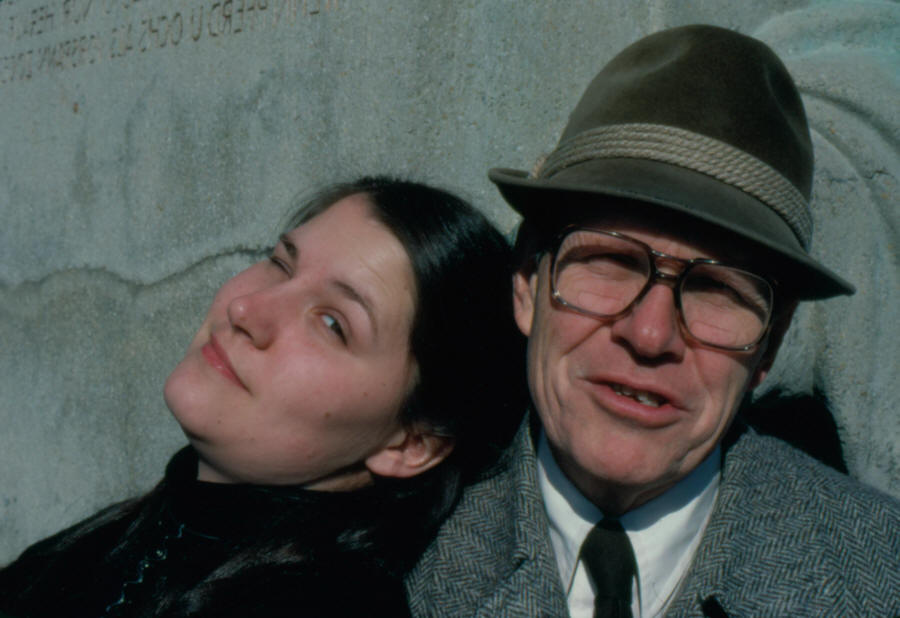 It is very hard, I know my own father is having a hard time witnessing my
decline and pain. I wish I could spare him all this, but I live at home with him
so it's tough. He is 85, has a slow moving Lymphoma himself, but is one of the
strongest people I know. For his sake, I would love to be pain free. But the
promise of freedom from cancer pain is not always fulfilled. I still have
trouble with pain management in spite of all the solutions I have been offered.
It is very hard, I know my own father is having a hard time witnessing my
decline and pain. I wish I could spare him all this, but I live at home with him
so it's tough. He is 85, has a slow moving Lymphoma himself, but is one of the
strongest people I know. For his sake, I would love to be pain free. But the
promise of freedom from cancer pain is not always fulfilled. I still have
trouble with pain management in spite of all the solutions I have been offered.
So, no there is no reason not to address the pain but like so many things about
this disease, sometimes it doesn't work to our satisfaction. I don't have a
better answer for you than this. In time, you may gain wisdom or find the
information you seek to better answer your question.
I wish you well and hope you find peace. Elizabeth
-----------------------------------------
Date: Sun, 4 Sep 2005 11:18:58 EDT
From: Elizabeth Parcells
Subject: Re: MY FIRST MATE SAILS ON AHEAD
Dear Harry,
Thank you for your post about Bella's passing, letting us share her final time
with her family and her peaceful passage. I am so sad for you at this time, you
know I will pray and think of you along with so many of your friends. Bella was
a great fighter. The extra time you had with her was a great gift of
sacrifice and love.
It is good to know that you will stay with us on the list where we can continue
to offer each other friendship and support. I wish you comfort in the
coming days.
Love, Elizabeth
-------------------------------
Date: Fri, 9 Sep 2005 17:28:13 EDT
From: Elizabeth Parcells
Subject: Re: Janet- stage IV survivor
9/9/2005 9:22:45 A.M. EST, lfitz@ writes: Are there any more stage IV out there who are still living?? Best regards Lynne
Yes Lynne, there are. Me, for instance. Still trying to make sense of it all,
seeking sense where there is none. Since the doctors spoke with me at diagnosis
in August 2003 and "explained the incurability" of my condition, it has been a
campaign for more time. That is what survivorship is all about.
I would say, 150% of life is being there. And living is about time, time to be
and interact with your loved ones, time to put things right, time to make your
stand and your peace. Cancer, even late stage, used to be a sprint, now it's a
marathon. Ever heard of "Heartbreak Hill"? It has been the despair of many
a Boston Marathon runner, and yet the champions have the heart to finish.
Survivorship with late stage illness is the true test of what you believe in,
what is important to you, and what you fear. You learn a lot about yourself at a
time like this. I dare say you learn some things about the people around you as
well! You can't let yourself get into "anyway" mode, like I am dying "anyway" so
what's the use. That is akin to despair, the end of any capacity for
happiness in life no matter what your circumstances.
It sounds trite but yet is so true: One Day At A Time.
So, yes, living and life go on with stage IV because they must. Even with
the finish line coming into view, the race is not over until you get there.
Thanks for listening to a weary runner. Love, Elizabeth
---------------------------------
Date: Fri, 9 Sep 2005 18:01:37 EDT
From: Elizabeth Parcells
Subject: Re: Buddy Bracelets Work!
Hi Fred,
Bravo! You are right. I have a few similar stories since I began handing out
bracelets. Sometimes we can save a few, and that feels really really good.
Love, Elizabeth
--------------------------------
Date: Sat, 10 Sep 2005 10:32:40 EDT
From: Elizabeth Parcells
Subject: Re: GREAT day for Canadians!
9/10/2005 9:26:34 A.M. EST, esther.hart@ writes:
Hello All! Go out and grab a Globe and Mail newspaper, turn to page A6 and read
the great news... Erbitux and Avastin are approved by Health Canada!!!
HOORAHHH!!! I have been so worried for our Canadian neighbors dealing with the
shortfall of treatment options. I am so glad to hear this great news!
Elizabeth
-------------------------------
Date: Sat, 10 Sep 2005 10:57:12 EDT
From: Elizabeth Parcells
Subject: Re: my Matt is at peace
Oh, Bari,
I add my condolences to those of your many friends and loved ones at your loss
of Matt. Your message is full of love and consolation, speaking of how he did it
his way, peacefully. After all you and he have been through, this is a blessing,
and tells of a good and just life. I hope this knowledge sustains you as
you face life on your own.
Love, Elizabeth
9/9/2005 6:07:12 P.M. EST, Blg11960@ writes:
Dear Listmates, It with my heavy and broken heart that I let all of you know
that my husband Matt passed away yesterday at 3:30 in the afternoon peacefully in
his own bed. My children and I let him know that we would be okay if he let go
and soon thereafter within minutes of me taking my son to basketball practice (5
minutes) from home he passed. I think that he did it his way and the peaceful
look on his face that appeared after he died was something that had been absent
for so long. He will be so missed but it was his turn to have his peace. He
fought so hard for 30 months with this dreadful beast for his children and
myself and now it gives me a sense of calm that the suffering his suffering is
over. I could not have ever gotten all of this without all of the kindness and
support of this amazing list serve and I thank all of you from the bottom of my
heart. Love as always, Bari wife of Matt
-------------------------------
Date: Mon, 12 Sep 2005 09:03:16 EDT
From: Elizabeth Parcells
Subject: Courage
9/10/2005 11:04:37 P.M. EST, Blg11960@ writes:
Dear Elizabeth, As I sit here teary eyed over the fact that I have to bury my
beloved Matt tomorrow I am, as always inspired and enlightened by your truly
brilliant posts. As a caregiver I could never quite feel exactly what it would
be like to be in the shoes of the patient but the courage that I see on this
list serve truly amazes me and forces me everyday to be a better person, to live
a fuller life, and to inspire others to do the same. In my religion the Torah
often repeats itself because the idea of repetition is that one kind act begets
another kind act. This list serve is an example of this, one person helping
another and on and on. You are a fine example of this and I thank you for making
my life richer. Love as always, Bari wife of Matt
Thank you for your encouragement and kind words. It is a good thing that you do
not wear the same shoes as us patients. But it is very good that you have become
empathetic and appreciative of life because of your experiences. I have often
thought about both roles, caregiver and patient, wondering if one was "harder"
than the other. I have been in both roles in my life, seen how my parents
reacted to my childhood cancer way back when, and how I reacted to theirs (Mom
had aggressive Melanoma which took her in 1995 and my Dad has a more merciful
Lymphoma that he is living with). Putting aside the pain and misery many cancer
patients have to endure, is it really easier to care for a loved one with cancer
than to be the one with cancer from a spiritual standpoint? Is the level of
courage required really that different?
I will let the question hang in the air. Because it doesn't really matter what
adversity we speak of, it is the courage itself that counts. The ability
to love, and more to the point, be loved, is the source of that courage.
The helper and the helped share a bond of love and caring that transcends the
adversity itself, making the display of courage the natural product of the bond. This is more often observed by others than by oneself. The caregiver and patient
both feel overwhelmed and inadequate in the face of this challenge, unsure at
every step if they are doing the right thing, making the right decisions. Yet
others, observing them, will hail their great courage and determination. I can
tell you, no caregiver or patient feels as confident as all that!
Courage is a necessity rather than a choice. Faced with a situation you can't
change, Life demands that you rise to the challenge. You can't change that you
got sick, but you can work on treatment and healing (even when a cure eludes
you) and live as fully as you are able. Your loved ones and caregivers can't
avoid the fact of your illness, but they can surround you with love and support
and help and quality of life. For people capable of loving and being
loved, these choices come naturally, yet are defined as proactive courage.
Courage in the face of death and loss comes naturally to loving people. But is
it harder to die or to grieve? Another question hangs in the air. The pain of
separation is unavoidable no matter how great your faith. And this is truly the
one situation no one can change. Courage is a necessity again. And as before, it
is a phenomenon more observed by others than by oneself. Both the dying
and the grieving feel overwhelmed and unsure, but their courage shines forth to
inspire those around them.
Bari, I know that your own courage is more obvious to others right now than it
is to you. Just know that your love and inner strength are carrying you through
this time of grieving and will bring you to better, brighter times. I
admire your courage.
Love, Elizabeth
-----------------------------------
Date: Sat, 24 Sep 2005 11:48:04 EDT
From: Elizabeth Parcells
Subject: Re: Radiation Pain?
Hi Beth,
Your question: does radiation cause pain or additional symptoms? Short answer,
probably not to the degree you describe, no.
I am going thru similar stuff right now. (background: stage IV dx July 2003 with
liver and pelvic mets and lymph involvement, liver nonresectable, started FOLFOX
after colon surgery, then Avastin, then Camptosar, today taking Erbitux and
Avastin combined with Camptosar, radiation to treat bone pain recently)
I have a number of mets to the spine now too,a few of which are causing pain. Recently I was given ten radiation treatments to the region of the 7th and 8th
vertebrae where the lesion had become larger and threatened to press on nerves. The pain was significantly helped, but I began to notice trouble swallowing and
irritation to the digestion. I asked the radiologist what might cause this
and he said the close proximity of the treated spine area to the esophagus could
well cause this reaction.
Other than this, the only radiation related symptoms I noticed were fatigue (I
slept a lot) and some extra nausea. I had no pain from radiation.
Other areas radiated to control pain and symptoms from bone pain were my left
shoulder rotator cuff, and the base of my skull were a lesion was pressing on an
ocular nerve causing double vision which thankfully has been resolved so I can
see normally again. Again, no pain or GI symptoms from the radiation itself. In
fact the radiation has been very effective against the bone pain I was having. (And bone pain is AWFUL.)
The other symptoms you describe could be related to the chemo (FOLFIRI is
notorious for some of the symptoms you describe like appetite loss, dehydration
and GI troubles) to new lesions or other types of things. Be sure to list these
symptoms great or small to your doctors so that they can be addressed. Spending
too much time at bed rest can also create problems like joint pain, changes in
bowel activity and digestion, and so on. There isn't much left to blame on
the radiation treatments.
I hope this helps. Elizabeth
www.elizabethparcells.com
9/21/2005 9:25:13 A.M. EST, mullins417@ writes:
Hello all, We learned in mid-August that my husband Dan has 4 spinal mets (in
addition to his multiple, inoperable liver mets). He began daily radiation Sept
6 to kill them and the 3 nearby lymph nodes that were the source of the journey
to the spine. The day after he began radiation, he started FOLFIRI (FOLFOX
wasn't working). We thought we were prepared for the inevitable diarrhea with sandostatin shots, both short acting and the long acting release. However, he
couldn't keep even a little water on his stomach and after 3 days of vomiting,
ended up in the hospital for the weekend with dehydration.
The nutrients and
prescriptions for Kytril and Reglan did wonders and everything was groovy until
a few days ago his lower back and left hip began to really hurt. Prior to the
discovery of the spinal mets, his right hip/thigh were the problem areas. They
really aren't an issue any more. He also is complaining of a full feeling in his
left side (back). Does radiation cause additional pain like this? Also, out of
the blue yesterday, he began the vomiting again. Is all of this to be expected
or do we need another MRI or CT? Sorry for the length of this, but thanks for
any replies.
Beth
------------------------------------------
Date: Sat, 24 Sep 2005 11:54:38 EDT
From: Elizabeth Parcells
Subject: Re: past, not future
9/23/2005 8:50:02 P.M. EST, rbeckler@ writes:
Today was my three year oncology followup visit and I heard words I hope and
pray everyone gets to hear.
With two clean scopes, normal CEA, no symptoms and clear CT scans, my oncologist
said, "I think I can say with confidence that this is part of your past, not
your future."
Dear Ray,
This is really wonderful. You move forward into life with joy and a new
appreciation of life's blessings. You really couldn't ask for more!
You know of course, the best way to protect your treasured good health is
continued vigilance, but that is such a small thing that you can do that with
little interruption. You are truly under a lucky star!
Love, Elizabeth
----------------------------------
Date: Sun, 25 Sep 2005 09:23:45 EDT
From: Elizabeth Parcells
Subject: Re: The Very Worst News
9/25/2005 3:28:27 A.M. EST, christineanne985@ writes:
Christine, wife of Ron, lucky enough to be married to the love of her life.
Dear Christine,
You are lucky indeed to have known and to know such love. It is rarer than we
think. I am so very sorry for your loss, I know you will miss him every moment. It is so that the price we pay for great happiness is sometimes great sadness,
just as the price we pay for life is death. The Universal Human Condition. Personally, I have found the journey most worthwhile, even with all the ups and
downs. I hope you will find that happiness and joy in your life again that
you shared with Ron.
With love and deep sympathy, Elizabeth
www.elizabethparcells.com CC IV dx 7/03
---------------------------------
Date: Tue, 27 Sep 2005 10:46:12 EDT
From: Elizabeth Parcells
Subject: Re: Ulcerative Colitis new dx Cancer
Dear Karen,
My heart goes out to you as I read of your trials and troubles. The pain is
especially demoralizing and the trouble eating and keeping weight up really
takes a lot of joy out of living. We each have our crosses to bear, and so
comparisons with other folks burdens are never right on. But we do have
common ground in all of this.
When you say, most people just plain don't understand what you go through, you
are right. How could you describe this to a healthy person with no experience of
what this is like? Even the medical personnel who are trained to take care of us
don't fully comprehend. I have an inkling of what you describe out of my
own experience, but it is still not quite the same.
Still, I think you find more understanding in a group like this one than trying
to express yourself in healthy circles.
I wish I could help or suggest something to ease your pain. No doctor am I, but
I do wonder if something more could be done. Do your doctors have any more
sweeping solutions to your dilemma?
With cancer, the treatments I sum up are cut, poison and burn. None of these
sound terribly healing or soothing, but until now, they have been our only
options. Work is ongoing to find other, less destructive treatments. But for
cancer, we often turn to the surgeon first to cut out as much disease as we can. Then chemo and radiation are utilized to help control or finish off the disease. That in a nutshell is the course.
What all goes along with that fills volumes.
With colitis, I know that is another subject. The threat of cancer forming out
of a long colitis history is real. In my case, I had no pre existing conditions
and was without any symptoms when my cancer was found. "Out of the Blue" I guess
you could say. Fair warning is not given to all of us. If you can
avoid adding cancer to your list, it is worth whatever it takes.
Take good care, and I will pray for healing blessings for you and that your life
will improve in health and wholeness.
Love, Elizabeth
---------------------------------
Date: Wed, 28 Sep 2005 19:31:34 EDT
From: Elizabeth Parcells
Subject: Re: Ulcerative Colitis new dx Cancer
9/27/2005 6:40:05 P.M. EST, skkjwalker@ writes:
Dear Elizabeth,
I wanted to tell you how much your message meant to me. I am having an
especially awful time with it over the last 3 weeks or so. I am crying as I type
- it is just plain awful right now, and your message was wonderful to read on a
day like this. I couldn't even shower today until 1:00!!
Rarely do I even talk about my disease to anyone, because first of all, they
probably wouldn't want to hear about it, and secondly, they just can't begin to
understand. So I joined this listserv even though I don't have colon cancer,
because I couldn't find a group with my complex situation. There are UC lists,
but those folks are able to live and work like I used to. They are not on a
chemo, not fighting mouthsores, hair loss, or having the complications that I
have with joints and things.
Hi Karen, well, remember, if you can't vent here, then where? Don't worry about
that. You may not have cancer in particular, but you are still in the right
place with this list. The side effects and symptoms you are dealing with
are very like what folks here are experiencing.
Balancing family, household and personal concerns in the midst of all that is
challenging, even if you were healthy. So don't be too harsh on yourself because
you can't help with "normal" things. Your family loves you and accepts you as
you are and are willing to help you always. Your children are learning important
lessons from your life and example of courage and high values. How easy it would
be for you to give up and stop caring! But you don't. You really do care for
them and worry that you are letting them down. Trust that they know that.
Main thing is, you are there for them. Alive. Life with them is better than no
life. They have their Mom and that is what they treasure. So, when you slow
down, don't feel despondent. Just go with it and try to relax in the assurance
that your priorities lie higher than a little household grime or unwashed dishes. I would rather live in a dirty house full of love than a clean one full of
coldness. Besides, there are these handy maid services for heavy cleaning, and
not as pricey as you think. Get 'em in a few times a year for the rough
stuff, does wonders.
It is so hard to let go and let others help you. You want to spoil the kids and
pamper the husband your way, and the frustration you feel is understandable. There are some things you just can't delegate.
Just keep the priorities straight and you will see that Love comes first,
expressed in sincerity, not just good cooking and a clean house.
I know your heart is in the right place, what else really matters?
Love, Elizabeth
-----------------------------------
Date: Thu, 29 Sep 2005 12:57:42 EDT
From: Elizabeth Parcells
Subject: Re: coverup for rash
9/28/2005 1:15:08 P.M. EST, jpeter2338@ writes:
Sorry to keep going back to this subject but it seems like more questions arise
after every dose of the Erbitux, as the rash changes everyday. Has anyone
used any makeup (e.g. concealer, powder) that they would recommend to cover up the
rash, or at least reduce some of the ugliness that it causes. Not to sound vain,
I just have never had to deal with acne and its difficult to look at myself, let
alone other people. Thanks for any suggestions,
Hi,
I am on Erbitux now, and got a rash on my face from it. It just feels scaly and
dry, almost like a burn. Unfortunately I am a bit of a scratcher, so I may have
made matters worse by touching it in my sleep. I put some antibiotic cream on
which helped, and also plain moisturizer. Fixed it up with a little makeup
power to dull the redness and it doesn't look too bad.
The rash has improved now after a month of Erbitux, so it doesn't look bad now. But I do have to take good care of my face, washing often and applying the
creams, keeping my hands off it and letting it rest and heal. I didn't
have any spread beyond my face, so I guess I got lucky.
Hope this helps a little, Elizabeth
--------------------------------------
Date: Sat, 8 Oct 2005 14:34:40 EDT
From: Elizabeth Parcells
Subject: New phase
Hello Kate and all friends on the list,
I just came out the hospital where I was treated for side effects and pain for
five days. I am feeling so much better than last week! On Monday I went in for
chemo, but the oncologist told me I was just too sick. So he admitted me. Good
move. I was having a lot of GI trouble, unable to keep food down and crampy. Also, general weakness, plus the very daunting pain from increasing development
of the bone lesions in my spine. I must have looked awful. The Erbitux rash had
broken out, so my face looked like a battlefield, I had thrush in my mouth, I
could not stand or sit for the pain so I'm sure I was not wearing a pleasant
expression, and the Dr. didn't like it at all. He feared I might
have an obstruction, so he took no chances.
After two years on chemo, and according to his evaluation of my current stage of
disease, he finally said the words none of us want to hear. He said that in his
view the chemo part of my treatment was now more detrimental to me than
beneficial and that we should stop now. He was gentle, reasonable and
intelligent in his explanation of this. He said, when I was ready, he
would prescribe hospice care for me so that I could stay home and not have these
very difficult pilgrimages to the hospital or any reliance on ER care.
I know he is right. It is not unexpected at all, but still it is a jolt to hear
it from him. Anytime a treatment option falls away, it is hard to accept. I have
been fighting so hard, for which he praised me, saying that a second year chemo
patient traveling to New York and singing a concert at Carnegie Hall shows
exceptional strength and determination. That's what a Diva loves to hear, well
done!
But of course, I had some tears over this revelation. I am strong but not made
of stone. My dearest friend and caregiver Ric was also very moved. It is hard to
see my beloved suffer for me. But I have determined that this is the right
thing. I am so very ready to feel better and recover my strength.
Also now, I am concentrating harder on pain management with the chemo side
effects out of the picture.
In the hospital, the pain folks came to puzzle over me and my intolerance of
morphine and all its cousins. They decided to try a Fentenyl patch, which I wore
for 12 hours, until in the middle of the night, I reacted badly yet again. I
became very drugged, heavy chest, seeing shooting stars, and becoming verbally
incoherent. Brain befuddled, and nauseous, throwing up several times, I was
miserable again. They removed the patch, but it took another 14 hours for it to
wear off. My Dad came to visit me in the morning and I still couldn't
express myself, which upset him and me too! So that is it! No more of that stuff
either.
I kept asking for the radiation to my spine I had been promised to control the
pain. So in this case, the procedure was planned and carried out while I was
inpatient. Called "radio surgery", usually used on the brain, the doctor in that
department explained to me that he had pioneered the use of this particular
machine and software to treat spines. Thursday I was on the table for the
non-invasive session with radiation right to where it smarts. I am waiting
for the effect to kick in, and can hardly wait to get the hoped for relief.
Meantime I am managing with tylenol and altram. So far so good. Pain or no, I
don't want my pain meds to make me a drooling idiot. I found my loss of mental
faculties very upsetting, and kept weeping with frustration during the whole
patch experience. My plan is to get better now, not worse.
Today I feel so much better already, I am feeling good about this new phase. I
see it as the logical next step in my care for myself, in reducing pressure on
me, and thereby defusing the stress my family and friends feel for me. I am in
great spirits and accepting of the situation. It is important to me that the
people around me feel relaxed and comfortable with me and don't see any anguish
or distress in me over things that are what they are. Sure I worry about
what lies ahead for me, fearing the complication from disease that can happen,
but I take back my power as I plan for eventualities as best I can.
I know many of you are focused on continuing treatments and clinical trials,
fighting the beast every step of the way. I admire all my cancer comrades, all
the activists working politically and in the health system for change, research
and the ultimate cure. The battle can never end if we ever expect to vanquish
this horrible disease. I feel I have done my part too, surviving the first
cancer when I was but a toddler, and starting out my treatment this time with a
clinical trial in the interest of future generations. Each of us has
something to contribute to the effort.
Let me not speak of myself in the past tense. I am very much here and intend to
stay awhile. I am enjoying life in spite of all, and life is for living. I am so
thankful for the blessings of love and family, loyalty and devotion, faith and
hope in my life. I can truly say, I am content.
The posts to this list are important to me and I follow then like a fan of this
great group. I will write more often now that I am feeling so much better.
I love you guys.
Elizabeth
----------------------------------
Date: Sat, 8 Oct 2005 23:10:28 EDT
From: Elizabeth Parcells
Subject: Re: New phase
10/8/2005 2:51:25 P.M. EST, akingston@ writes:
You have the most eloquent postings. I have tears in my eyes as I cannot imagine
facing what you have faced so far. But I suppose in some ways these tears are
for me also. You are where I fear I will get to. When they say, well
buckle up cause the ride is coming to its end.
I hope this is not too crude of a way of expressing myself. But I have been
dealing with very difficult side effects from the very invasive HIIP abdominal
surgery and find myself daily wishing for feeling good. Remember when you used
to take that for granted? That is something you and I will never do again. These
days when you feel good enough to think and feel outside of your realm of pain
and misery, it is a marvelous day! Does that make sense?
Anyway, thanks so much for continuing to share your journey. May you have
many days of feeling good and aware and independent.
Many blessings to you, Allison
Thanks Allison,
It feels even better to know you understand what I am saying. I am slowly making
the new phase clear to my family, especially my Dad who keeps things inside
where they tear him apart. So I am "rehearsing" how I sell the package to them. You and I can understand the need to feel better, on the old "feels so good when
it stops" theory. But some people might think this is "giving up." When every
fiber in our being cries out, SURVIVE at all costs! After all, survival is one of
our very strongest instincts. It goes against our every instinct ever to
give up.
So I don't give up. Not at all. I am here, I will stay here. This is a new
phase, not goodbye. Thanks for your good wishes and understanding.
Love, Elizabeth
----------------------------------
Date: Sun, 9 Oct 2005 07:10:47 EDT
From: Elizabeth Parcells
Subject: Re: New phase
Hi again, Sherri, Rebecca, Erica, Nancy, Deborah, Cynthia, Allison, et al,
I had a hard time writing this string because I know the spirit and courage in
this group depends heavily on optimism and hope. And yet your responses to me
have been no less than I expected of you, so understanding. sympathetic, and
above all lovingly supportive. For that I am thankful to you all. Let's talk
future tense, because I think we are getting to the good part. Stay tuned.
Not wanting to depress anyone, but still as truthful as ever, I had to let you
all know what is up with me because the purpose of this list is communication on
all aspects of colon cancer. It helps me tremendously to be able to express
myself here so freely and receive such wonderful, useful feedback from people
who are on the same path. No one likes to bring bad news, so the best thing to
do is concentrate on the good part. All of us in the Stage IV Club keep
the optimism and hope on top of our survival kits.
My hope is that I can recover strength and well-being now, live better and
longer without the awful strain of Chemo treatments. I am very sensitive to meds
of all kinds, reacting badly even to the meds that are supposed to help the side
effects. I persisted all this time because life is the whole point. Right now my
feel-good program includes Protonix, Dedadron, Altram and Tylenol. Nothing
burdensome there. Pain is subsiding in my bones, appetite is good, spirits high.
This to me is excellent news.
How about the future? Ah, well, who can know! Lots of things could happen, if I
take the time and energy to worry about it. I'll stick to the classic "one day
at a time" pattern and seize the day. I'll keep writing, try 'n stop me, and in
touch with this fine list and the friends I've made. Have you noticed, I
am feeling quite wonderful just now.
Love, Elizabeth
---------------------------------
Date: Sun, 9 Oct 2005 14:45:03 EDT
From: Elizabeth Parcells
Subject: Re: New phase
10/9/2005 2:00:12 P.M. EST, jaybyrd1@ writes:
" I can truly say, I am content."
I guess that these seven words sum it all up.
The hard core, never give up caregiver part of me (yes, he's still there) is
tempted to say please reconsider before you throw in the treatment towel ...
but, the fact of the matter is that I've never had to go through the horrendous
systemic chemo that you've been through, so I guess that I'd be talking out of
church somewhat.
You owe to yourself to do what you think is best and to enjoy the best quality
of life that is available to you.
It's interesting, to some a good quality of life means battling phase one
clinical trial side effects to keep a glimmer of curative hope alive ...
to trail blaze for the others that will be diagnosed this time next year ... and
for others it means beginning a new type of hope, as is what you seem to be
describing.
Good luck to you as you enter this new phase of your life. You seem very at
peace with your decision and with yourself ... which is a lot more than I can
say for myself! :-)
Carl
Hi Carl,
I hear you loud and clear. Hope for the future is based on the progress of today
in treatment and prolonged survival. I have taken advantage of this progress,
always receiving the best of care and the newest in treatment options. I began
my treatment by joining a clinical trial for the very reason you describe, to
contribute something to that progress. I went to Chicago for the TheraSphere
treatment under the compassionate use clause to help Dr. Salem with his campaign
to get this device FDA approved for secondary liver cancers. This treatment can
be used palliatively to prolong life. I believe it has done that for me. I may
well have gained a significant number of months from it, where my liver function
is good and the worst of the liver lesions slowed or stopped.
My first line chemo was FOLFOX, which halted progression for over a year. Not
bad. I did Avastin and Erbitux too. Radiation has helped keep the bone mets at
bay. So I have never been reluctant about treatments, even with all the nasty
side effects I've had to endure. And I have studied the specific treatments and
new developments avidly, always searching for that prolonged survival factor.
I also have that same never-give-up spirit that you do.
Although my doctor and I are ruling out chemo now, he is still my doctor, on the
case for as long as I'm here. I am glad of that, because we have a good rapport
and he knows me well by now. I wouldn't look forward to "breaking in" someone
else. The way he explained it to me, he said I had reached a point in my
endurance and tolerance of the chemo where the risks outweighed the benefits. Chemo is toxic and causes serious problems of its own.
These problems were manifesting themselves more and more dangerously in me and
he worried that he was doing me more harm than good by treating me so
aggressively.
The minute he said that, I knew he had made the point, as it hit my brain and
spirit in the right place. Spontaneously and without much hesitation, I
acknowledged his opinion and agreed with him. Funny, I didn't figure I
would be so willing to accept that scenario at first, but truth is, when you get
to that place with perfect honesty, you will know.
This is a process. You can't know just how you will feel about a
situation/decision point until you get there. If you are still in
fight-like-Hell mode, throwing in the proverbial towel would be simply
unthinkable, and was for me all this time. And really, I don't feel I am
throwing in anything I can't well live without now. I read the statistics on how
much and how long these treatments can benefit patients, and it's limited. I
knew that going in. To take chemo while disease continues to progress as in my
case is futile. Much better to turn to other options than to waste your
life on something that is clearly not working for you.
So it's time to bulk up for the next part of the campaign. Acceptance of this
decision helps me move forward promptly to other positive steps I can take on my
own behalf. What's done is done, rethink, plan and act. My style,
works for me.
So Carl, I really can say it, without agonizing over what is decided, I am
content. I will stay right here combing for other options, being supported,
supporting and interacting, and fighting my illness with everything I've got.
Thanks for your message and concern, you keep me thinking.
Love, Elizabeth
-----------------------------------
Date: Mon, 10 Oct 2005 00:43:57 EDT
From: Elizabeth Parcells
Subject: Re: New phase
Hi Gene-Paul,
I always enjoy your unique perspective and way with words. I have been aware of
the HPV vaccine development for some time before it hit CNN evening news. Breakthroughs in research are rolling in all the time. I have often teased the
chemo nurses that chemo will soon be obsolete and they will all have to look for
new jobs. They grin and say, "Gladly!" It can't be easy on them poisoning people
day in and day out for the good cause. Cancer is so tough on everyone.
The doctors and nurses who specialize in it are all incredible in their
dedication.
I dream of the time when cancer is chronic not fatal, or cured all together. The
possibility that something new will come along that could help me is still in my
mind. Where there is Life there is Hope. And I feel terribly alive and very
hopeful. You have experienced this, having survived far beyond what was expected
in your case, your hope is real and justified. How tremendous to achieve
survival against all the conventional wisdom!
And say, you may remember, I had a neuroblastoma when I was two years old. It
was inoperable and I was given but a few more months to live. There was no such
thing as chemo in 1953, so an experimental treatment was tried, cobalt radiation
to the tumor. Then watch and wait. After 8 years, I had exploratory surgery
again and the shrunken tumor was found to be benign and could be removed. A
miracle? A "deus ex machina" at the last moment to save the day? God had a
plan for me and spared my life? I have had over 50 years of survival to ponder
this.
So I am a very old cancer soldier, not easily ruffled by questions of mortality. I have lived my life dancing, singing, becoming an artist, cultivating my soul
and knowing my savior. That is why I so admire other survivors. We differ from
"regular" folks because we are so keenly reminded that our lives here are
temporary. But think of the opportunity for growth and development of the spirit
that comes with this enlightenment. Your priorities are snapped into
balanced perspective, you think on what's really important.
Geee I'm talkative today. I am feeling so good, I'm like a geyser! Excuse me for
dominating the board this way. I just seem to have a lot to say all of a sudden. So thank you for listening.
Keep surviving and seeking the cure.
Love, Elizabeth
10/9/2005 11:29:45 P.M. EST, gsalls@ writes:
Elizabeth: I think you have reached the path of which we must travel. Some will
have flats , some with engine problems and some that run out of gasoline.
In each of the above we fail to follow a normal day , in some cases revolt.
I cannot come close in telling you the right path as we are all very
different. The advances being made right now in cervical cancer is a reaction to
a wish, and very hard work If they were to ask me to try the new vaccine would
be pleased to try. When they said I was terminal some years ago I told myself ."
Do anything , go any place ., try anything , and I have done that "
I went through 7 years following a Colon cancer and at that moment an additional
cancer, mantle cell. I knew then as I know now that I'm not finished , as
they will find more and I will do whatever necessary to try to have a life.
Think that the vaccine is necessary. To know that to this very day they
are hunting down these killers.
I wish I could be the person to press the triggers to start a new vaccine probe
and would go any place to get that job done
As you can see I am in a fighting mode and hope that I can continue., mentally ,
for that is key element that will allow some of us to continue . My Doc. will
tell what is going on as I will be going to the clinic again early Dec.and this
time only blood draw . No Cat now nor anything else .
I hit upon the key element to our living with cancer and that is the ability to
keep our minds in good condition.
It's time to hit the silk...........Gene-Paul.
..Dancing on a dime..
----------------------------------
Date: Wed, 12 Oct 2005 14:49:50 EDT
From: Elizabeth Parcells
Subject: Re: Overwhelmed
10/12/2005 11:19:33 A.M. EST, Lois@ writes:
Thank you Chris for you kind and wise words. I am going to check out a support
group tomorrow that meets near my work. Funny, George and I met at a support
group for parents having problems with their teenagers. I told George
about this list on Monday night and this morning he asked me to show him how to
get on this list to take a look.
Lois Anne
Hi Lois Anne,
You have gotten such great response to your overwhelmed thread, but I thought I
would just chime in a little. Very good news that George is curious about this
list. It is a great way for him to keep his privacy and still deal with his
issues with this wonderful group to help. I know it has helped me tremendously,
in many ways, better than a regular support group. This way I can write about
what I feel day or night, reach the group at any time, read the other posts when
I am able and never even leave my chair or bed. It is the greatest.
I am a stage IV, pretty sick right now after a two year struggle so far. The
sheer convenience of communication on the Internet is invaluable to me, because
I really can't show up for a meeting in person. I hope George will read what has
been written here already by cruising the archive. He will find plenty of
good and useful stuff.
If he is willing to look, I think you are on a good path to where you would like
him and you to go on the communication and denial issues that have had you so
concerned.
Good wishes, Elizabeth
----------------------------------------
Date: Fri, 14 Oct 2005 00:17:44 EDT
From: Elizabeth Parcells
Subject: Re: New phase
Hi Karen,
Thanks for your thoughts. I hope you are feeling better as you say.
Sorry to hear you have been ill.
Update on me, home from the hospital, I have been on strict TLC and rest now,
and am actually enjoying life more. I have plenty to smile about, being
comfortable and fed, rested and with my symptoms subsiding, things sure are
looking up. I have been on an Internet shopping spree, ordered some flannel
pajamas from Victoria's Secret, cute as heck, polishing my nails and putting my
jewelry back on. I pamper my poor face, oil my feet, write letters, and lounge
enthroned in my large comfortable bed. Spoiled rotten and waited on hand and
foot. Friends come to visit and are happy to see me so content and
relaxed.
The radiation a week ago hasn't had enough time to really work, but I am moving
better now. I do have nursing care here a few times a week, so at least I get up
and washed regularly. That feels good too. I am very tired physically, but alert
mentally. Life is fine.
The whole hospice thing, I just look at it as home care covered by my insurance,
much cheaper than a private nurse. I do need attention at home and this is the
way to get it. I am not going to wait for this advantage until I am too sick to
care. Let them come and take care of me, why not? I hate the ER and want to stay
at home. So this week or next I will sign up for it.
I view this also as something I can change if some treatment for me comes along.
I remain flexible in my thinking and continue to search for solutions.
I do like to write, as you see, and will keep doing that. I don't want you to
worry about me, things are really quite okay. I feel I have adjusted to
this and still have a clear mind for the future and for hope.
So Karen, please take good care and feel good and strong. That is the way
to beat the beast.
Love, Elizabeth
10/13/2005 11:11:16 P.M. EST, skkjwalker@ writes:
Dearest Elizabeth,
I have been thinking a great deal about you, and wanted to write to you earlier
after reading your spectacular post, but unfortunately I have been too ill to do
so.
Your post was so beautifully written - even when having to now speak the very
difficult phase you are entering. I admire your grace and dignity in the way you
are choosing to spend your time. It is certainly far better to find a way to
enjoy your loved ones and spend meaningful time with them rather than end up
miserable with the medication side effects. Still, it is just so
unsettling that they really have no alternatives to relieve your pain.
I have been praying for you, for relief at least with the help of the radiation
you just had, and for the strength you need to continue to fully embrace your
life in the way you want to. It would be unsettling, I am sure, to now
have to consider hospice at some point - but perhaps they may have some
techniques that would leave you feeling better able to function with a clear
mind.
What a journey you have experienced - and yes - absolutely with great effort and
fighting this wretched beast as you have. I find myself wondering if you have
been keeping a journal or if you have written a book. Your messages are so
clear and inspiring - you clearly could be a writer.
It is so good to hear of your feelings of contentment, and the relief you have
from being set free from the chemotherapy. I will continue to pray that
your coming months will remain such that you can be very comfortable.
Take care - I am sorry this message is written so awkwardly. I greatly
enjoy you here on the list, and so wish there was a cure in your future!
Consider yourself hugged....
Love to you, and many prayers,
Karen Walker
--------------------------------------
Date: Fri, 14 Oct 2005 13:28:18 EDT
From: Elizabeth Parcells
Subject: Re: A little less overwhelmed
Hi Lois,
So glad to hear you are adjusting well. As a patient, I can tell you a few
things to do to help George cope with his condition as it is now.
Concentrate on his diet and good, appropriate food. His appetite and tastes will
get specific to certain foods and sometimes things he liked before won't be on
his menu anymore. Be sure to ask him what foods he is wanting currently and be
careful with portions. Taking care of the food for him is a relief to him.
He does need rest, so he'll need reminders to take extra time for it. If he
feels that he can kick back and not have too many chores or responsibilities in
the household, he will rest more. I had a hard time adjusting to that part,
accepting help and reducing my activities. It takes a little time and
experience.
I get a lot of help from my sister who I have designated as my patient advocate. She handles the insurance company, helps with appointments and comes with me to
hear what the doctor has to say when test results are in. She does not get
involved in my decision making, which I insist is my area, but she is always
ready to listen to me, and she will offer her view if I ask her for it.
Just getting the insurance work and reimbursements managed is a huge load off of
me.
My dear, dear friend, Ric, who never leaves my side, he is my main caregiver. From him I have companionship and the comfort of a presence through the
sometimes restless nights. He is very calming and accepting of me, brings me
whatever I need, and is my best friend. He is always willing to listen to me
when I need to talk. God is good that I have him.
So I am saying, there are many things you can do to lighten the load for your
patient, by taking on certain annoying responsibilities and keeping things well
organized and convenient to save the patient's precious energy. This
ensures a better overall quality of life for him, and you by the way.
Hope you find these ideas helpful.
Love, Elizabeth
-----------------------------------------
Date: Sat, 15 Oct 2005 05:31:49 EDT
From: Elizabeth Parcells
Subject: Re: New phase
10/14/2005 6:22:03 P.M. EST, suewarner16@ writes:
Elizabeth,
When we moved to hospice care with Mom, the enrolling nurse told me that Mom
could "graduate" from hospice care. So, I like to think that you
can too.
I think it provided Mom some comfort knowing that she could move out of hospice
care.
Be well, Susan
Hi Susan,
You are correct, I do have options. Right now I am needing care at home and
someone to call on nights and weekends to avoid ER. However, if I rally, and if
there are treatment options available, I can leave hospice if I choose. That is
what we always have to remember. Options are always ours. I still feel very much
in control of things. Thanks for the reminder.
Love, Elizabeth
-----------------------------------
Date: Sat, 15 Oct 2005 06:03:13 EDT
From: Elizabeth Parcells
Subject: Re: Stage IV
10/14/2005 10:40:56 P.M. EST, Franrauba@ writes:
Hi Meri:
I am only replying to one part of your message. Your Dad is young and has
treatment options that I am sure Kate will respond to.
I was dx'd in 98 at the age of 58 with stage III and underwent chemo and
radiation. Met to the lung 4 years later with surgery and chemo.
I guess what I am perplexed about is why has your Dad has not been told about
his diagnosis and future treatment. He is the person who has this disease and
entitled to know what is happening to his body and to make decisions about it. You or any other family members do not have the right to make decisions for him
unless he is incapacitated. You might think you are protecting him but you
are denying him the right to know what is happening to his body and what could
be done for the outcome and what he is willing to do to fight the disease.
Sorry to be so harsh, but if it were me I would be mad as hell if my family kept
this from me. I would also be mad as hell if the surgeon or Onc would not
consult with me first before they told the family. This disease is beatable and
many of us on this list have gone on to be survivors because we are
knowledgeable about what treatments are now available and what might be on the
horizon. I hope you will continue to be part of our list and your Dad also. Fran
Hi Fran, Hi Meri,
I remember a thread we had awhile back on "What to tell the patient" where we
discussed this very issue. I am a fifty something, mature, unmarried woman, so
when the doctor had to tell me my bad news, there was no one else but me to
tell. I am glad I was told directly, in private, one on one. I wanted to tell my
family in my own way, not have them telling me. My health is my
responsibility.
Where do these doctors get off talking to the family INSTEAD of the patient
anyway? Seems bizarre to me. The harsh news is hard to put nicely and we all
complain that the doctor was cold or unfeeling in the telling. But these days
where patients are encouraged to take the lead, make informed decisions for
themselves, it is simply not appropriate to keep a responsible adult in the
dark. You can't go into this voting booth for someone else.
The first option I was offered was to take treatment, or not to take treatment. Then, having decided to take treatment, what treatment. Decision points arose
again and again. Always, I was in the drivers seat, no one else, and
personally I would have it no other way.
So what do we tell the patient? Everything. Especially how much we love
and support them.
Love, Elizabeth
---------------------------------------
Date: Mon, 17 Oct 2005 15:56:57 EDT
From: Elizabeth Parcells
Subject: Re: tips for the shortened colon
10/17/2005 1:05:00 P.M. EST, gail.imig@ writes:
I am watching this discussion very carefully and wondering if anyone else has
problems with constipation. I am stage 3cc, 8 months after colon surgery and 3
months after chemo. I eat a high fiber diet with lots of fruit and veggies but
things just don't come often or easily. Thanks Gail
Hi Gail,
I had chemo long term and my diet changed quite a bit. The constipation problems
I had were related to the pain morphine I tried. The chemo made it very hard for
me to eat any fresh or raw fruits or vegis. The insoluble fibres are not
digestible and can cause hard stools that are especially difficult to pass thru
a colostomy. Certain vegetables and legumes cause painful gas too and ought to
be avoided. Broccoli and beans especially.
The nutrition person told me at the start to forget all the good things I
learned about healthy diet before and eat the things I can tolerate instead. Gone the bowls of pitted fresh cherries, the teeming salads, the sauteed
vegetable pans, the raw juices, and bean pots. I found high protein to be my
friend and the right carbs. Lots of Ensure to make sure, and remembering
which foods had helped or hindered.
We each have our own stomachs, but you might try adjusting your thinking on the
healthy fruits and vegetables and see if less of them in your diet help you with
you digestion.
Love, Elizabeth
------------------------------------
Date: Mon, 17 Oct 2005 17:08:39 EDT
From: Elizabeth Parcells
Subject: Re: Trouble swallowing
10/17/2005 4:42:38 P.M. EST, fz34@ writes:
Charlotte, My husband, Bill has had trouble swallowing, and complains of
hoarsness and a sore throat ever since he started Avastin. He said that he feels
raw all the way down when he swallows. They sent him to an ENT last week, who
found nothing wrong. His voice changes to very squeaky if he talks too much and
when he first gets up in the morning.
The ENT man said for him to try to speak
with a lower voice so that he would utilize the center of his larynix instead of
the sides. This is all he told him. No other advice was given. Francie, wife of
Bill dxed 2001, stage IV colon cancer.
Hi Charlotte,
I'm a singer who they put on Avastin for awhile and I too noticed a lot of
hoarseness from it. Really bothered me to have my voice of all things affected
that way. But as you say, there was nothing they could do or tell me to resolve
it. So I reached for my old singer standbys like warm tea with honey,
light salt gargles, a little steam, chicken soup, and vocal rest.
Sometimes the doctors don't have any better answers than something soothing you
can make on your own stove at home.
Love, Elizabeth
----------------------------------
Date: Tue, 18 Oct 2005 04:26:44 EDT
From: Elizabeth Parcells
Subject: Re: We take one day at a time - Michelle's update
10/17/2005 9:48:13 P.M. EST, gleann@ writes:
I know my next email will be very difficult but I have gained knowledge and
strength from reading others on the list. At this time peace is what she
needs.
Regards
AnnMarie - mother of Michelle dx 12/03 cciv (age 22 now)
Hello AnnMarie
I am so glad that this list has been able to help you so much, I know it has
been helping me too. Your beautiful daughter Michelle sounds like someone I wish
I could meet. Your loving description of her character, personality, care for
others and her real approach to life and destiny as such a young person truly
inspire me. What a wonder mother you are!
I am praying for you and your family in these days and wish you great strength,
comfort and love.
Love, Elizabeth
------------------------------------
Date: Tue, 18 Oct 2005 05:02:09 EDT
From: Elizabeth Parcells
Subject: Supportive Care talk
Hello everyone,
Today I have a feeling of real accomplishment. I officially entered the hospice
program of my health system for the supportive care they can provide for me and
my family. I learned a few new and important things about this area that
may help some of us make this decision.
First, according to the hospice social worker who came to my house for our first
interview, the requirements have changed for joining. The prognosis is no longer
limited to six months for "terminal" patients before the insurance can pay. It
is now generally recognized that this amounts to "playing God." Hospice cares
for many chronic conditions as well. I was told that these days, they have
patients much longer term than in the past. So, with this time-constraint out of
the way, there is no reason to wait after treatment to take advantage of this
wonderful service. No more gloomy prognosis talk. I consider this a
sea change in attitude on the part of the system.
For me, the new convenience of this service is going to be great. A nurse will
visit me at least once a week, check me out, check my meds and make sure all my
prescriptions are up to date and refilled and even picked up from the pharmacy
and brought to me. She will be in touch directly with my doctor on this and I
need not be bothered with it anymore. My medical supplies, including my ostomy
supplies will be delivered to me thru hospice now too, all covered by the
insurance thru hospice.
Most of my care will be at home. But if for some reason I do need to go to
hospital, hospice will ambulance me to there and I will be admitted directly to
one of their rooms without going thru ER. Ah, that's really nice to know. I can
be at the hospital and the hospice team there will care for me. NO more ER!
The 24 hour hotline is foremost in my mind and a service I have not had
adequately until now. We all know how hard it is to get help on nights and
weekends without resorting to ER. Being able to call a nurse anytime is an
improvement over what I have had to endure. This is also a great comfort to my
family and helps with their peace of mind as well as my own. Annoying
about ER is that often, the issue could have been dealt with at home without all
that circus.
So, even though I can't escape the notion that my treatment options have been
limited, I feel I have taken back control of my care. I have taken steps to do
things my way, without overly relying on my family and dear friend. Quality time
with them is more important to me. I know my decision will help unburden them. Oh, and I do plan to be here for a good long time to come, not to worry.
I am feeling well.
It was an interesting day. I will keep you up on this experience and hope
it helps some of us take good and positive steps on this journey.
Love, Elizabeth
www.elizabethparcells.com if you like good music
------------------------------------
Date: Tue, 18 Oct 2005 05:20:31 EDT
From: Elizabeth Parcells
Subject: Re: Supportive Care talk
Elizabeth again,
PS to this, I forgot to mention that my decision to enter hospice today is by no
means a permanent one. If any kind of aggressive or effective treatment becomes
available that hospice does not cover, I am free to exit hospice and be a
"regular" patient again. Any treatment I need for pain or symptoms is always
available. So I can still have it all.
This is important to us all, to keep hoping and working toward abundance of
life. Hospice is by no means a no. I'm saying YES to life.
Love, Elizabeth
-----------------------------------
Date: Tue, 18 Oct 2005 12:31:14 EDT
From: Elizabeth Parcells
Subject: Re: Reversal Tomorrow!!!! OOPS!
Harry, so good to hear from you again, sounding so upbeat and busy! Best of luck
with your reversal and getting back yet another level of healing and normal into
your life. The boat sounds dreamy and fun, and you amaze me with your recovery
and getting back into life full swing. I am a big fan of yours.
Love, Elizabeth
-------------------------------
Date: Fri, 21 Oct 2005 11:47:52 EDT
From: Elizabeth Parcells
Subject: Re: Sleepless in Seattle
10/21/2005 7:38:59 A.M. EST, lois@ writes:
The duality of my thoughts is maddening: I will have a thought, feel guilty for
having that thought, be angry for feeling guilty for having that thought.
Yes this is about him and it is about me and about us.
Thanks for letting me vent, it helps a lot to be able to get this out.
Lois Anne, wife of George CC IV, diag 7/12/05
Hi Lois Anne,
You are welcome to vent here, as are we all, one of the main benefits of this
list. Feelings need expression, and this list can act as a valuable buffer so
that you dump it here instead of on your loved ones. I am glad that you are in a
good live support group too, which means you are taking action to deal with your
very real issues. It would be no good for you to bottle it all up.
Negative emotions go with the territory in a situation like this. Anger we
accept as a normal reaction to disaster and unwelcome, unexpected change, when
despite our plans, life proves unpredictable and fragile. The downside of anger
is the regret, remorse and guilt it often leaves behind. A sense of
helplessness, loss of control over one's life, feeling the ground drop out from
under your feet, man oh man! Lots of us here know just what that is.
I am in George's camp, the patient around whom everything is revolving now. I
have my own set of hopes, fears, emotions positive and negative, which I can
more or often less share with those around me. I try really hard not to dump
negatives on them. I want calm, smiling faces around me, peace in the house for
my well being. I can understand a patient not wanting to start awkward emotional
scenes with his caregivers to avoid that extra stress. It may appear that
the patient is closed up, or unwilling to express himself, which is frustrating
when his spouse needs that special communication from him that was always there
before.
Where then does the caregiver go with her/his complex feelings and needs? Here
to this list for instance, or to a counselor, support group, best friend are
good things. Keeping a written journal might help you too. One burden of
care giving is indeed providing for the patient while setting aside one's own
needs. As the patient, I am very aware of this and so appreciative of the
selfless care I have received. I know what pain my loved ones are suffering over
my illness and in anticipation of the outcome. Everyone involved has had
huge adjustments to make, emotionally and circumstantially.
One thing about strong emotions is that they are like storms, violent at first,
but which weaken again with time and adjustment. Like the pain I sometimes feel,
somehow it abates again, no matter how I think, oh no, this pain is here to
stay. Anger will cool. The trick is not to do or say things in anger that will
leave that guilt behind. It is that "Send" button we all have that we
should only hit when the message is acceptable.
I've been sleepless lots, trust me. Sometimes the meds just won't let me sleep. My mind is going all the time, working out all the complex emotions and coping I
need to set correct priorities and keep my energy for what matters. It is best
to sleep on these things, to restore balance. Sleep, a great healer in the
coolness and calmness of the night.
Thanks for listening to me also. Love, Elizabeth
----------------------------------------
Date: Sat, 22 Oct 2005 08:49:22 EDT
From: Elizabeth Parcells
Subject: Re: CAT scan results
10/21/2005 8:48:27 P.M. EST, lois.konrad@ writes:
Any thoughts? Does this drug switch sound normal? Is anyone currently on these
drugs or have been in the past and can tell me what it is like? Is it usual to
have the cancer grow like this?
I am worried and scared that a bad situation has become worse, should I be?
Lois Anne, wife of George IV CC, diag 7/12/05
Hi Lois Anne,
I began chemo on the folfox regimine which is still considered first line and is
often assigned to cases like mine or George. I was advised at the time that any
chemo they try will be monitored for effectiveness for at least two months. I
was also made aware that the chemo agents work differently on different
patients, and on some patients, not at all. A baseline work up including a CT
scan is done and then compared to the ones after a time on treatment. The hope
is for the tumors to get smaller of course. The best I got was that they didn't
grow. So we did continue with the folfox as long as it was "helping."
There came a point it was time to stop the Oxaliplatin part, and so Avastin was
added instead. Later, when this one didn't appear to help, and I was
experiencing more and more side effects, we moved over to Erbitux.
So yes, it is common to move from one of these agents to the other according to
the diagnostics and judgment of the oncologist. They will do their best to find
the optimal group of chemos and drugs for the individual patient. There is some
trial and error involved so we patients have to try, wait and test. It is
our best chance to find the right things.
It sounds like your doctors are following the good procedures and most accepted,
proven ways to help George.
Love, Elizabeth
-------------------------------------
Date: Sun, 23 Oct 2005 16:13:24 EDT
From: Elizabeth Parcells
Subject: Re: Bone mets
10/23/2005 1:14:21 P.M. EST, jarmarec@ writes:
Do bone mets hurt all the time? I've had a few pains in my lungs (lung mets as
well) and had a bone scan but do not have the results yet. The pain comes on
fairly quickly and then subsides within 24 hours. I thought bone mets
would hurt all the time and be continual in pain.
Thanks
Rebecca
Hi Rebecca,
My own experience with the bone pain is that it can come and go. I have some
bone mets that don't hurt at all located on my skull. The ones that hurt more
are within moving joints or near the spine or if they are pressing on nerves.
I have had several treated with radiation to help with pain which worked well
for me.
I do have one at the spine that hurts when I have to be up on my feet, but does
not hurt me when I am lying down. So, no they don't hurt all the time.
Hope this helps. Elizabeth
------------------------------------------
Date: Thu, 27 Oct 2005 02:47:42 EDT
From: Elizabeth Parcells
Subject: Re: The next incline on the cancer rollercoaster
10/26/2005 8:53:51 P.M. EST, Rslindley@ writes:
That was a great article and overall I was impressed with the outcomes of the
trial. However, I also wanted to point out that these are just the responses
noted from the trial. I had both lung and spinal mets at the time of my
Sir-Spheres procedure and excellent response. I hope I'm not speaking out of
turn, but I believe that Elizabeth (who had Theraspheres) also showed good
response in spite of extrahepatic mets.
Just goes to show that everyone is different. Suzanne
Yes, Suzanne, I had the therasphere version which is just the same, and I am
still benefiting. I have mets outside the liver, but the main thing is, my liver
function is good since the treatment. One less problem is always worth the
effort.
Elizabeth
-------------------------------------
Date: Fri, 28 Oct 2005 10:48:53 EDT
From: Elizabeth Parcells
Subject: Re: When is "tumor humor" appropriate?
10/27/2005 10:19:51 P.M. EST, ELSpeaks2@ writes:
Just because cancer enters our lives does not mean joy has to exit!
Amen Eddie,
Humor is a vital tool in our survival kit. It is not the cancer that is funny,
and SNL is a cabaret, old friend, with a big old legal department to handle
complaints. So if they have stepped on toes, oh well.
What we need to do is keep humor in our hearts that overcomes our negative
feelings about what is happening to us. We can still laugh over our human
foibles and weaknesses, gathering courage by recognizing that we are not
perfect, but can rise above adversity with a defiant laugh.
I did quite a lot of humor as a performer over the years and learned what the
heart of humor can be. To laugh with and not at, for instance. Humor is meant to
be shared, not used to injure. On stage, sometimes people would giggle nervously
at the serious scene, but far worse was when you tried to land a joke and no one
laughed. Ouch.
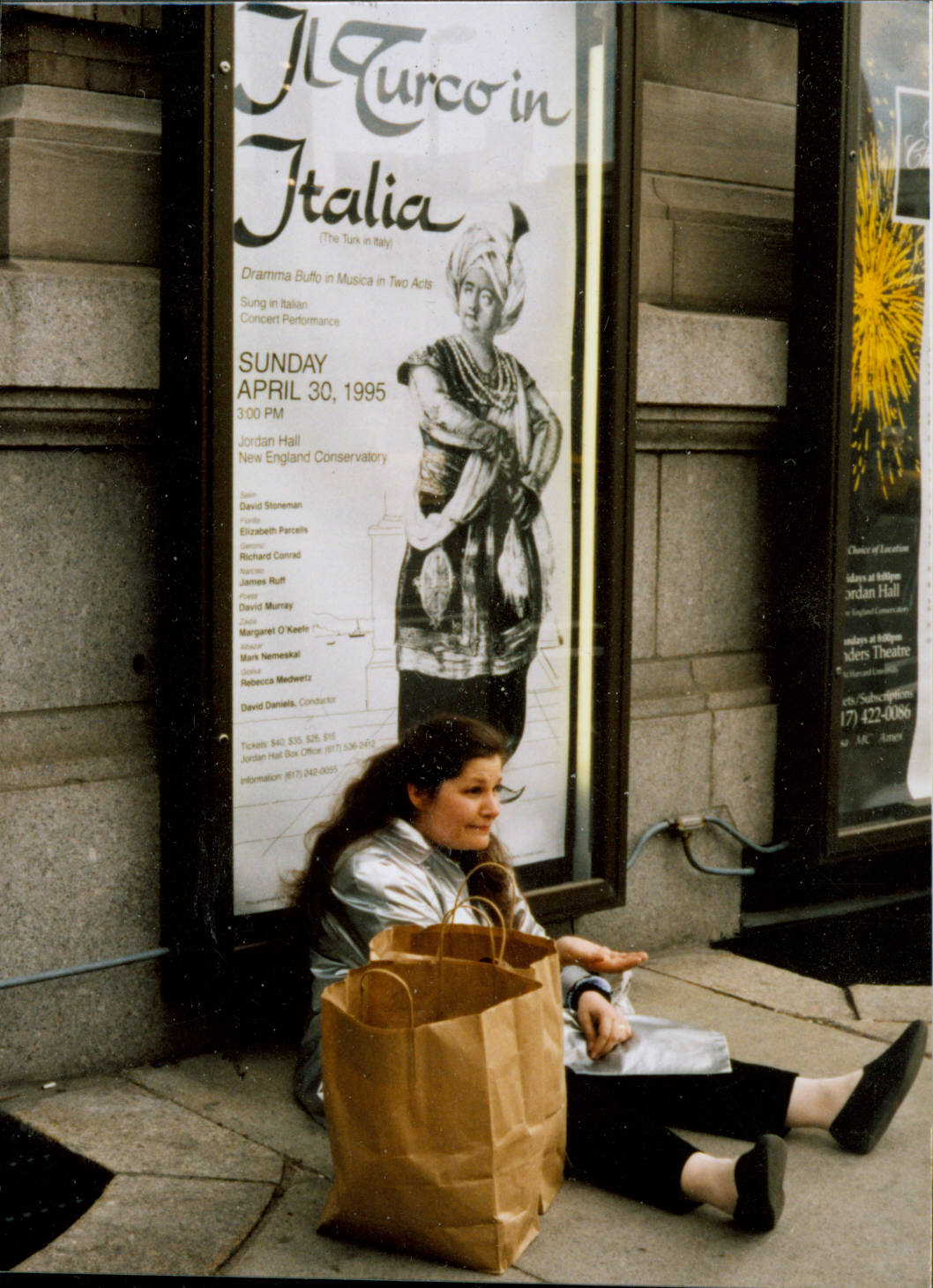 So, I tease the nurses, tease myself, quip with the doctors, smile with my
caregivers over the strange predicament in which I find myself, the divine
comedy of life. They say, shall we send you the hospital chaplain? I say, sure,
if he's having a bad day, I can cheer him up, happy to help! They give me some
pain medicine that causes me to crisis, I tell em, don't try this at home. They
come in with some big old needle to hurt me with, I say to the nurse, hurt me,
I've been very, very naughty. I enjoy catching these Pros off guard!
So, I tease the nurses, tease myself, quip with the doctors, smile with my
caregivers over the strange predicament in which I find myself, the divine
comedy of life. They say, shall we send you the hospital chaplain? I say, sure,
if he's having a bad day, I can cheer him up, happy to help! They give me some
pain medicine that causes me to crisis, I tell em, don't try this at home. They
come in with some big old needle to hurt me with, I say to the nurse, hurt me,
I've been very, very naughty. I enjoy catching these Pros off guard!
Sure, we can laugh over what is happening. It is a source of strength in
sharing. Hope and Humor are so divinely Human.
Love, Elizabeth
---------------------------------------------
Date: Mon, 31 Oct 2005 13:56:50 EST
From: Elizabeth Parcells
Subject: Re: Need for Encouragement
Hello Michelle.
I understand your feelings very well. You wonder why you are not enjoying your
triumph over stage III CC and why you are still so afraid. Having had cancer,
even when you battle successfully, I know you can continue to live under a
cloud. Doubt, fear, like post traumatic stress can still grip you at times. I
know because I had early childhood cancer from which I made a full recovery.
But when as an adult I realized what had happened to me, I too had to walk thru
that darkness after the fact.
So it is that life has really changed, even with the best outcome. You can draw
courage and hope from your victory, but true peace of mind is more difficult to
achieve. It is something to work on and choose. I think I have lived more fully
and taken on more opportunity because of my past than I ever would have,
compensating for the limitations I was left with after cancer. Now that I
am indeed sick again, I look back on fifty years of survival I could never have
foreseen and I am thankful.
Keep your hope alive, keep the best thoughts out front, and take the best care
of yourself you possibly can. Then you can live fully with joy.
Love, Elizabeth
---------------------------------
Date: Wed, 2 Nov 2005 14:23:19 EST
From: Elizabeth Parcells
Subject: Elizabeth recovering
Hello all, (caution: long post!)
I am following our list with attention as usual. Very interesting information on
new clinical trials and new approaches being tried with the existing treatments
show how much work and hope are going into the fight against this disease. The
newcomers to the list are getting the all important support they need to deal
with new diagnosis and all the issues and challenges that come with that, which
is so valuable here. My heart goes out to each of them.
I can identify closely with Meri and her Dad, since his case sounds much like
mine, and I appointed my sister as my patient advocate. A stage IV diagnosis is
very difficult to absorb, factually and emotionally. The initial anger and
feeling of helplessness is so fresh in my mind. I remember the days following
surgery waiting for the exact pathology findings, wondering if the surgery had
gone far enough to nick the cancer, especially the lymph and liver. I had even
been prepared for a hysterectomy which was skipped because it would have
increased my time and risk in surgery. I felt frustrated that the surgery
had left so much cancer behind.
News came to me as the doctors knew for sure, and the interview with the
oncologist after surgery was the moment of truth. I, the patient was being asked
to take in the whole story and begin participating in treatment decisions. My
patient advocate had the job of sitting in on the meeting to help me listen and
understand. But it was made clear to me that I would be making the decisions if
this was my wish. Of course, it was.
The oncologist was very good at the counseling part. He laid out three clear
alternatives for my general decision: Informed treatment decisions on my part,
leaving treatment decisions up to the doctor, or choosing not to treat at all. Being in my early fifties, I opted to be an informed, participating and treating
patient, and encouraged the doctor to begin aggressively. I was looking for life prolongment.
I was offered either FOLFIRI or FOLFOX and a clinical trial. The doctor offered
no guarantee that any of this would be effective in my case, since some patients
admittedly do not respond to chemo as could be hoped. But I decided some odds
are better than none. The better statistics for first line treatment seemed to
lie with FOLFOX at the time, so we went with that one. It did arrest
progression for about a year, so not a bad choice.
Just remember when you are dealing with statistics what Mark Twain said, "There
are lies, damned lies, and then there are statistics."
Statistics are perhaps general guides, but well might not apply to individual
cases. So beware of relying on them too much. Choosing the "right" treatment
then is somewhat subjective after all. Oncology is hardly an exact science
yet.
I look back on each decision point that followed and see that there was my own
grim determination to keep going with unpleasant treatments, and then the point
would arrive when an allergic reaction, or a bout of intolerance, or news of
progression would rule out that option beyond anyone's control. Then it
was no longer a decision, but more a situation I had to accept and own.
I did search, ask and research options even my wonderful oncologist did not know
of, which is how I came to do the TheraSphere treatment to my liver. That has
paid off very well in keeping the liver progression in check. That avenue is
still open to me if the doctor in Chicago feels it would help again. So it
pays to be on the lookout.
So these two years of struggle and treatment have been worthwhile although
difficult at times. I am glad I took it as it came, day at a time. It is easier
if you keep you eye on what is happening in the now and not dwell on the things
that might come, or your fears for the future. This would have wasted a
lot of my emotional energy, and many of the worst things you imagine don't ever
happen anyway.
The decision I accepted recently to end the aggressive treatments was "my"
decision in that I take full responsibility for it, as I have for all of "my"
decisions. This is how I feel an adult should carry on a life. I don't want my
family, patient advocate, significant other or anyone other than myself to feel
they decided something on my behalf that might turn out to be wrong, and then
feel remorse or guilt. They might well have tried to encourage me to continue
with treatment in an effort to hang onto me somehow, to feel something proactive
was still being done. But, It was really inevitable, and I had reached a point
where I knew it was right for me to begin to recover from the ravages of chemo. I have been able to make this clear to them.
And it is the most personal decision I have ever had to make.
Recovering means getting back some of my strength and being relieved of physical
burdens so that I can live longer and reap the benefits of the treatments I
worked so hard to make successful. How do I know when I am making the right
choices? Well, I don't really, but I do the best I can for myself, and I can
only go by what I feel is right. You can't always know. Being wise does not mean
you know anything. But I sure know I feel better now. And I know
that the time I have now is due to the good effects of the treatments to give me
time.
Recovering is also for the people around me, my family and friends. I hope they
can have good quality time with me to remember later. This makes my
recovery time both medically sound and sensible for life, so that I can feel
good about it on both levels.
Speaking as the patient, with all due respect to my caregivers and dear ones, I
will continue to do things my way. Thank you all for listening to me rationalize
again. Helps me.
Love, Elizabeth
-----------------------------
Date: Mon, 7 Nov 2005 01:07:32 EST
From: Elizabeth Parcells
Subject: Re: Husband diagnosed last week
Hello ht jenkins from the UK,
I'm Elizabeth, and I'm glad you found this list. There are many here who are
sharing and have shared your present experience. People with a lot of knowledge
can help you look for all your options. And there are a few like me who are
cancer patients speaking from that point of view. You are in the right
place.
My stage IV diagnosis came as a surprise because I did not feel seriously ill at
all, though I had finally noticed the mass forming in my lower left abdomen. I
was sent for a CT scan quite soon and was in great suspense until the result
came in. With your new diagnosis, you are being asked to wait for test results
to finish an accurate and exact staging. This is very stressful.
Learning to wait calmly until all the data is in is one of the hardest things to
do in this situation. And yet, with cancer and treatment, we have to do it over
and over again as more CTs and tests are done to evaluate the best treatments
and how they are working. So we test, and we wait, trying hard not to go nuts.
I call us gals the Ladies in Waiting.
Find a calm place to wait in, a favorite project, an interest, some music. You
can only think about it in sips at first, and G will need to keep his mind from
rushing ahead to worries and wait for facts. The most helpful attitude boosters
are the old standbys of Hope and Faith. One day at a time, one test at a time. And the love you have forms the happiness you choose together. I can tell you,
all is possible, especially joy in life. Don't let fear take that away
from you.
Welcome, Elizabeth
11/6/2005 10:09:42 P.M. EST, ht_jenkins@ writes:
Finally, a forum !!
We found out last Friday that my husband - Grahame (43yo) has large bowel
cancer. No history of bowel changes or anything like that, just that he had been
anemic for a while. His Hb was 7.7 and they thought maybe it was a slow
bleeding ulcer, but his endoscopy was clear, and although he had been on 600mg
iron tablets, his Hb dropped further to 7.1. So our GP sent us to the hospital
and it was confirmed on USS. It is an 8cm mass.
Obviously we are both devastated, but they think at the moment it is the most
operable/curable type of cancer until we are told otherwise. G is hanging
onto that, and is extremely positive, its not so easy for me, particularly being
an oncology/palliative care nurse.
I am so used to telling my patients and relatives what an emotional roller
coaster it is, but experiencing it first hand, is a different matter completely. My thought process is all over the place, I am more than a little scared, scared
for him, scared for my future, afraid of being widowed. All sorts of emotions
and feelings. We have only been together 5 yrs, married for 2.
I saw the wretched thing (tumour) when he went for his colonoscopy on Weds,
nurses privilege I guess to be able to go in with your husband. (some privilege
eh?). It looks nasty, although I must admit, in my experience, all tumours do
look nasty. He has a CT scan on Tues, to make sure it hasn't spread to his liver
or lungs. Then on Friday we have to go back to the hospital to discuss his
biopsy and CT scan. He is booked in to go into hospital on 21st Nov, to have an
op on 22nd. They are going to do a right hemi-colectomy.
It couldn't have come at a worse time, I had had my gallbladder removed the week
before he was diagnosed, as I had a stone in the neck of the gallbladder which
was causing a lot of problems. Unfortunately, I haven't been able to heal as
well as I should. With all the stress and coughing post op, I split the wound in
my belly button, so am having that dressed every other day by the district
nurse. I am still in a lot of pain 2 weeks on.
Hoping I am able to get some support from this site. I am from the UK
-----------------------------------
Date: Mon, 7 Nov 2005 17:00:43 EST
From: Elizabeth Parcells
Subject: Re: Husband diagnosed last week
11/7/2005 6:16:37 A.M. EST, ht_jenkins@ writes:
I now work in a hospice, which is why I am finding this so hard to deal with.
I've forgotten what it's like to deal with curable patients and seem to be
focusing more on the terminal/palliative care side of things.
I understand better now. I certainly admire you for your hospice work,
dedication and caring. But it is not good to take it home with you. We all know
that these days more and more people are surviving cancer for many years or even
indefinitely. More cancers are curable than ever before, hope is everywhere. So
it is very important to wait for all the facts before concluding anything about
a prognosis. And even when things look bleak, hope is still there.
In fact, hospice has changed recently, I'm sure you know, to not requiring a
gloomy prognosis of six months or less to accept a patient, not wanting to play
God. Hospice is a service, not a sentence.
I survived an inoperable Neuroblastoma as a toddler in 1953 until the present
with only cobalt treatments to rely on. How, no one knows. I have gotten fifty
years of borrowed time, so far. All is possible. There are many other great
stories of survival here. So you and G can take heart and courage from
such examples.
Hope you find this encouraging, love, Elizabeth
---------------------------------------
Date: Thu, 10 Nov 2005 01:45:35 EST
From: Elizabeth Parcells
Subject: Re: lots of questions
Hi Imke,
To add a little more experience from a fellow chemo patient: I started out with
FOLFOX treatment as already described my Kate M. I got the two day fanny pack
pump too. After reading the pamphlets on the chemo agents I would be taking, I
too had serious misgivings. My first chemo day I had no less than four family
members and my friend in the visitor chairs around me to offer support. They all
gazed at me the whole time waiting for something to happen. But the first chemo
went off with hardly a whimper. So as the chemo became more routine it was just
me and my friend Ric sitting there.
Yes, the side effects did show up, but the pre-meds I was given kept things
under control and after that I had things to take at home. Personally I found
that Zofran worked best for nausea, the Immodium resolved the diarrhea very well,
and the neuropathy from the Oxalyplatin was annoying but not intolerable.
Most take the chemo for a max of six months I suppose. I was on chemo for two
years. By the end of that time, I was having toxic reactions to it and the
cancer was not responding. So chemo has been suspended in my case. But it was a
long time before it came to that. Chemo novices, like I was back then,
need to keep in mind that each patient is different in their reactions and that
in many or most patients will not have the side effects so severely as described
in that literature, if you check out the statistics, and to take a calm wait and
see tack when undergoing treatment.
Chemo is administered under close supervision by oncology nurses with the doctor
never far away. So rest assured, anything that happens will be dealt with
promptly. Chemo was effective for me and definitely gave me a significant
amount of time that could not be promised without it.
Good luck to you, relax and concentrate on getting better, Love, Elizabeth
-----------------------------------------
Date: Sat, 12 Nov 2005 11:30:24 EST
From: Elizabeth Parcells
Subject: Re: We now have an angel
11/10/2005 5:15:35 P.M. EST, gleann@ writes:
Michelle is now at peace!
Regards, Anne Marie
Dear Anne Marie
My deepest sympathy for your loss. Michelle gave so much and was given so much,
living a full and productive life, her memory will live long afterwards. Her
influence will be felt in such positive ways into the future through your
wonderful tributes to her, the Michelle law, the scholarship, and her moving
story. You have every right to maternal pride in your beautiful daughter.
My prayers are with you and yours.
Love, Elizabeth
-----------------------------------------
Date: Thu, 17 Nov 2005 07:11:16 EST
From: Elizabeth Parcells
Subject: Oh my aching bones!
Hello all,
I'm reporting to you on how I'm managing the pain in my back and broken rib.
My main problem has been my complete intolerance to morphine, which is usually
the gold standard for controlling bone pain.
Review: CC diag July 03, surgery, chemo for two years, the usual suspects FOLFOX,
Avastin, Ebutux. Radiation for bone mets and a successful TheraSphere treatment
to the liver. I have fought very hard the past two years. However, the chemo was
not effective anymore by the two year mark last month, and had become very toxic
for me. I was in a lot of pain from my bones too, so my oncologist and I decided
to stop chemo and admit me to the hospital to resolve my side effect and symptom
issues. I was there five days.
A week later, I took my doctor's advice and applied for hospice care. Hospice
specializes in symptom and pain management to keep the patient comfortable, and
after all I had been through, boy, was I ready to feel better! The hospice
people have been wonderful and so helpful, for whatever I need. And I'm at
home.
The bone pain has been very stubborn. I have had the best in radiation therapy
including radio surgery, a pinpoint ray to the small mets near my spine. This
has helped, and hospice has covered it. But I have a broken sixth rib and more mets causing considerable breakthrough pain when I have to get up and walk for more
than a few minutes. Trips to the bathroom for toilet or shower are agony.
I need help with everything, can hardly get out of bed myself.
Problem: I do not tolerate morphine or any opiates at all. The fentenyl patch we
tried at the hospital caused a cardiac crisis and I became incoherent. It wore
off in about twelve hours, but that was the last time we will ever try opiates
again. So I tried to control the pain with Tylenol and Advil. Not
too effective, but better than nothing.
Solution: After joining hospice, I was seen by a doctor who made a HOUSECALL!!!!!!!!!
Wow, I haven't had a real doctor come to my house to see me since the fifties!
He looked me over, heard my morphine saga, and then began to think about other
ways to solve the pain problem. I was already on some steroids post radiation,
so he asked me to continue those. Here is the cocktail he suggested
The steroid Decadron Celebrex Neurontin A Protonix chaser Tylenol as needed
The Neurontin was given in small dose at first and raised day by day to the
therapeutic level so that I could adjust to it. It has taken about a week to
become effective, and I am now noticing good improvement of my pain and ability
to move. So I am very happy.
I don't like the Decadron, when the dose is too high it harms my skin, makes my
face swell up and causes GI problems. But I am told it is important to control
inflammation which helps the pain and prevents the mets from pressing on nerves. So I try to keep a smile on my bloated visage.
We have backed off the dose so that my skin is healing and I hope the swelling
will go down.
The Celebrex seems to work well in tandem with the other meds and I notice no
adverse effects.
The Protonix helps my GI tract handle the other meds, and the Tylenol is taken
when I feel achy.
Now a little over a week into this regime I can get up by myself, I have less
pain, and am able to sit up longer when at the computer or writing. With less
pain, I can concentrate better and have more energy. Any improvement is very
welcome to me. And I have read on our listserver that patients have usually died
before the bones could become involved, so I feel like an "old" cancer patient,
beating the odds each day. Feeling better is my triumph over adversity and
the nasty beast.
I hope this tale can help others of you who are dealing with pain and are
sensitive to Morphine. Apparently, there ARE other ways to control pain if you
keep probing. I am also having a reflexologist come to the house. The foot an
hand massage and the quiet time are beautiful. I am doing lots of feel-good
things to improve my QOL (quality of life) like splurging on pretty PJs and
comfy bedding, eating things I love whenever I can, and generally pampering
myself. After the pain setbacks of late, it sure feels great to see
improvement and fills me with hope for better times.
Love, Elizabeth
-----------------------------------
Date: Tue, 22 Nov 2005 01:46:56 EST
From: Elizabeth Parcells
Subject: Re: Colostomy
Hi Cecelia,
Sorry to hear about your father's illness and need for surgery. I had a sigmoid
tumor and now have a permanent colostomy which I have lived with for over two
years now. At first I was hardly thrilled with it, and it took me some
months and some nursing help to learn how to take good care of it and get used
to the new body part.
But in time I have not only made my peace with it, in some ways I see certain
advantages. I have had many problems with my GI tract due to chemo, and have to
say, the pouch lets me choose when I go to the toilet to empty my output, I
don't need to sit on the john endlessly when I have diarrhea for instance. My
backside never gets irritated or sore and stays nice and clean because all the
bad stuff goes into the pouch. Now that I am stuck in bed most of the time, I
appreciate my "front loader" even more. I never soil myself or my bed. And with
an ostomy, I am less likely to experience certain cramps.
Downside, yeah, it's a chore I don't enjoy keeping the spot changed and cleaned. But I am used to it by now. I like to joke a bit, that God had some good reasons
to put the a&&hole in the back, and the little story about the fashion conscious
lady bemoaning that she will never find shoes to go with that bag, y'know.
You can cry or you can laugh.
If you need suggestions on ostomy care or products you can research, let me
know. You can look up these products online. Any of them will happily send you
free samples to find the best one for your father. Special ET or colostomy
nurses are standing by to advise you too. Mainly, concentrate on your father's
treatment and good health. You will find the ostomy is not such a bad
thing at all, but is actually part of the solution.
Elizabeth
-----------------------------------
Date: Tue, 29 Nov 2005 01:40:15 EST
From: Elizabeth Parcells
Subject: Re: Venting
Dear Nancy,
I feel moved to respond to your specific question:
"When did life get so complicated? Was it when the doctor told both of them,
"It's treatable, but not curable!" I still find it unbelievable to think that a
doctor, who is a virtual stagna, could deliver such devastating news to us that
would change our lives forever. What must it be like to be the bearer of bad
news?"
I have stage IV CC diagnosed in July 2003. At that time I was told everything
truthfully and fully by my doctors, including the fact that my condition was
treatable but not curable. Hearing that I have a serious, progressive disease
that will lead me down the difficult path of treatments and symptoms with an
unavoidable outcome was very hard. What would I tell my family? I knew they
would suffer perhaps more than myself at this news. The doctors had the
relatively easy job of telling me. But helping my family and myself over the
news was going to be the far more difficult path. It was time to plan my
care and adjust to my new situation.
The news that my death would arrive ahead of schedule shook me, of course. Thoughts that flashed by me, I would not grow old with my sisters and brothers,
watch my niece grow up, write a book, invent something, see China, retire... But
as my mind wrapped itself around the "news" I began to realize that I was merely
being reminded of the universal condition of human mortality which all of us
share and prefer to forget. What had really changed in that regard? In
fact, I was being given fair warning to put my life in order and properly
prepare for what is the most meaningful moment in this life, the transition to
the next.
My family and I have struggled against the fact that I am going to be terribly
missed, separated from them by an illness outcome. I am haunted by the fact
that, given early detection, this whole thing might have been avoided. Two years
of treatments to give me more precious time have been worth it, but very hard.
My niece is five, the sweetest child in the world, I must trust in her future.
Back to that moment when the doctor broke the news to me: I did not find this to
be cruel on his/her part, there was a surgeon and an oncologist involved in
completing the diagnosis and prognosis reports, I was aware that it was their
duty to tell me, a responsible adult, everything I needed to know. They would
have been severely remiss if they had not. Would I really want to be
blissfully ignorant of my prognosis, and would I have been making the right
informed decisions as to my treatment and care? And if I had not been told,
would not the doctors and hospital be liable for my uninformed mistakes,
shortening my life? On this issue there is nowhere to hide.
My status now is, after two years of treatment, the chemo has ceased to control
the disease and, together with my oncologist, I have decided to end treatment,
go home and join Hospice for the special care they can offer me now. This moment
was another kick in the head for my family and me, but I'm not in denial. When I
notice how I can't get along without help anymore, talk about a bed potato, I
guess I need to have somebody around to care for me. The changes in my condition
take place faster than I can mentally adjust to them, so on days when I can't
get up by myself and my dearest Ric has to hoist me out of bed, I shed a tear or
two. The day the bedside commode showed up in my room, I was unhappy.
The truth stings. Yes. I am sitting in the middle of a whole lot of truth. It's
a cold bath at times. But there are other truths that come to our aid, make us
strong and confident in those great truths. Faith, hope and love. The power of
life. The high values we hold dear. The priorities that float right to the top
when we realized there are much more important things in life than seeing China. Right now, comfort and quality time with those I care about are more precious to
me than anything I could plan in the unseeable future.
I write this as much for me as for you, venting you call it. Well from my point
of view and that of your brother and husband, they may be dealing with the news
somewhat differently than members of their families, or even you as spouse and
caregiver. It is very important for you to listen to them, carefully.
Their wishes and hopes are what they will rely on for gaining peace and
acceptance and the ambition to work hard on life prolonging treatments.
Be sure they know that their decisions will be respected and followed. I have my
family in training for this. And I am putting the legal documents in place
to make absolutely sure my directives are followed.
Patient choice, no matter how you feel or perhaps disagree, must be respected in
my view. I hope it is a long way off for your men-folk, but don't hesitate to
get help in, such as hospice, to provide professional, supportive care when the
time comes. I have done this for myself where I don't believe my family would
have, and I am glad my doctor urged me to do it in timely fashion. Now I know
that my family and dear friend are not totally saddled with a situation they are
unprepared to face, and I am confident that I will be comfortable and cared for
as I need it now. Life is so much better knowing that. I can smile
and keep my life affirming sense of humor every day.
I wish you strength, courage and wisdom along the way, my thoughts and prayers
are with you, your brother and husband, to all patients and their saint
caregivers and loved ones, we are all in this thing together.
Love, Elizabeth
11/28/2005 7:55:50 P.M. EST, NSTeach49@ writes:
Hi all,
It's just one of those nights when I feel like talking ..... if you can listen,
it's much appreciated.
With the holidays approaching I begin to think about those things that I am
grateful for and those things that send me "over the edge"! I am on two lists -
colon and prostate - because my husband has advanced prostate cancer and my
brother has liver cancer. Fortunately, they both feel well right now. My brother
(58) resumes his chemo tomorrow in an effort to shrink his liver lesions. My
husband (50) is undergoing hormone treatment, which thus far, has kept his PSA
low. He will continue on this regime until March when he will have to go off the
hormone shots in an attempt to extend the length of the treatment.
When did life get so complicated? Was it when the doctor told both of them, "It's treatable, but not curable!" I still find it unbelievable to think that a doctor, who is a virtual stagna, could deliver such devastating news to us that would change our lives forever. What must it be like to be the bearer of bad news? I vomited when I heard the report ...... both times. Do you think the doctor was upset by that? Did it matter? Of course it did ...... their job is difficult too. I wish I could go back to a time when spontaneity was taken for granted, and I complained about the mundane. I wish I could be as "carefree" as I felt before the diagnosis of both my husband and my brother ..... but, of course, I can't. I am grateful for many things ..... Christmas carols, my sons, my mother ............... the warmth of my comforter and my kitten purring at my side.
Did
you ever see a full moon shedding light on your yard at 4:00 am? It's truly
beautiful. It reminds you that there is a power greater than ourselves. There is
a universe that is beyond our personal problems and connects us with that power. Am I rambling? Sorry. That is the wonder of the Internet.
We are all one in cyberspace! Thanks for being there to listen.
Nancy from NJ
--------------------------------------
Date: Tue, 29 Nov 2005 19:18:31 EST
From: Elizabeth Parcells
Subject: Re: Venting
X-To: suewarner16@
Dear Susan,
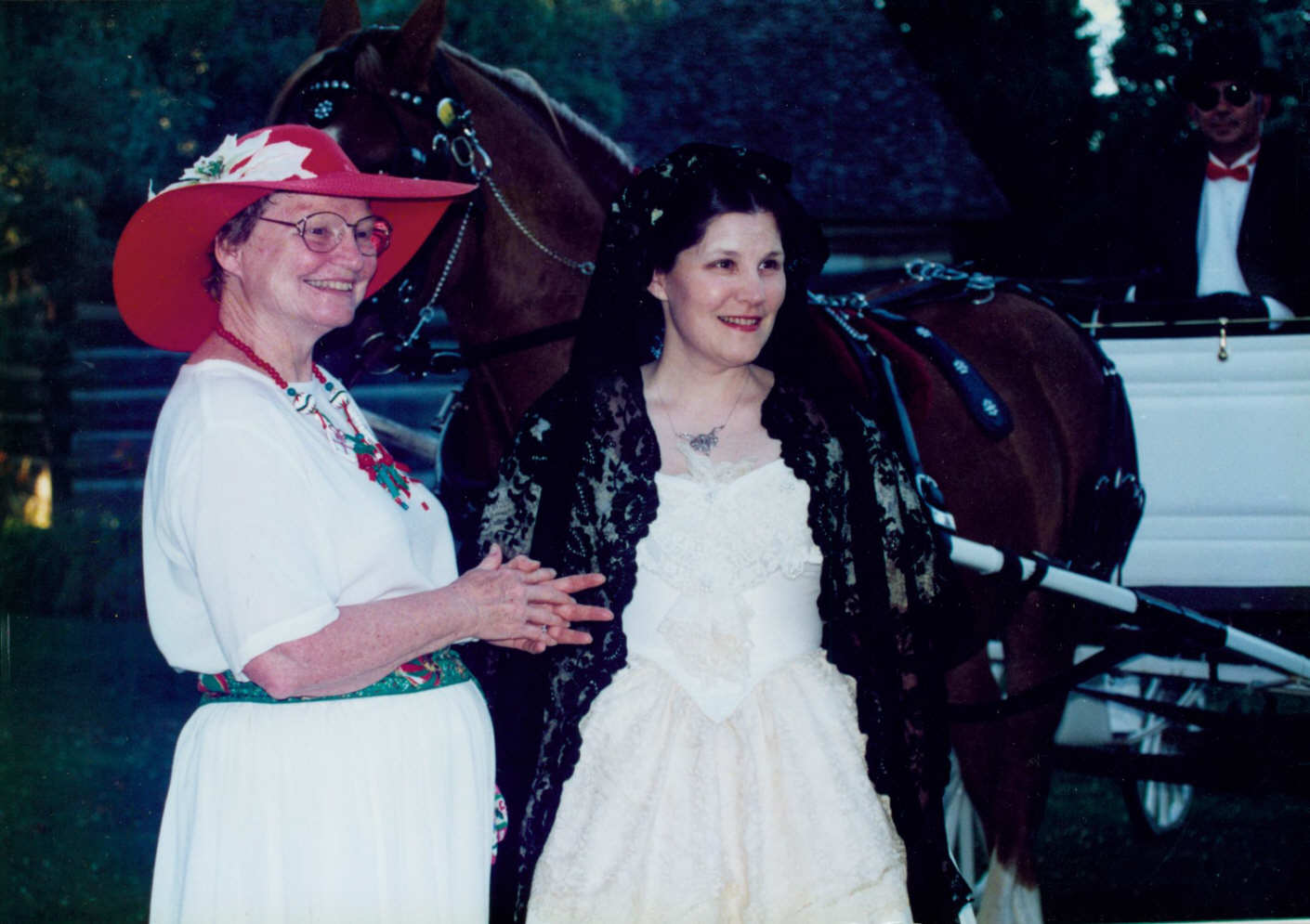 I had the same honor. I took care of my Mom and was there with her in her last
times. She died in my arms. But lacking an advanced directive, or any other
legal paper with instructions, we had to endure the intervention of the EMI,
with resuscitation attempt and ambulance trip to the hospital, and waiting for a
doctor to come in the middle of the night to make the pronouncement. It
was not a drama that anyone needed, least of all Mom who was dead when I laid
her back down in her bed that early morning.
I had the same honor. I took care of my Mom and was there with her in her last
times. She died in my arms. But lacking an advanced directive, or any other
legal paper with instructions, we had to endure the intervention of the EMI,
with resuscitation attempt and ambulance trip to the hospital, and waiting for a
doctor to come in the middle of the night to make the pronouncement. It
was not a drama that anyone needed, least of all Mom who was dead when I laid
her back down in her bed that early morning.
What did I learn? Get your ducks in a row, that's what. If you the patient don't
make these decisions, they will be made for you, either by your next of kin or
by the law. And make them in writing in proper legal documents with witnesses
and the whole ball of wax. This is not difficult, in fact, Hospice offers
services from their social workers to help you do just this kind of thing.
My Mom was in some denial, and she "didn't want to upset the children" so she
rejected signing these documents and would not let Hospice in the house. Her
care fell to me, and I was not prepared for it. How could I be? She too would
try to do things for herself, sneaking to the bathroom when I had told her to
say put. I would step away for just a moment, hear a sickening dull thud, and
there she was, on the floor. And no amount of scolding helped.
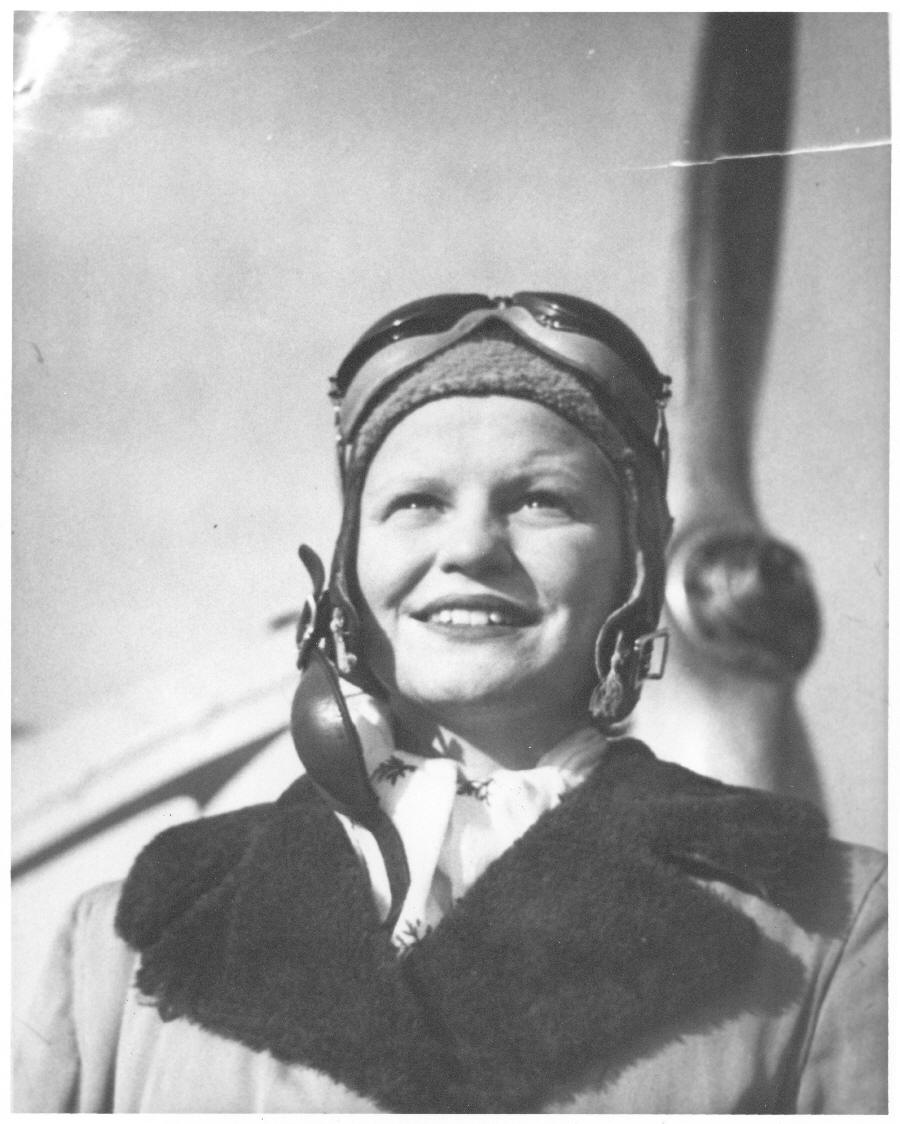 She was a great lady, determined and independent: Admiral traits in a healthy
person, but somewhat dangerous when you are a very sick patient. When my
diagnosis and prognosis where pronounced on me, and I gave the matter great
thought, I realized that I could learn from and avoid repeating the mistakes, or
shall we just say, the misconceptions we had been acting on in Mom's case. I had
an opportunity to "do it right."
She was a great lady, determined and independent: Admiral traits in a healthy
person, but somewhat dangerous when you are a very sick patient. When my
diagnosis and prognosis where pronounced on me, and I gave the matter great
thought, I realized that I could learn from and avoid repeating the mistakes, or
shall we just say, the misconceptions we had been acting on in Mom's case. I had
an opportunity to "do it right."
My time is coming (who knows when) and hospice is here, doing a very fine job,
and my family and I are getting the education in adjustment that we missed
before. My mother actually left us the example we or at least I required
to make the right decisions for myself.
Although I feel as if Hospice issues really belong on the ACOR hospice
listserver, Kate permits me to speak of it here as a matter of common interest. And the ACOR hospice list shows hardly any activity at all. It is not possible
to initiate any discussion there. So bear with me. This is where I am right now,
I will endeavor to keep my posts relevant to all. More thanks for letting
me vent.
Love to you all, Elizabeth
11/29/2005 1:49:03 P.M. EST, suewarner16@ writes:
I am so thankful that I could be there for Mom in her last days. Was it easy,
no, it was very difficult and until you personally go through it, no one can
prepare you for. Deciding to get care from hospice was a great idea and allows
for a slower adjustment for the next phase for you and your family. We
received hospice late in the game and it was a crazy adjustment.
I wish you a peaceful time and hope that you can rest well as a bed potato. You
have allowed me into a very special place through your posts as a patient and I
so appreciate it. It helps me understand some of Mom's resistance to or
help and the medical aids they gave us.
Take Care, Susan
--------------------------------------
Date: Wed, 30 Nov 2005 01:29:43 EST
From: Elizabeth Parcells
Subject: Re: Venting
Hi Fran,
What to do for the dying? Anything they ask you to do! I have a sister who is
very big on nutrition and what we would call alternative curatives, the sort of
thing we don't discuss on this board. She is sure that the sugar I eat is very
bad for me. Well I guess she is right, in the long run. But if a
piece of cherry pie helps me with my pills and gives me a little moment of
comfort and joy, hey, who cares if I'm feeding my yeast or my cancer or
whatever? She needs to deal with her denial that it even matters. Gimme my pie!!
No I'm not a real writer nor am I published. I am inspired to write these days
about the jouney I'm on that is so amazing compared to the others I have been
on. All that, the school days, the career, the personal travels, were all just
trips. Now this is a journey! Singing is out, and so I write. I must
say, it's cool to have readers.
So on with the cookies and danishes, on with the massages and pedicures, Let's
have the good times and plenty of venting! Feel good time!!
Love, Elizabeth
11/29/2005 8:02:03 P.M. EST, Franrauba@ writes:
Hi Elizabeth:
What a strong caring and inspirational individual you are. I so admire your
determination to best prepare yourself and your family for life's last journey. I
feel it is the best inheritance that we can leave them. I too learned from my
mother's death on what not to do for the dying. When my husband became ill we
also had Hospice who were our earth Angels and we fought to have them sooner
rather than too late. They not only helped with the practical things for a
bedridden patient, but offered compassionate honest answers to questions. I
could not have been a good caregiver without them and I know my husband died
free of pain. You write so eloquently. Do you have any published pieces? I wish
you peace and know you are surrounded by love not only from your family and
friends, but this list. May the Angels watch over you. Love, Fran
-----------------------------------
Date: Sun, 18 Dec 2005 07:35:58 EST
From: Elizabeth Parcells
Subject: Merry Christmas
Dear Friends,
This morning I woke up early to a box with over 200 emails in it. I
apologize for having let it get so full! Today I would like to make up for it in
the old fashioned way by wishing you a very Merry Christmas, and a happy holiday
with all best whishes for a healthful new year.
I have been as well as can be expected and am finding my hospice experience very
positive. The help and care from the people there has been wonderful.
My whole family is here for the holidays and are not only a lot of fun to be
with, (as always) but also are capable helping hands.
My Dad is doing great. You'll be happy to know my little niece of 5 years old is
coming today. So the presents are piling up, getting wrapped, and very soon a
large Christmas tree will be emerging out the living room floor. No Grinch is
gettin' in here.
"...and to all a good night."
Love, Elizabeth